

Work-Life Balance Auditor
Answer the questions below honestly to receive a personalized balance score and actionable tips based on the article's principles.
Your Balance Score
Personalized Action Plan
You know that feeling. It’s 8 PM on a Tuesday, you’re still answering emails, and your dinner has gone cold. You promised yourself this year would be different, yet here you are, trading sleep for productivity and sanity for status. If you feel like you’re running on a treadmill that keeps speeding up, you aren’t alone. In fact, recent data from the Australian Institute of Health and Welfare suggests that nearly 40% of workers report high levels of psychological distress linked directly to job demands. The problem isn’t usually that you have too much work; it’s that you lack boundaries. Fixing work-life balance isn’t about working less-it’s about working smarter and protecting the hours that belong to you.
The Myth of Perfect Balance
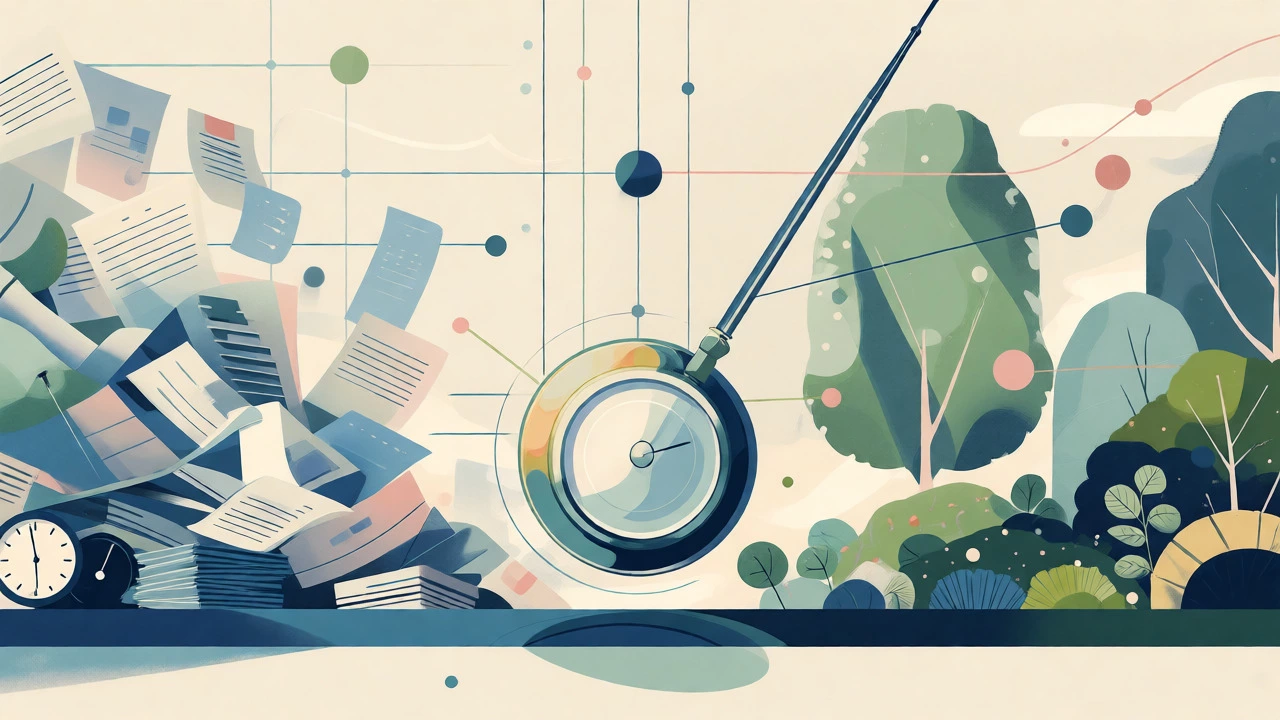
Let’s kill a myth right now: there is no such thing as perfect equilibrium. The idea that every day must consist of exactly eight hours of work, eight hours of sleep, and eight hours of leisure is a recipe for frustration. Think of it more like a pendulum. Some weeks, work will swing heavily because of a project deadline. Other weeks, family or health needs take precedence. The goal isn’t static balance; it’s dynamic integration. You want to ensure that over the course of a month, you don’t consistently neglect one side of your life. When you stop chasing perfection, you can start focusing on sustainability.
Audit Your Time Like an Accountant
You can’t fix what you don’t measure. Most people think they work 40 hours a week, but when you account for scrolling through Slack after hours, checking emails in bed, and "thinking" about work while trying to relax, the number often jumps to 55 or 60. For one week, track every hour. Use a simple spreadsheet or an app like Toggl. Be honest. Did you spend 30 minutes staring at a blank document? That’s not deep work; that’s procrastination disguised as effort.
Once you have the data, look for the leaks. Are you spending two hours a day in meetings that could have been an email? Are you checking notifications during your morning coffee? These micro-interruptions fragment your focus, making tasks take longer than they should. By identifying these patterns, you can reclaim significant chunks of time without actually working fewer hours.
Set Hard Digital Boundaries
In our hyper-connected world, the office never really closes. This is especially true for those working remotely or in hybrid roles. If your laptop lives on your kitchen table, your brain struggles to switch off. You need physical and digital separation. If possible, create a dedicated workspace. If you live in a small apartment, use a specific corner or even a separate user profile on your computer for work only.
Digital boundaries are just as critical. Turn off non-essential notifications after 6 PM. Use features like "Focus Mode" on iOS or Android to silence work apps during evenings. Communicate your availability clearly to colleagues. Try saying, "I check emails at 9 AM and 4 PM," rather than pretending you’re always available. People respect clear expectations more than vague apologies for late replies.
Master the Art of Saying No
Saying yes to everything is the fastest route to burnout. Every time you agree to a new task, you’re implicitly saying no to something else-usually rest or personal time. Learn to assess requests against your current capacity. Is this urgent? Does it align with your core goals? If not, negotiate. Instead of a flat "no," try, "I can take this on if we push the deadline for Project X back by two days." This shifts the conversation from refusal to prioritization.
Managers often appreciate honesty about workload limits because it prevents last-minute crises. If you wait until you’re drowning to speak up, you’ve already damaged your credibility. Proactive communication builds trust and shows you value quality over quantity.
Redefine Productivity
We often confuse being busy with being productive. But staring at a screen for ten hours doesn’t mean you accomplished ten hours’ worth of meaningful work. Focus on output, not input. What did you actually achieve today? Did you solve a complex problem? Did you finish a proposal? Or did you just attend three meetings?
Try the "Three Things" rule. Each morning, pick three critical tasks that must get done. Ignore everything else until those are complete. This forces prioritization and gives you a sense of completion by mid-afternoon, freeing up mental space for the evening. When you leave work, you can genuinely disconnect because you know you hit your targets.

Protect Your Recovery Time
Rest isn’t a reward for hard work; it’s fuel for it. Athletes understand this intuitively-they schedule recovery sessions as rigorously as training. You need to do the same. Schedule downtime in your calendar just like you’d schedule a meeting. Treat it as non-negotiable. Whether it’s a gym session, reading a book, or simply sitting in silence, protect this time fiercely.
Also, consider the concept of "micro-breaks." Research indicates that short breaks throughout the day improve focus and reduce fatigue. Step away from your desk for five minutes every hour. Walk around the block, stretch, or make tea. These small pauses reset your cognitive load, preventing the afternoon slump that leads to inefficient evening work.
Communicate With Your Employer
If your workload is structurally unmanageable, no amount of time-tracking will fix it. You may need to have a serious conversation with your manager. Come prepared with data. Show them where your time goes and propose solutions. Maybe you need to delegate certain tasks, or perhaps a process needs automating. Frame the discussion around business outcomes: "If I continue at this pace, my error rate will increase," or "I can deliver better results if I have uninterrupted focus blocks."
Many companies now offer flexible working arrangements, compressed workweeks, or wellness stipends. Ask about them. Don’t assume policies haven’t changed since you joined. The workplace landscape in 2026 is far more adaptable than it was five years ago, but you have to advocate for yourself.
| Pitfall | Symptom | Actionable Solution |
|---|---|---|
| Digital Bleed | Checking emails in bed | Use grayscale mode at night; set auto-reply |
| Meeting Overload | No time for deep work | Agenda required for all invites; default to 25-min slots |
| Perfectionism | Late nights polishing minor details | Set strict time-boxes for tasks; accept "good enough" |
| Lack of Boundaries | Always available for quick questions | Block out "focus time" on calendar; batch communications |
Frequently Asked Questions
Is work-life balance possible in high-pressure jobs?
Yes, but it looks different. In high-pressure roles, balance might mean intense work periods followed by guaranteed recovery phases, rather than daily equilibrium. The key is predictability and control over when you disconnect.
How do I handle guilt when taking time off?
Guilt often stems from unclear priorities. Remind yourself that rest improves performance. Prepare a handover list before leaving so colleagues aren't blocked. Seeing the positive impact of your rested state on your next project helps reframe the narrative.
What if my boss expects me to answer emails immediately?
Clarify what constitutes an emergency. Often, immediate response expectations are based on assumptions, not actual urgency. Propose a system where urgent issues come via phone/text, while routine matters wait for the next business day.
Does remote work help or hurt work-life balance?
It depends on discipline. Remote work eliminates commutes, saving time, but blurs physical boundaries. Without a commute to signal the end of the day, you must create rituals, like changing clothes or closing the laptop, to mark the transition.
How long does it take to see results?
You’ll likely feel relief within a week of setting boundaries. However, changing habits and cultural norms at work takes 2-3 months. Consistency is key; don’t revert to old patterns after the first crisis passes.