Rice Safety Checker
Check the safety of your prepped rice by analyzing how long it sat out and how it was stored.
Awaiting Input
Select your rice handling details and click the button above to see if your meal prep is safe.
Why this matters:
Cooked rice can contain spores of Bacillus cereus, a bacterium that survives cooking. If rice sits between 5°C and 60°C (the "Danger Zone") for too long, these spores multiply and produce heat-stable toxins. Reheating kills bacteria but often fails to destroy these toxins, leading to food poisoning symptoms like vomiting or diarrhea.
You spend Sunday afternoon cooking a massive pot of rice, portioning it into neat containers, and stacking them in the fridge. It feels productive. It feels like you've hacked your week. But if that rice sits at room temperature for even an hour before cooling down, you might be setting up a microscopic trap. The issue isn't that rice is bad for meal prepping-it's how we handle it after the heat goes off.
Here’s the reality: uncooked rice often contains spores of Bacillus cereus. These bacteria are tough little survivors. They can withstand boiling water. When cooked rice cools slowly or stays warm too long, these spores wake up, multiply, and produce toxins. The kicker? Reheating doesn't always kill those toxins. So, while your chicken might be safe, your rice could leave you feeling miserable by Tuesday lunch.
The Science Behind the Spores
Let's break down why this specific grain behaves differently than, say, quinoa or pasta. Rice is starchy and holds moisture well, which sounds great for texture but is terrible for bacterial control if mishandled. Bacillus cereus is a bacterium commonly found in soil and raw foods, particularly rice and spices. It produces two types of illnesses: one causes diarrhea (from live bacteria in the gut) and the other causes vomiting (from a toxin produced in the food itself).
The vomiting-type toxin is heat-stable. This means you can microwave your container until it's steaming hot, and the toxin remains active. If you left your cooked rice on the counter for three hours because you were busy answering emails, those bacteria had plenty of time to reproduce. By the time you refrigerate it, the damage is done. You're not just storing food; you're storing potential poison.
| Scenario | Bacterial Risk Level | Toxin Formation | Safety Verdict |
|---|---|---|---|
| Cooled on counter > 2 hours | High | Significant | Risky |
| Refrigerated within 1 hour | Low | Negligible | Safe |
| Left out overnight | Very High | Extreme | Dangerous |
| Frozen immediately | Minimal | None | Best Option |
The Texture Problem
Even if you nail the safety aspect, there's another reason people hate prepped rice: it turns into glue. Or worse, it becomes hard and dry. This happens due to retrogradation. When starch molecules cool, they realign and crystallize. In the fridge, this process accelerates. Your fluffy jasmine rice from Sunday becomes a blocky, chalky mess by Wednesday.
Reheating helps reverse some of this, but it rarely restores the original fluffiness. You end up with unevenly heated clumps-hot edges, cold centers. And if the center isn't piping hot, any surviving bacteria get a second chance to thrive when you eat it lukewarm. It’s a double whammy of poor quality and potential risk.
How to Meal Prep Rice Safely
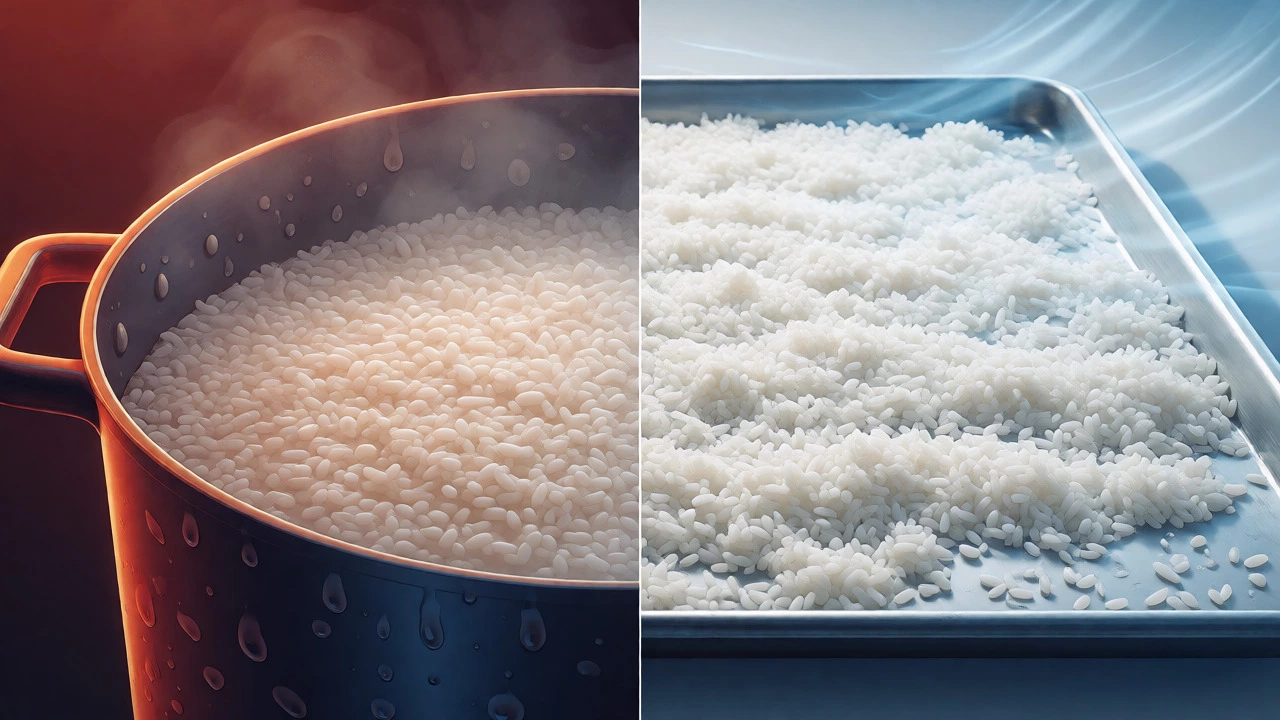
Does this mean you have to ban rice from your meal prep routine? Absolutely not. Millions of people do it safely every day. You just need to change your workflow. Speed is everything. The goal is to get the rice through the "danger zone" (between 5°C and 60°C) as fast as possible.
- Cool it fast: Don't put a giant pot straight into the fridge. Spread the rice out on a large baking tray. The thinner the layer, the faster it cools. Aim to get it into the fridge within one hour of cooking.
- Portion early: Divide the rice into single-serving containers before refrigerating. Small portions cool much faster than a big tub.
- Freeze what you won't eat soon: If you're prepping more than 3-4 days ahead, freeze the rice. Freezing stops bacterial growth completely and preserves texture better than refrigeration.
- Reheat thoroughly: When you're ready to eat, add a splash of water to the container. Cover it loosely to create steam. Microwave until it's steaming hot all the way through, stirring halfway.
In Sydney, where our kitchens can get surprisingly warm even in winter, leaving rice out is a bigger risk than you think. I learned this the hard way after prepping a big batch of sushi rice for work lunches. I let it sit in the rice cooker on "keep warm" for four hours. That setting keeps the temperature right in the sweet spot for bacterial multiplication. My stomach paid the price.
Alternatives to Plain White Rice
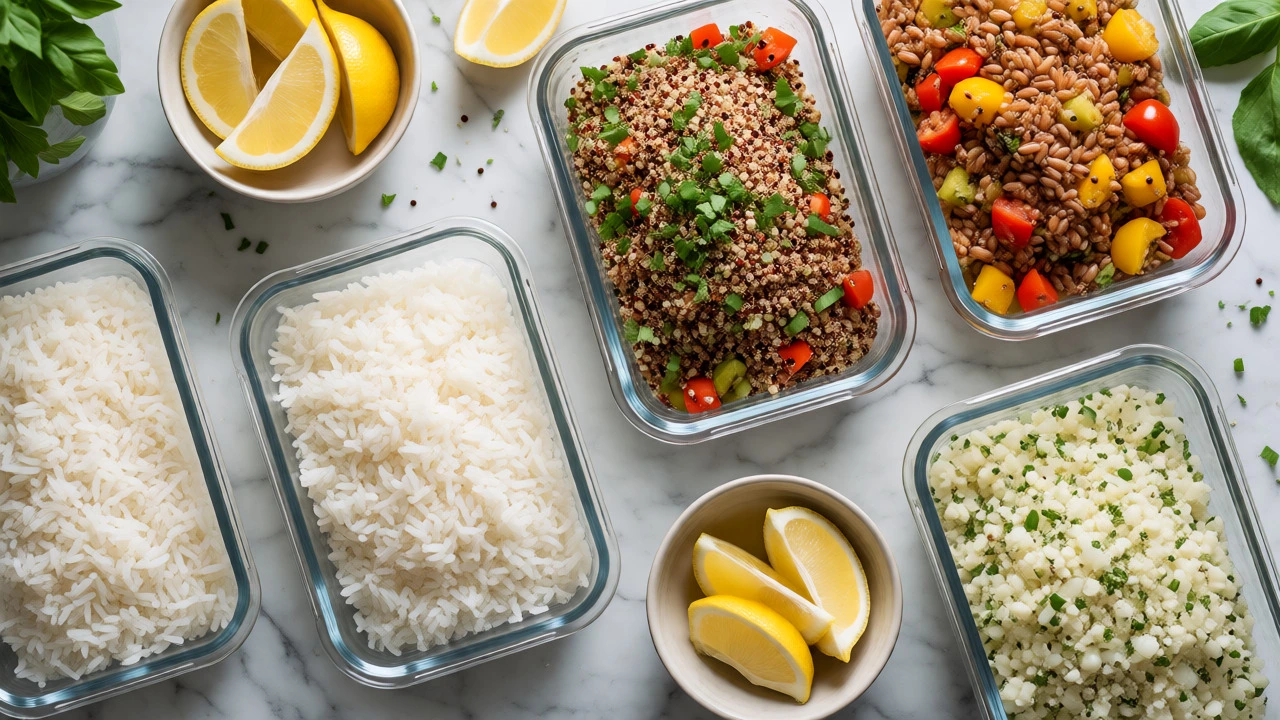
If the hassle of cooling rice quickly feels like too much effort, consider grains that behave better during meal prep. Some options hold their texture and resist spoilage risks more effectively.
Quinoa is a great swap. It cooks quickly, cools faster due to its smaller size, and actually tastes good cold in salads. Plus, it has a higher protein content, which makes your meals more satiating.
Cauliflower rice is another low-risk option. Since it's mostly water and fiber, it spoils less predictably than starch-heavy grains. However, it gets soggy quickly, so it's best for dishes you'll cook fresh or eat within 24 hours.
For something heartier, try Farro. This ancient wheat grain has a chewy texture that holds up beautifully in the fridge and freezer. It doesn't turn into paste, and its nutty flavor stands up to strong sauces.
Common Mistakes to Avoid
We all make mistakes in the kitchen. Here are the most common ones that turn meal prep into a gamble.
- Stacking hot containers: Putting five hot containers of rice directly into the fridge raises the internal temperature of the entire appliance. This puts other foods, like milk or meat, at risk. Let them cool slightly on the counter first, but no longer than an hour total.
- Eating leftovers after 5 days: Cooked rice generally lasts 3-4 days in the fridge. After that, the risk of Bacillus cereus increases significantly. If it smells sour or looks slimy, toss it. Don't taste-test to check.
- Reheating multiple times: Only reheat the portion you plan to eat. Taking a whole container out, scooping some, and putting the rest back introduces new bacteria and warms the remaining rice enough to restart the danger zone.
Also, be careful with mixed dishes. If you mix rice with wet ingredients like curries or stir-fry sauces, the moisture content rises. Bacteria love moisture. Keep your rice separate from saucy components until you're ready to combine them. This simple step keeps the rice drier and safer.
When Rice Meal Prep Actually Works
So, should you stop prepping rice? Not necessarily. It works perfectly fine if you respect the rules. Use it for quick weekday lunches where you can ensure rapid cooling. Pair it with high-acid ingredients like lemon juice or vinegar, which inhibit bacterial growth. Think tabbouleh-style salads rather than heavy creamy risottos.
If you find yourself constantly worrying about whether your rice is safe, maybe it's time to switch strategies. Prep your proteins and veggies, but cook your rice fresh each morning. A cup of instant brown rice takes ten minutes. That small time investment guarantees freshness and eliminates the anxiety. For many people, peace of mind is worth ten minutes of waiting.
Can you eat rice that was left out overnight?
It is generally unsafe to eat rice that has been left out at room temperature for more than two hours, especially if it was kept between 5°C and 60°C. Overnight exposure allows Bacillus cereus spores to germinate and produce heat-stable toxins that reheating cannot destroy. It is best to discard such rice to avoid food poisoning.
How long does cooked rice last in the refrigerator?
Cooked rice typically lasts 3 to 4 days in the refrigerator if stored properly in airtight containers. Ensure the rice was cooled rapidly before refrigeration. If it has been stored longer than 4 days, the risk of bacterial growth increases, so it is safer to discard it.
Is it safe to reheat rice twice?
It is not recommended to reheat rice more than once. Each time rice cools and reheats, it passes through the temperature danger zone, allowing bacteria to multiply. Additionally, repeated heating degrades the texture and nutritional quality. Only reheat the portion you intend to consume immediately.
What is the fastest way to cool rice for meal prep?
Spread the cooked rice thinly across a large baking sheet or tray. This maximizes surface area exposure to air, allowing it to cool much faster than in a deep pot. Once it reaches room temperature (within an hour), transfer it to shallow, airtight containers and place them in the refrigerator immediately.
Which grains are better for meal prep than white rice?
Grains like quinoa, farro, barley, and brown rice tend to hold their texture better during meal prep. Quinoa cools quickly and resists becoming mushy. Farro has a chewy consistency that survives reheating well. Cauliflower rice is also a low-carb alternative, though it has a shorter shelf life due to high moisture content.