One Touch Rule Simulator
The One Touch Rule states that you should never put an item down unless it is in its final destination. If you can't do that within two minutes, don't pick it up yet. Test your instincts below.
Scenario 1: The Junk Mail
You pull a glossy advertisement out of your mailbox while standing in the entryway. You glance at it for 2 seconds.
Scenario 2: The Wet Umbrella
It’s raining. You walk inside holding a dripping wet umbrella. Your coat rack is 10 feet away across the room.
Scenario 3: The Complex Bill
You open an envelope containing a detailed insurance statement requiring cross-referencing with other documents. It takes about 15 minutes to process properly.
Scenario 4: The Grocery Bag
You carry a heavy bag of groceries from the car to the kitchen island. You are tired but have 5 minutes before dinner prep starts.
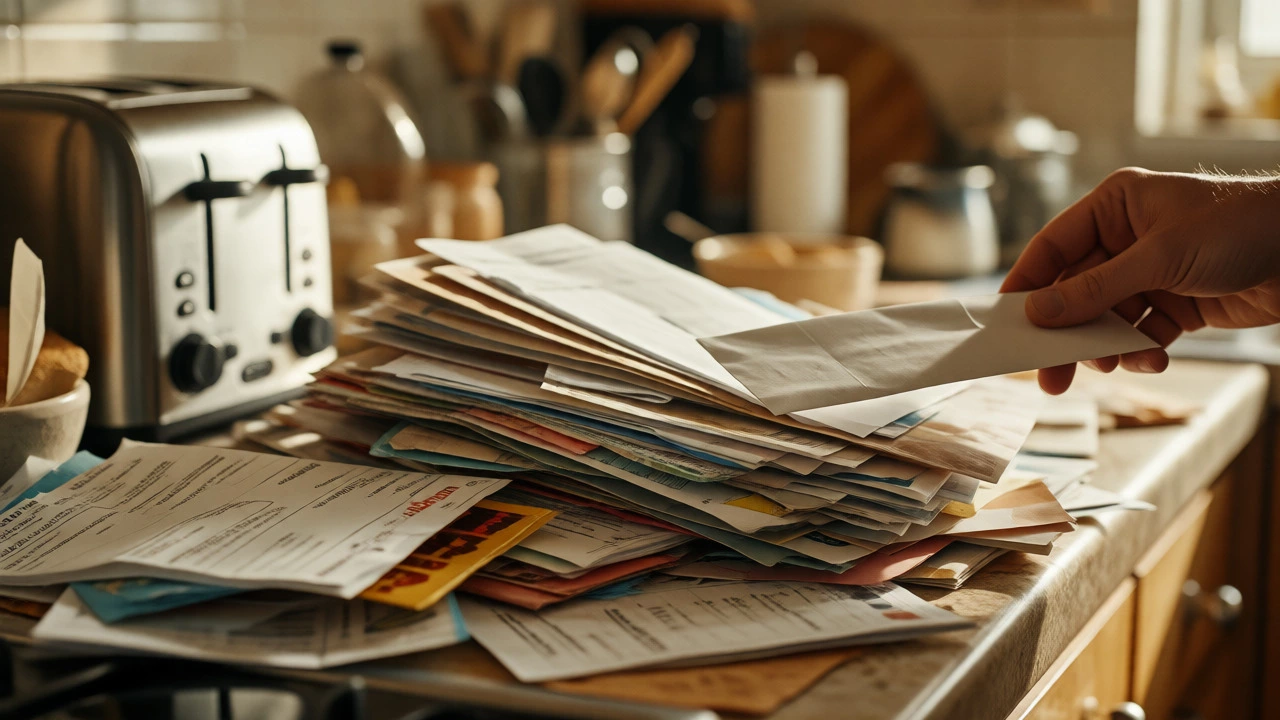
You pick up a piece of mail from the kitchen counter. You glance at it, think about filing it later, and set it down on the stack next to the toaster. Three days later, that same envelope is still there, now joined by three other pieces of junk mail and a utility bill you forgot to pay. This scenario sounds familiar because it happens in almost every home. The culprit isn't usually laziness; it's a broken system for handling incoming items. Enter the One Touch Rule, a simple behavioral strategy designed to stop clutter before it starts by ensuring you handle any item only once.
The concept is straightforward but requires discipline. When you pick something up-whether it’s laundry, paperwork, or a grocery bag-you must decide its final destination immediately. You don’t put it down to deal with "later." You either use it, file it, trash it, or move it to its designated home right then and there. If you can’t do one of those four things within two minutes, you don’t pick it up yet. This approach eliminates the "transit zones" in your house where objects go to die: the chair in the bedroom, the bench in the hallway, and the pile on the dining table.
Why We Create Clutter in the First Place
Most people assume clutter comes from having too much stuff. While quantity plays a role, the real issue is often indecision. Psychologists refer to this as decision fatigue. Every time you look at an object and think, "I'll deal with that later," you are making a micro-decision to defer action. Your brain registers this unfinished task, creating low-level anxiety. To cope, you avoid looking at the object, which means you never actually process it. The object sits, gathering dust and visual noise, until the mental cost of dealing with it feels higher than just ignoring it.
This cycle creates what organizers call "clutter creep." It starts small-a single jacket on a hook-and expands when you fail to establish clear boundaries for entry and exit. Without a rule like the One Touch method, we tend to rely on temporary holding spots. These spots are dangerous because they lack a defined purpose. A basket labeled "Miscellaneous" becomes a black hole where items disappear for months, only to resurface during a frantic spring clean. By removing the option to "park" items temporarily, you force yourself to engage with them actively.
How the One Touch Rule Works in Practice
Implementing this rule changes how you interact with your environment. It shifts your mindset from passive storage to active management. Here is how it applies to common household scenarios:
- Paperwork and Mail: When you open your mailbox, take the stack inside. Stand by the recycling bin. Sort through each item. Junk mail goes straight into the bin. Bills go into a specific folder or onto the desk to be paid immediately. Important documents go into the filing cabinet. You do not put the stack on the counter.
- Groceries: Instead of leaving bags on the floor while you unload the car, carry them directly to the pantry or fridge. Unpack them completely. Put away cans, freeze meats, and store produce. Do not leave boxes sitting on the kitchen island waiting for "a free moment" to unpack.
- Laundry: As soon as the dryer buzzes, remove the clothes. Fold them or hang them up. Put them away in their drawers or closets. Do not let warm laundry sit in a hamper overnight, becoming wrinkled and harder to organize.
- Dishes: After eating, wash the dish or load it into the dishwasher immediately. Do not soak pots in the sink if you aren't going to scrub them right away. If you can't wash it now, rinse it and place it in the dishwasher so it's ready for the next cycle.
The key metric here is time. The rule works best when combined with the Two-Minute Rule: if a task takes less than two minutes, do it now. Picking up a shoe and putting it in the closet takes ten seconds. Putting it in the closet is faster than picking it up again later, remembering why you left it out, and feeling guilty about the mess. Efficiency drives compliance.
Common Pitfalls and How to Avoid Them
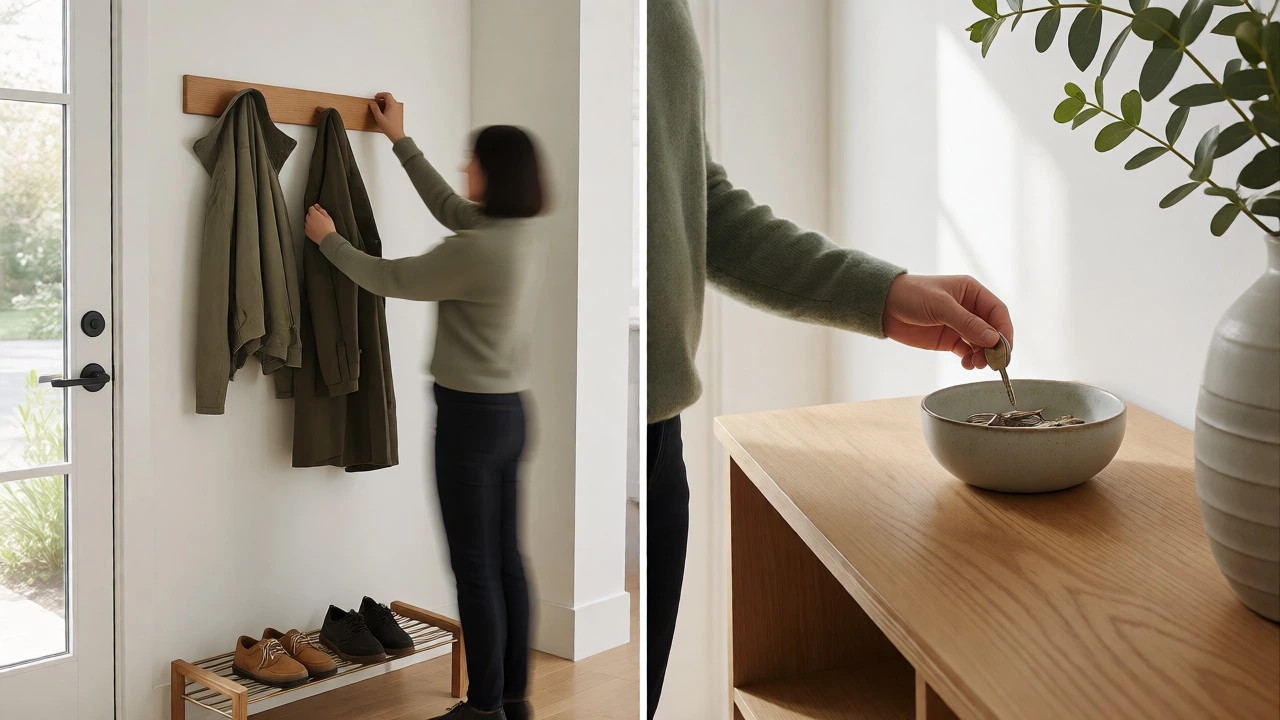
People often fail with the One Touch Rule because they haven't prepared their spaces. You cannot put an item away if it doesn't have a home. If you try to follow the rule without proper storage solutions, you will end up moving clutter from one surface to another rather than eliminating it. Before starting, ensure every category of item has a designated spot. Keys need a bowl near the door. Shoes need a rack in the entryway. Documents need a file box.
| Scenario | Traditional Approach | One Touch Rule Approach | Outcome |
|---|---|---|---|
| Receiving Mail | Place stack on counter; sort later | Sort immediately over recycling bin | No paper piles; bills paid on time |
| Unloading Groceries | Leave bags on floor/counter | Carry to pantry/fridge and unpack | Clean counters; food tracked better |
| Returning Home | Drop keys/bag on random surface | Hang bag; drop keys in bowl | Items found instantly next morning |
| Post-Dinner Cleanup | Stack dishes in sink | Wash/load immediately | Fresh start for next meal prep |
Another pitfall is perfectionism. Some people interpret the rule as needing to clean the entire house every time they touch an object. That’s unsustainable. The rule applies to the specific object you picked up. If you pick up a magazine, put it on the shelf. You don’t need to reorganize the whole bookshelf unless you want to. Keep the action focused on the item in hand.
Building the Habit Over Time
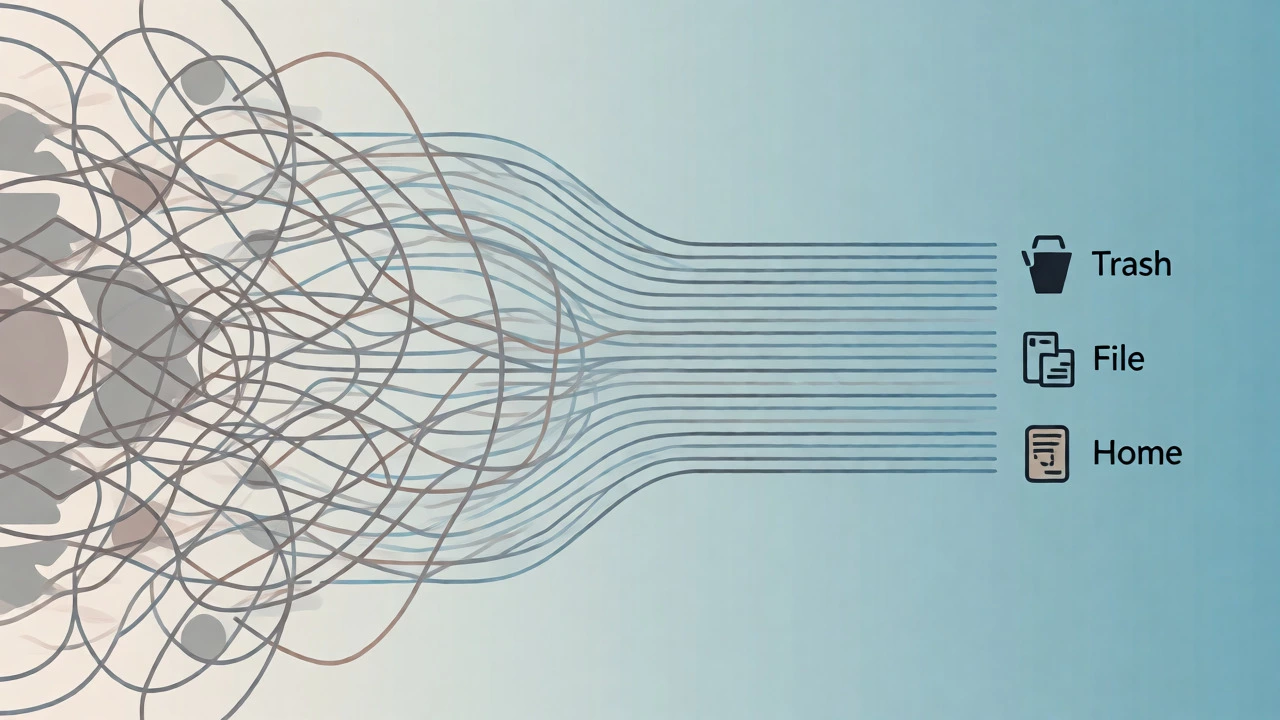
Changing behavior takes repetition. Start with one area of your home. The entryway is usually the easiest place to begin because it deals with high-traffic items like coats, shoes, and keys. For one week, commit to touching these items only once. Hang the coat. Drop the keys. Step into the shoes. Once this feels automatic, expand to the kitchen or office.
Be honest with yourself about items you repeatedly ignore. If you find yourself constantly moving a specific object back and forth, it might not belong in your home. The One Touch Rule acts as a filter. If you can’t figure out where to put something, ask yourself: "Do I actually use this?" If the answer is no, it should go to donation or trash, not back onto the counter. This turns organization into a decluttering tool naturally.
Maintenance is easier than recovery. Spending thirty seconds putting away a pair of scissors prevents spending thirty minutes hunting for them later. Multiply that saving across hundreds of daily interactions, and you reclaim hours of your life annually. More importantly, you reduce the visual stress of a chaotic environment. A clear space supports a clear mind.
Does the One Touch Rule mean I can never put anything down?
No, it means you shouldn't put things down in "transit zones" like counters or chairs. You can put items down, but only in their permanent, designated homes. If you're cooking, you can put ingredients on the cutting board, but you shouldn't leave the empty packaging on the counter after prepping.
What if I don't know where an item belongs?
Create a temporary "decision box" or tray. Put unassigned items in there. Limit the box to one size. Once it's full, you must sort through it and assign homes or discard items. This prevents indefinite procrastination.
Is this rule suitable for families with young children?
It helps, but you may need to adjust expectations. Children are learning responsibility. Teach them to put toys away immediately after playing. Use lower shelves and clear bins so they can see where things go. Consistency from parents is crucial for modeling the behavior.
How long does it take to form the habit?
Research suggests habit formation varies, but most people feel more natural doing it after 21 to 66 days. Start small. Focus on one room or one type of item (like mail) until it feels automatic, then expand to other areas.
Can I combine this with other organizing methods?
Absolutely. The One Touch Rule works well with KonMari methods or capsule wardrobes. In fact, having fewer possessions makes the rule easier to follow because there are fewer decisions to make about where items go.