Self-Help Book Quality Checker
Use this checklist before buying or starting a new self-help book. Check the boxes that apply to the book you are considering.
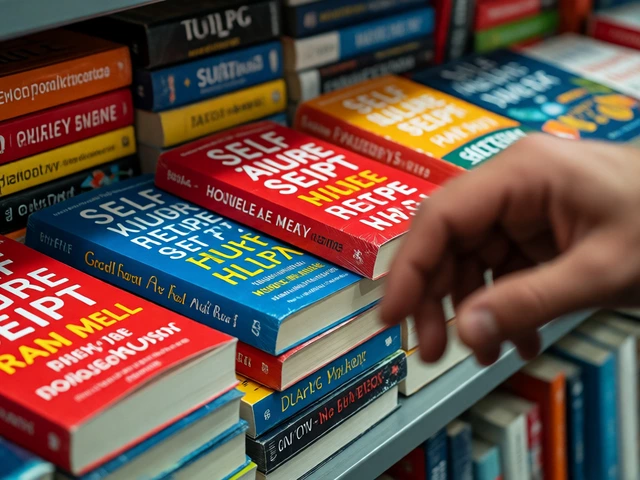
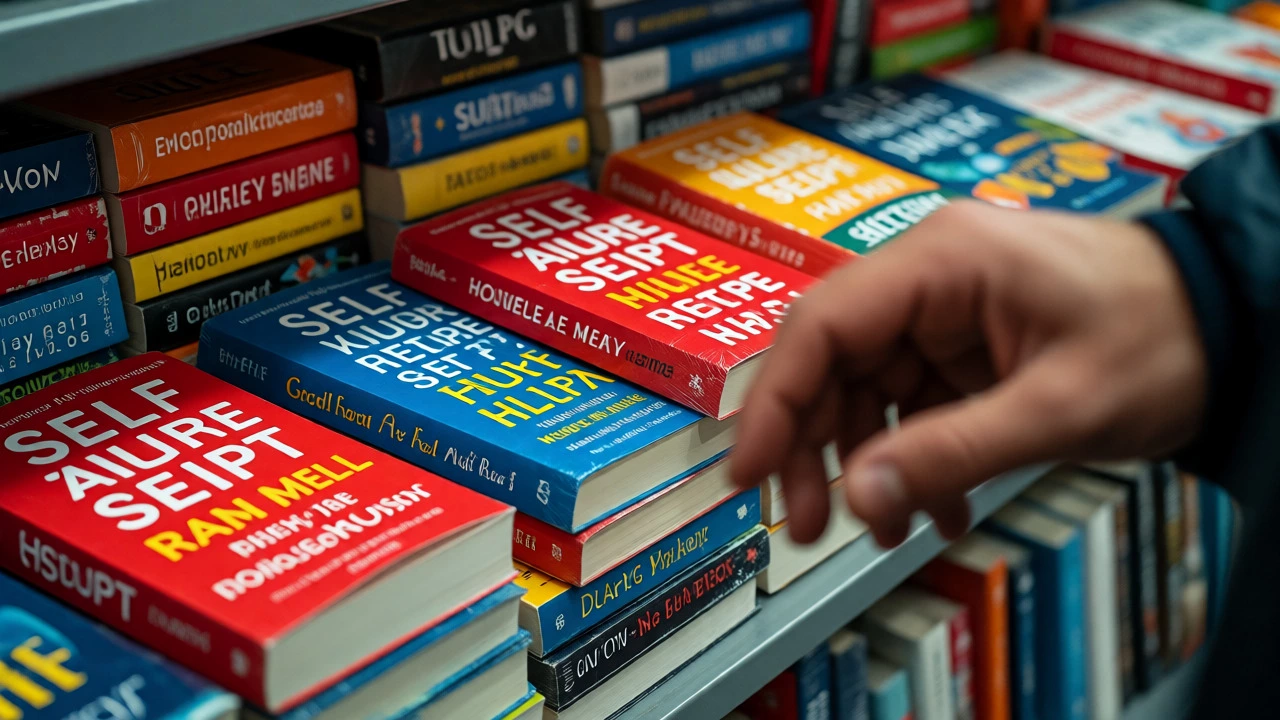
You’ve probably seen them stacked on airport shelves or recommended by every productivity guru on Instagram: self-help books. They promise to fix your sleep, double your income, and make you happier than a cat in a sunbeam. But do they actually work? Or are they just expensive paperweights that gather dust after chapter three?
The truth is messier than the marketing copy suggests. Some people swear by these books as life-changing tools. Others find them repetitive, shallow, or even harmful if taken out of context. So, should you read them? The answer depends less on the genre itself and more on how you approach it. Let’s break down when self-help delivers real value, when it’s a waste of time, and how to pick titles that won’t leave you feeling worse than before.
The Real Problem With Self-Help Literature
Before we decide whether to open one, let’s address the elephant in the room: quality control. Unlike academic textbooks or peer-reviewed science journals, the self-help industry has almost no barrier to entry. If you can string sentences together and have a catchy title, you can publish a book. This leads to a flood of content where 80% might be recycled advice from older classics, padded with anecdotes to hit word count.
This isn’t to say all self-help is bad. It’s to say that the signal-to-noise ratio is low. You’re often paying for packaging rather than substance. When you buy a book titled "The 7 Habits of Highly Effective People," you expect actionable strategies. But many modern equivalents offer vague platitudes like "believe in yourself" without explaining the mechanics of belief formation or behavioral change.
Think of it like fast food versus home cooking. Fast food (mass-market self-help) is convenient and tastes good in the moment, but it rarely nourishes you long-term. Home cooking (curated, high-quality self-help) takes more effort to prepare-reading actively, taking notes, applying concepts-but yields better health outcomes.
When Self-Help Books Actually Work
Despite the criticism, there are specific scenarios where these books shine. They aren’t magic pills, but they can act as catalysts when you’re stuck in a rut.
- You lack a framework: Sometimes you know something is wrong, but you don’t have the vocabulary or structure to fix it. A book like Atomic Habits provides a clear system for habit formation that is easier to implement than abstract willpower.
- You need validation: Reading about someone else’s struggle with anxiety or procrastination can reduce shame. Knowing you’re not alone is a powerful first step toward change.
- You want diverse perspectives: Good authors synthesize research from psychology, neuroscience, and sociology. Instead of spending years studying cognitive behavioral therapy, you get a distilled, practical version in 300 pages.
The key here is utility. If the book gives you a tool you can use tomorrow morning, it’s worth the price. If it just makes you feel inspired for an hour, it’s entertainment, not education.
The Dangers of Passive Consumption
Here’s where most readers fail: they treat self-help like fiction. They binge-read five books in a month, highlight lines, feel motivated, and then change nothing. This is known as "productive procrastination." You feel like you’re working on yourself because you’re consuming information, but you’re avoiding the hard work of implementation.
Research from the University of Pennsylvania suggests that passive reading has minimal impact on behavior change compared to active practice. Highlighting a quote about discipline doesn’t build discipline. Doing ten pushups does. If you’re reading to avoid action, you’re using books as a comfort blanket, not a ladder.
Another risk is the "toxic positivity" trap. Some books dismiss genuine emotional struggles with simplistic solutions. Telling someone with clinical depression to "just think positive" is not only unhelpful; it can be damaging. Always check if the author acknowledges the complexity of human emotion or if they oversimplify for the sake of a clean narrative.

How to Spot a Quality Book vs. Fluff
Not sure if a new release is worth your time? Use this checklist before buying. It filters out the noise quickly.
| Criterion | Green Flag (Read It) | Red Flag (Skip It) |
|---|---|---|
| Evidence Base | Cites studies, references experts, admits limitations | Relies solely on anecdotes or "trust me" claims |
| Actionability | Includes exercises, scripts, or step-by-step plans | Vague advice like "be present" or "find your passion" |
| Nuance | Acknowledges exceptions and individual differences | Promises one-size-fits-all results for everyone |
| Author Credibility | Has relevant qualifications or proven track record | Influencer status is their only credential |
| Tone | Empathetic, realistic, slightly skeptical | Hype-driven, aggressive, overly cheerful |
Let’s look at two examples. Thinking, Fast and Slow by Daniel Kahneman is dense and scientific, but it explains exactly why you make irrational decisions. It’s not "fun," but it’s accurate. On the other hand, a book titled "Manifest Your Millionaire Mindset in 3 Days" likely lacks evidence and relies on magical thinking. One changes how you think; the other sells you a dream.
Alternatives to Traditional Self-Help
If you’re tired of the self-help shelf, consider these alternatives. They often provide deeper insights without the fluff.
- Biographies and Memoirs: Learning from real lives is often more instructive than theoretical advice. Steve Jobs’ biography teaches resilience and vision better than any leadership manual.
- Philosophy: Stoicism, Buddhism, and Existentialism have tackled human suffering for millennia. Marcus Aurelius’ Meditations offers timeless wisdom on control and perspective without needing a pop-psychology wrapper.
- Scientific Non-Fiction: Books like Sapiens or Becoming explain human behavior through history and biology. Understanding why we act certain ways helps us change how we act.
These genres respect your intelligence. They don’t pretend to have all the answers; they invite you to ask better questions.

A Practical Approach to Reading for Growth
So, should you read self-help books? Yes, but with conditions. Treat them as reference manuals, not bibles. Here’s a simple workflow to maximize return on investment.
- Identify one specific problem: Don’t read "to improve your life." Read to fix your sleep schedule or learn negotiation tactics. Narrow focus prevents overwhelm.
- Pre-screen the book: Read the table of contents and the first chapter. If the tone feels condescending or the advice feels generic, put it down. Life is too short for bad books.
- Read slowly and actively: Take notes. Write down one action item per chapter. If you can’t apply it within a week, discard it.
- Implement before moving on: Finish one book, apply its core lesson for 30 days, then start another. Depth beats breadth.
Remember, the goal isn’t to finish books. The goal is to change behaviors. If you read ten pages and change one habit, that’s a win. If you finish a 400-page book and change nothing, it was just leisure reading-and that’s fine, as long as you’re honest about it.
Frequently Asked Questions
Are self-help books scientifically backed?
It varies widely. High-quality books cite peer-reviewed research from fields like psychology and neuroscience. However, many popular titles rely on anecdotal evidence or pseudoscience. Always check if the author references credible studies or if they are primarily selling a personal narrative.
Why do I forget what I read in self-help books?
Passive reading leads to rapid forgetting. To retain information, you must engage actively. Techniques include taking handwritten notes, summarizing chapters in your own words, and immediately applying one small concept. Spaced repetition-reviewing notes weeks later-also helps solidify learning.
Can self-help books replace therapy?
No. While books can provide valuable tools and insights, they lack the personalized feedback, accountability, and therapeutic relationship found in counseling. For mild issues or skill-building, books are excellent. For trauma, clinical depression, or deep-seated patterns, professional help is usually necessary.
What are some highly rated self-help books?
Consistently well-regarded titles include Atomic Habits by James Clear for productivity, Man’s Search for Meaning by Viktor Frankl for perspective, and Daring Greatly by Brené Brown for vulnerability. These books are praised for their evidence-based approaches and practical applicability.
Is it okay to quit a self-help book halfway through?
Absolutely. In fact, it’s encouraged. Many books are repetitive, padding a few good ideas into hundreds of pages. If you’ve extracted the core value, stop reading. Your time is more valuable than finishing a book out of obligation.