Late-Night Eating Impact Calculator
Enter your current habits to estimate how much weight you might lose by stopping late-night snacking. This tool focuses on the behavioral aspect (calorie reduction) rather than metabolic magic.
Your Current Habits
Estimated Weight Loss
Results will appear here based on calorie deficit assumptions.
- Complete the calculator above to see tailored advice.
You’ve heard it a thousand times. Maybe your aunt said it at Christmas. Maybe a fitness influencer on Instagram swore by it. "Don't eat after 7 pm," they say. "Your body turns food into fat while you sleep." It sounds simple, almost too easy to ignore. But does the clock really dictate whether that late-night snack becomes waistline expansion or fuel for tomorrow?
Here is the uncomfortable truth: calories don’t check their watches. If you ate 500 extra calories at 6 am instead of 11 pm, would you lose weight faster? Probably not much. But the story isn't that black and white. Your body has an internal clock, known as the circadian rhythm, which influences how efficiently you process food. So, while the magic hour of 7 pm isn't a hard biological switch, the timing of your meals does matter more than we used to think.
The Myth vs. The Mechanism
Let’s strip away the hype. Weight loss fundamentally comes down to energy balance. You need to burn more calories than you consume. Period. If you stick to your daily calorie target, eating dinner at 8:30 pm won’t magically add ten pounds overnight. Several studies comparing early versus late eating windows show that if total calorie intake remains identical, weight loss outcomes are remarkably similar.
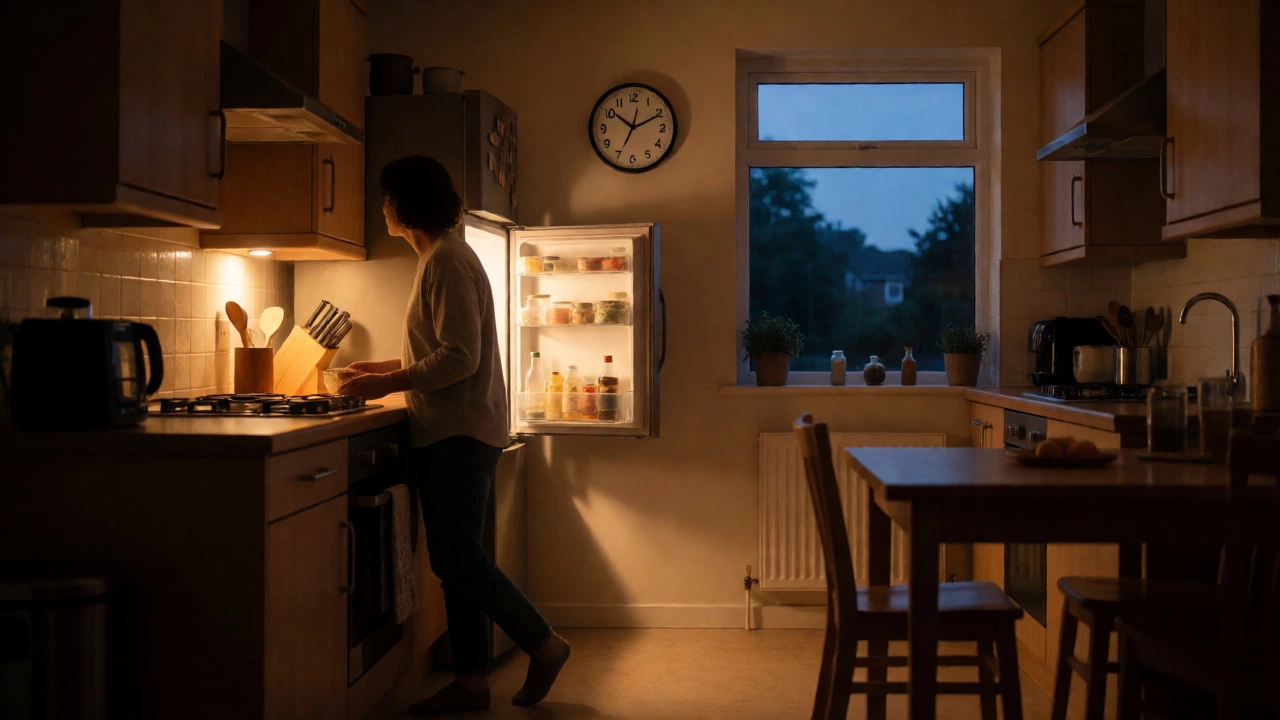
So why do so many people swear this rule works? Because it changes behavior. When you stop eating at 7 pm, you eliminate late-night grazing. That bowl of ice cream in front of Netflix? Gone. The handful of chips while scrolling social media? Vanished. For most people, the "no eating after 7" rule is actually just a fancy way of saying "stop mindless snacking." It creates a natural boundary that prevents overeating without requiring constant math.
Your Body Clock Is Real (And It Matters)
While calories are king, context is queen. Humans are diurnal creatures. Our biology is tuned to daylight. This brings us to the concept of chrononutrition. This field studies how the timing of food intake affects metabolism. Research suggests that insulin sensitivity-how well your cells absorb glucose from the blood-is higher in the morning and drops significantly in the evening.
Think of it like traffic. At noon, the roads are open, and cars (glucose) move freely into buildings (cells). By 9 pm, rush hour is over, the lights are red, and cars start piling up outside. If you eat a high-carb meal late at night, your body might struggle more to process that sugar compared to eating the same meal at noon. This doesn't mean you gain weight instantly, but it can lead to higher blood sugar levels and potentially increased storage of fat if this pattern repeats nightly.
| Metric | Morning Intake | Late Night Intake |
|---|---|---|
| Insulin Sensitivity | High | Low |
| Thermic Effect of Food | Higher | Lower |
| Fat Oxidation (Burning) | Active | Reduced during sleep |
| Hunger Hormones | Balanced | Ghrelin may spike next day |
Why 7 PM Specifically?
Is there anything special about 7 pm? Not really. The number itself is arbitrary. For someone who wakes up at 5 am, stopping at 7 pm makes sense because they have a long day ahead. For a night shift worker who starts at 10 pm, cutting off food at 7 pm would be disastrous-they’d be starving before their main activity period begins.
The real guideline should be tied to your bedtime, not the clock on the wall. A common recommendation from dietitians is to finish eating 2-3 hours before bed. This gives your stomach time to empty, reducing the risk of acid reflux and improving sleep quality. Poor sleep is a massive driver of weight gain because it messes with hunger hormones like ghrelin and leptin. If eating late keeps you awake or disrupts deep sleep, you’re indirectly sabotaging your weight loss goals.

The Hidden Trap of Late-Night Calories
Let’s look at what people actually eat after 7 pm. Rarely is it steamed broccoli and grilled chicken. It’s usually hyper-palatable foods: chocolate, crisps, cookies, leftover pizza. These are calorie-dense and low in satiety. You can easily consume 400-600 calories in twenty minutes of TV watching without even realizing it.
This is where the "don't eat after 7" rule shines as a behavioral tool. It removes decision fatigue. Instead of asking "Am I hungry? Should I have this biscuit?" every night, you simply close the kitchen. No decisions, no willpower battles. It simplifies life. And in the world of sustainable weight loss, simplicity wins.
Who Should Actually Try This?
Not everyone benefits from an early cutoff. Here is how to decide if it fits your lifestyle:
- The Emotional Eater: If you use food to cope with stress after work, an early kitchen closure can break the cycle.
- The Reflux Sufferer: If lying down after eating causes heartburn, stopping earlier is non-negotiable for comfort.
- The Morning Person: If you wake up early, shifting your eating window forward aligns with your natural energy peaks.
- The Night Owl: If you stay up until midnight working or gaming, forcing yourself to stop at 7 pm might leave you ravenous and prone to breaking the rule anyway. Consider an 8 or 9 pm cutoff instead.

Practical Strategies to Make It Work
If you want to test this out, don’t go cold turkey. Start by shifting your last meal 30 minutes earlier each week. Here are some tactics that help:
- Prioritize Protein at Dinner: Protein keeps you full longer than carbs or fats. A solid dinner with lean meat, fish, or tofu reduces the urge to snack later.
- Brush Your Teeth Early: It sounds trivial, but brushing your teeth signals to your brain that eating is done. Plus, nothing tastes good after mint toothpaste.
- Hydrate First: Thirst often masquerades as hunger. Drink a large glass of water when the 7 pm bell rings. Wait 15 minutes. Still hungry? Then eat something small.
- Plan a Light Snack (If Needed): If you’re genuinely hungry, have a pre-portioned option ready, like a small yogurt or a few almonds. Avoid keeping the "junk" accessible.
What About Intermittent Fasting?
This topic overlaps heavily with Intermittent Fasting (IF). IF cycles between periods of eating and fasting. The most popular version, 16:8, involves eating within an 8-hour window and fasting for 16. Many people choose 12 pm to 8 pm as their window. Others prefer 8 am to 4 pm.
Research indicates that IF helps primarily through calorie restriction, not magic. However, restricting your eating window naturally reduces opportunities to overeat. If you find it easier to skip breakfast than to skip dessert, then a later eating window (like 10 am - 6 pm) might suit you better than the traditional 7 pm cutoff. Listen to your body, not the dogma.
The Verdict
Does not eating after 7 pm help lose weight? Yes, but mostly because it stops you from eating extra junk food. It’s a useful heuristic, not a biological law. If you love your evening tea and toast, keep doing it. Just watch the portion sizes. If you find yourself raiding the pantry at 10 pm, moving your cutoff to 7 or 8 pm could be the simplest change you make all year.
Focus on consistency. Choose a time that allows you to sleep well and feel satisfied. Whether that’s 6 pm, 8 pm, or never, the best rule is the one you can stick to without feeling deprived.
Will I lose weight faster if I stop eating at 7 pm?
Not necessarily faster due to metabolism alone, but likely yes due to reduced calorie intake. By closing the kitchen early, you avoid late-night snacking, which often adds hundreds of unnecessary calories to your day.
Is it bad to eat right before bed?
It depends on the food and your digestion. Heavy, spicy, or fatty meals right before bed can cause acid reflux and disrupt sleep. However, a light, protein-rich snack is generally fine and may even improve sleep quality for some people.
Does my body stop burning calories when I sleep?
No, your body continues to burn calories during sleep to maintain vital functions like breathing, circulation, and cell repair. This is called Basal Metabolic Rate (BMR). Sleep deprivation, however, can lower this rate and increase hunger hormones.
Can I eat fruit at night?
Yes, fruit is healthy at any time. While it contains natural sugars, it also provides fiber, vitamins, and water. Unless you are strictly monitoring carb intake for medical reasons, a piece of fruit is a far better late-night choice than processed snacks.
What is the best time to eat for weight loss?
There is no single "best" time for everyone. Evidence suggests aligning meals with your active hours helps manage energy levels. Most experts recommend consuming the majority of your calories earlier in the day, but the total daily amount matters most.