

Safe Weight Loss Calculator
Calculate your realistic timeline to lose 30 pounds safely based on the guidelines from health experts (1-2 pounds per week). Your body is unique, but this tool will help you set realistic expectations.
Estimated Timeline
Important Note: Losing 30 pounds safely means losing 1-2 pounds per week. This tool calculates based on health expert guidelines. Faster weight loss can lead to muscle loss, metabolic slowdown, and weight regain.
Remember:
- Healthy weight loss is about consistency, not speed
- Plateaus are normal and indicate your body is adapting
- The scale doesn't show the full picture - track measurements too
- Building sustainable habits matters more than the number on the scale
Want to lose 30 pounds? You’re not alone. But how long will it actually take? The answer isn’t a magic number-it’s shaped by your body, your habits, and how you move. There’s no shortcut that works for everyone, but there is a realistic path that keeps you healthy and keeps the weight off.
What’s a Safe Rate of Weight Loss?
Health experts agree: losing 1 to 2 pounds per week is the sweet spot. That’s not flashy, but it’s sustainable. Why? Because faster loss usually means muscle loss, hunger that won’t quit, and a metabolism that fights back. Losing 30 pounds at 1.5 pounds per week means about 20 weeks-roughly 5 months. At 1 pound per week? That’s 30 weeks, or just over 7 months.
Some people lose faster at first-especially if they’re carrying more weight or cutting carbs hard. That initial drop? A lot of it is water. Real fat loss takes time. If you’re losing more than 2 pounds a week consistently, you’re likely losing muscle or water, not fat. And that’s not the kind of loss that lasts.
Why Speed Doesn’t Work
Quick-fix diets promise 30 pounds in 30 days. They’re loud. They’re tempting. But they rarely deliver. Why? Because your body isn’t a machine you can reset with a button. It’s a system that wants to survive. When you starve it or over-exercise, it slows down. Your thyroid gets cautious. Your hunger hormones spike. Your energy crashes.
Studies show people who lose weight slowly are far more likely to keep it off for years. A 2019 study in the Journal of the American Medical Association found that those who lost weight at 1-2 pounds per week kept 80% of it off after two years. Those who lost faster? Less than 30% kept it off. Speed doesn’t build habits. It builds burnout.
What Actually Moves the Needle
You don’t need fancy gear or a gym membership. You need consistency. Here’s what works for most people:
- Walking 8,000-10,000 steps a day-easy to do at home or around the neighborhood
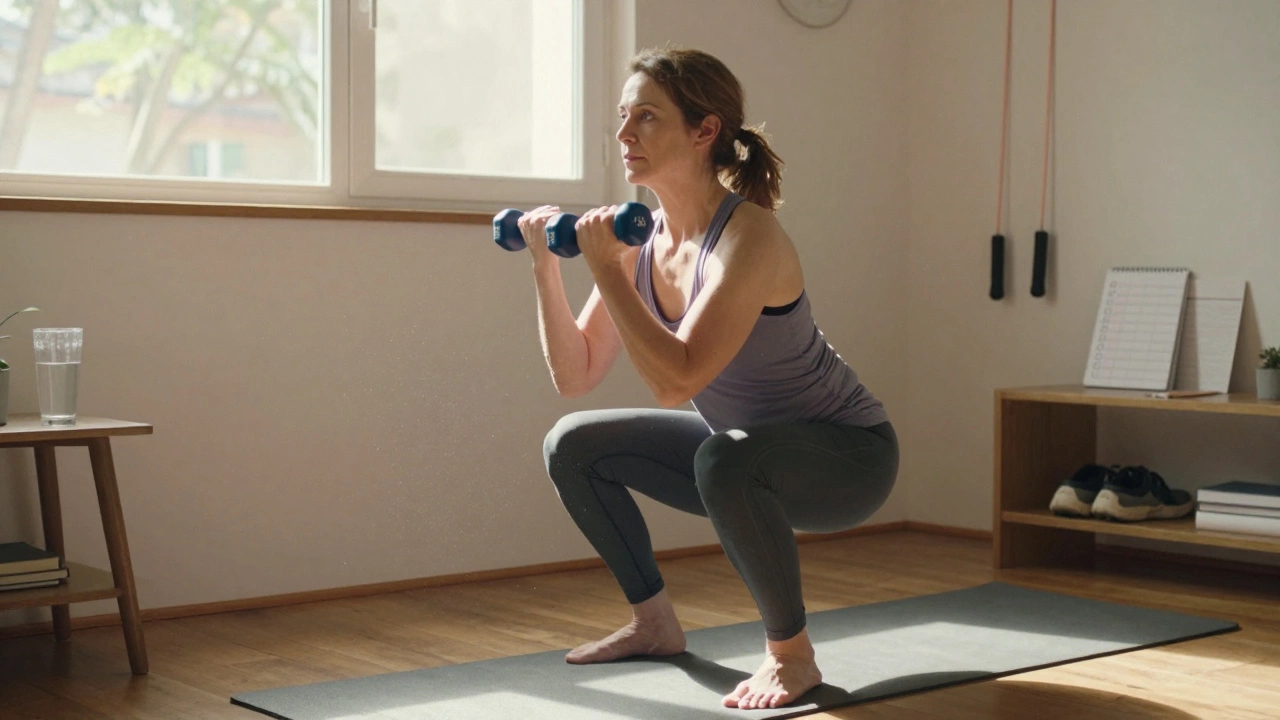
- Bodyweight workouts 3-4 times a week: squats, push-ups, lunges, planks
- Adding resistance bands or dumbbells if you have them-just 10-15 minutes boosts calorie burn
- Sleeping 7-8 hours a night-poor sleep raises cortisol and cravings
- Eating protein and fiber at every meal-keeps you full, stabilizes blood sugar
One woman in Sydney, 42, lost 32 pounds in 6 months using just a yoga mat, a pair of dumbbells, and daily walks. She didn’t count calories. She didn’t cut out carbs. She just moved more and ate until she wasn’t hungry-not stuffed. That’s the pattern.
Your Body Isn’t the Problem-Your Routine Is
Most people think they need to work out harder. They don’t. They need to move more often. Sitting all day kills fat loss faster than sugar. Even if you do a 45-minute home workout, then sit for 8 hours, you’re undoing half your effort.
Try this: Set a timer to stand up every 45 minutes. Walk in place for 2 minutes. Stretch. Grab a glass of water. That’s 16 extra minutes of movement a day. Over a month? That’s over 8 hours of activity. It adds up.
And don’t underestimate the power of small changes. Swap soda for sparkling water. Take the stairs. Park farther away. These aren’t workouts-they’re lifestyle upgrades. And they’re what make the difference between losing 30 pounds and keeping it off.
How to Track Real Progress
Don’t just weigh yourself. The scale lies. You could be losing fat and gaining muscle-and the number won’t change. That’s progress.
- Take weekly photos-same lighting, same clothes
- Measure your waist, hips, and thighs every two weeks
- Notice how your clothes fit
- Track energy levels and sleep quality
One man lost 35 pounds over 7 months. His weight barely budged for three months. But his waist shrank by 5 inches. He stopped needing a belt. That’s the win. The scale was just noise.
What to Avoid
Here’s what slows you down:
- Skipping meals-it triggers binge cycles
- Overdoing cardio-running 5 days a week without strength work burns muscle
- Following trendy diets-keto, juice cleanses, 5:2 fasting-these aren’t habits, they’re temporary fixes
- Comparing yourself to social media-those "before and after" photos are often staged, lit, and edited
You don’t need to be perfect. You need to be consistent. Miss a workout? Eat dessert? That’s fine. Just get back on track the next day. Progress isn’t linear. It’s messy. And that’s normal.
Realistic Timeline Based on Your Starting Point
Here’s what most people experience:
| Starting Weight | Consistency Level | Estimated Time |
|---|---|---|
| Over 250 lbs | High (daily movement + healthy eating) | 4-5 months |
| 200-250 lbs | High | 5-6 months |
| 160-200 lbs | High | 6-8 months |
| Under 160 lbs | High | 8-10 months |
| All weight ranges | Low (inconsistent workouts, poor sleep, emotional eating) | 12+ months or stalled |
Consistency matters more than your starting number. Someone at 220 pounds who walks daily, eats protein, and sleeps well will outpace someone at 280 who only works out once a week.

Home Equipment That Actually Helps
You don’t need a home gym. But a few simple tools make it easier:
- Resistance bands-under $20, great for glutes, arms, and back
- Adjustable dumbbells-one pair replaces ten, perfect for progressive overload
- Yoga mat-for floor work, stretching, and core
- Jump rope-5 minutes burns as much as 15 minutes of jogging
That’s it. No treadmill. No expensive machines. Just movement, consistency, and patience.
When to Expect Plateaus
Around month 3-4, your weight loss will slow. That’s normal. Your body adapts. You’ve lost weight, so you burn fewer calories. That’s physics, not failure.
Break through it by:
- Increasing your daily steps by 1,000-2,000
- Adding one more strength session per week
- Reassessing your portions-maybe you’ve gotten a little looser with snacks
- Getting more sleep-your body repairs fat-burning hormones while you rest
Plateaus aren’t stops. They’re signposts. They’re telling you to tweak, not quit.
What Happens After You Hit 30 Pounds?
Losing 30 pounds changes everything. Your knees feel lighter. Your clothes fit differently. You sleep better. You have more energy. But the real win? You’ve built a new relationship with your body.
Now, you don’t need to "diet" anymore. You just live. You move. You eat when you’re hungry. You stop when you’re full. That’s the goal-not a number on a scale, but a life you don’t have to escape from.
Can I lose 30 pounds in 2 months?
Technically, yes-but it’s not safe or sustainable. Losing 30 pounds in 2 months means dropping 3.75 pounds per week. That’s far above the 1-2 pound range experts recommend. You’d likely lose muscle, experience extreme fatigue, and regain the weight quickly. Healthy fat loss takes time. Rushing it harms your metabolism and mental health.
Do I need to work out every day to lose 30 pounds?
No. You don’t need to work out every day. In fact, rest days are important for recovery. Three to four focused workouts a week-like bodyweight circuits or resistance training-plus daily walking is more effective than daily intense sessions. Consistency over time beats daily burnout.
Can I lose 30 pounds without dieting?
Yes. You don’t need to follow a strict diet. Focus on eating whole foods-vegetables, lean proteins, whole grains, healthy fats-and stop eating when you’re satisfied, not stuffed. Portion control and mindful eating matter more than counting calories. Movement and sleep complete the picture.
Why am I not losing weight even though I’m working out?
You might be eating more than you think. Working out can increase appetite, and people often reward themselves with food. Also, if you’re only doing cardio and skipping strength training, you’re losing muscle-which slows your metabolism. Try adding resistance work, tracking your meals for a week, and checking your sleep and stress levels.
Is it harder to lose 30 pounds as you get older?
It can be. After 35, muscle mass naturally declines, and metabolism slows. Hormonal shifts-especially in women-can make fat loss trickier. But it’s not impossible. Strength training becomes even more important. Lifting weights, even lightly, helps preserve muscle and keeps your metabolism active. Consistency and protein intake are your best tools.
Next Steps
Start today-not tomorrow. Walk for 20 minutes. Drink a glass of water before each meal. Sleep 10 minutes earlier. That’s it. No overhaul. No pressure.
Track your steps for a week. Then add 500 more each week. Pick one bodyweight exercise-squats, push-ups, or planks-and do 3 sets every other day. That’s your plan. No fancy equipment. No confusing rules.
30 pounds isn’t a number. It’s a milestone. It’s the moment you realize you’re stronger than your old habits. And you’re not racing against anyone else. You’re just moving forward-one step, one meal, one day at a time.