

Work-Life Balance Diagnostic Tool
Rate Your Current Status
Drag the sliders to rate how you feel about these aspects of your life right now (1 = Poor, 10 = Excellent).
Your Balance Score
Does your phone buzz with Slack notifications while you are trying to eat dinner? Do you feel guilty when you leave the office at 5 PM, yet exhausted when you finally get home? You are not alone. For many women in 2026, the concept of "balance" feels like a myth sold by productivity gurus who never have to juggle the invisible load of household management alongside high-stakes careers.
The truth is that work-life balance is not a static state you achieve and then keep forever. It is a dynamic negotiation. It changes based on your career phase, your family situation, and your energy levels. For women, this negotiation often comes with extra layers of complexity due to societal expectations around caregiving and emotional labor. But it is manageable if you stop trying to do everything perfectly and start designing a life that actually works for you.
Redefining What Balance Means for You
We need to throw out the old image of the scale. That picture implies that work and life must be equal in weight, every single day. That is impossible. Some days, work takes 80% of your energy because of a big project. Other days, life demands more because a child is sick or you are planning an event. The goal is not daily equality; it is long-term equilibrium.
Work-life integration is a modern approach where professional and personal responsibilities blend seamlessly rather than competing for separate blocks of time. Instead of rigidly separating "work mode" from "home mode," you look at your entire week. Did you prioritize your health? Did you connect with loved ones? Did you deliver value at work? If the answer is yes across the board over a month, you are winning. Stop judging yourself on a daily basis. Look at the bigger picture.
Ask yourself: What does a good life look like for me right now? Is it having time for yoga? Is it being present for my kids? Is it hitting quarterly targets? Your definition will change as you age. Accepting this fluidity removes the pressure to fit into a one-size-fits-all mold.
Setting Boundaries That Actually Stick
Boundaries are not just about saying "no." They are about defining what you say "yes" to. Many women struggle with boundaries because they have been conditioned to be accommodating. We want to be helpful, supportive, and reliable. But without limits, reliability turns into burnout.
Start with digital boundaries. In 2026, technology makes us available 24/7. If you check email during lunch, you are signaling to your brain that work is always urgent. Try this: Turn off non-essential notifications after 6 PM. Use the "Do Not Disturb" feature on your phone. It sounds simple, but it creates a psychological buffer between your job and your rest time.
Next, set communication boundaries with colleagues. It is okay to respond to emails the next morning. Unless your job involves emergency response or global teams with significant time zone differences, most problems can wait until 9 AM. If you are worried about appearing unresponsive, set an auto-responder during off-hours. This manages expectations without you having to repeat yourself every evening.
Also, learn to delegate at home. The "mental load"-the invisible task of remembering birthdays, scheduling doctor appointments, and knowing when the dishwasher detergent runs low-falls disproportionately on women. Share this load explicitly. Create a shared digital calendar or a family command center. Assign specific domains to partners or older children. When you stop being the manager of everyone else’s life, you free up mental space for your own.
Prioritizing Energy Over Time
Time management is outdated. You can manage your clock, but you cannot manage your energy if you are running on empty. Women often push through fatigue because they feel they have too much to do. This leads to decision fatigue and irritability.
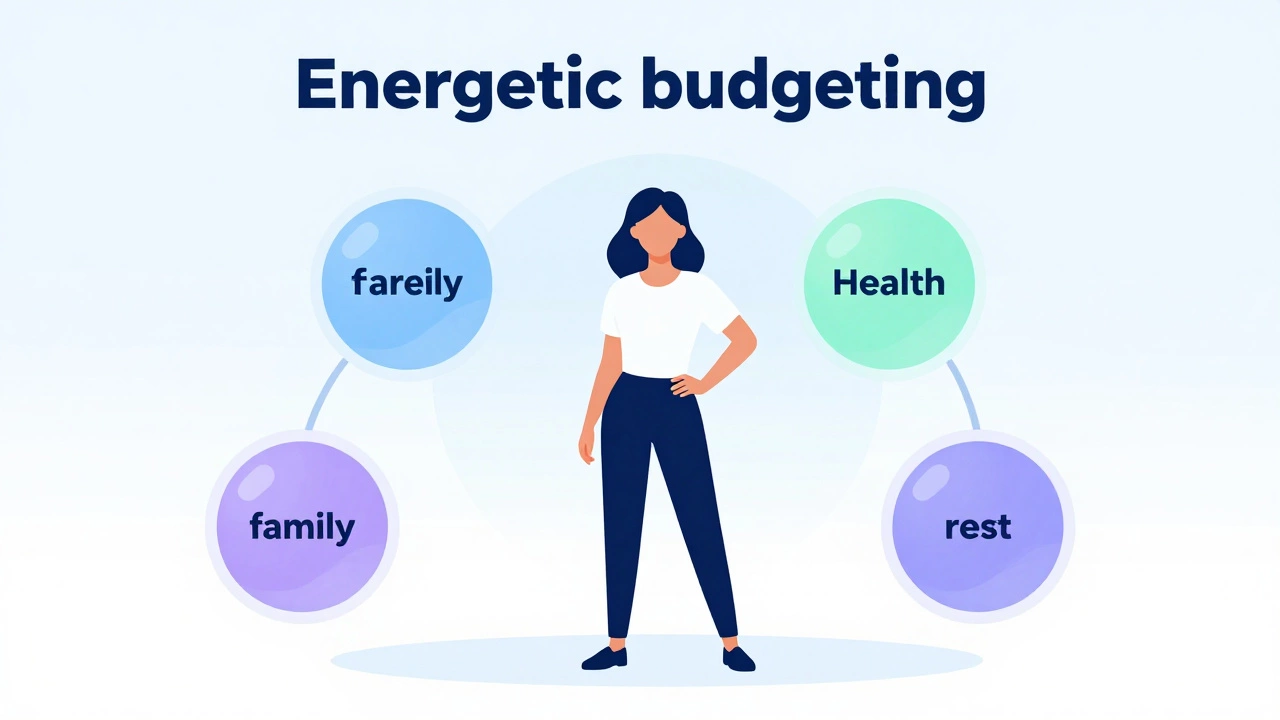
Energetic budgeting is the practice of tracking your physical and mental energy levels throughout the day to schedule demanding tasks when you are most alert. Identify your peak hours. Are you sharp in the morning? Schedule deep work then. Save administrative tasks for your afternoon slump. Protect your sleep fiercely. Seven to eight hours is not a luxury; it is a biological requirement for cognitive function and emotional regulation.
Incorporate micro-breaks. Every 90 minutes, step away from your screen. Walk outside, stretch, or just breathe. These small pauses prevent the accumulation of stress hormones. Also, protect your weekends. If you spend Saturday morning catching up on work, you lose the recovery time needed to recharge for Monday. Treat your rest time as a non-negotiable appointment.
Navigating Career Ambition Without Guilt
Guilt is a silent killer of work-life balance. Women often feel guilty for pursuing ambitious career goals, fearing they are neglecting their families. Conversely, they feel guilty for prioritizing family, worrying they are falling behind professionally. This double bind is exhausting.
Recognize that ambition and care are not mutually exclusive. You can want a promotion and also want to attend your child’s school play. Reframe your narrative. Instead of thinking, "I am selfish for working late," think, "I am modeling hard work and dedication for my family." Or, "I am providing financial stability and opportunities for my loved ones."
Communicate your goals clearly to your employer. In 2026, flexible work arrangements are more common, but you still have to advocate for them. If you need remote work days to handle childcare, ask for them. Frame it in terms of productivity. "I am most effective when I can focus without commute interruptions." Most managers care about results, not hours logged. Show them you deliver.
Also, build a support network. Find mentors who have navigated similar challenges. Join groups for working women in your industry. Sharing struggles normalizes them and provides practical solutions. You do not have to figure it all out alone.
Practical Tools for Daily Execution
Theory is great, but how do you implement this on a Tuesday afternoon when chaos reigns? Here are concrete tools:
- The Weekly Review: Spend 15 minutes every Sunday planning your week. Block time for work, family, and self-care. If it is not on the calendar, it likely won’t happen.
- The Two-Minute Rule: If a task takes less than two minutes, do it immediately. This prevents small tasks from piling up into overwhelming clutter.
- Outsource What You Can: If you can afford it, hire help for cleaning, grocery delivery, or meal prep. Buy back your time. Consider whether spending $50 on a cleaner saves you five hours of stress. For many, the answer is yes.
- Say No Gracefully: Practice scripts. "I appreciate you asking, but I don’t have capacity right now." You do not need to justify your refusal. A simple no is complete.
| Pitfall | Why It Fails | Better Approach |
|---|---|---|
| Multitasking | Reduces efficiency and increases errors | Single-tasking with focused intervals |
| Overcommitting | Leads to burnout and resentment | Strategic prioritization and delegation |
| Ignoring Signals | Physical and mental health deteriorate | Regular self-check-ins and rest breaks |
| Perfectionism | Wastes time on diminishing returns | Good enough mindset for low-stakes tasks |

Handling Social Expectations
Society often judges women harshly for their choices. If you work too much, you are a bad mother or partner. If you work too little, you are not ambitious enough. These judgments are external noise. Tune them out.
Focus on your values. What matters to you? Connection? Achievement? Creativity? Align your actions with these values. When you live authentically, criticism loses its power. Surround yourself with people who support your journey. Distance yourself from those who constantly criticize your choices.
Remember, comparison is the thief of joy. Social media shows highlight reels, not reality. Do not compare your behind-the-scenes struggles with someone else’s curated perfection. Focus on your own progress.
Building Resilience for the Long Haul
Work-life balance is not a destination; it is a practice. There will be seasons where work dominates. There will be seasons where life demands more. Be flexible. Adapt. Forgive yourself for imperfect days.
Invest in your resilience. Exercise regularly. Eat nutritious food. Cultivate hobbies that have nothing to do with your job. These activities restore your sense of self outside of productivity. They remind you that you are more than your output.
Finally, seek professional help if needed. Therapy can provide tools for managing stress and anxiety. Coaches can help you clarify goals and overcome obstacles. There is no shame in getting support. In fact, it is a sign of strength.
You have the power to design a life that feels balanced, fulfilling, and authentic. It requires intention, boundary-setting, and self-compassion. Start small. Make one change today. Then another tomorrow. Over time, these small shifts create a profound transformation.
How do I stop feeling guilty when I take time off?
Guilt often stems from internalized beliefs that you should always be productive. Challenge these thoughts by reminding yourself that rest is essential for sustained performance. Reframe time off as an investment in your well-being, which ultimately benefits your work and relationships. Practice self-compassion and acknowledge that taking breaks is a healthy, necessary part of life.
What if my employer doesn't respect my boundaries?
If your employer consistently ignores your boundaries, it may be a sign of a toxic culture. Document instances of boundary violations. Communicate your needs clearly and professionally. If the behavior continues, consider discussing the issue with HR or exploring other job opportunities. Your well-being is paramount, and no job is worth sacrificing your health.
How can I share the mental load with my partner?
Have an open conversation about household responsibilities. List all tasks and assign them explicitly. Use shared calendars or apps to track commitments. Encourage your partner to take full ownership of their assigned tasks, including planning and execution. Avoid micromanaging. Trust and clear communication are key to equitable sharing.
Is it possible to achieve perfect work-life balance?
Perfect balance is a myth. Life is dynamic, and priorities shift. Aim for harmony rather than perfection. Focus on long-term equilibrium and accept that some days will be unbalanced. Regularly assess your satisfaction and make adjustments as needed. Flexibility and self-compassion are more important than rigid adherence to an ideal.
What are some quick ways to reduce stress during a busy workday?
Try deep breathing exercises, short walks, or stretching breaks. Listen to calming music or nature sounds. Practice mindfulness meditation for a few minutes. Stay hydrated and eat healthy snacks. Disconnect from screens for short periods. These small actions can lower cortisol levels and improve focus.