
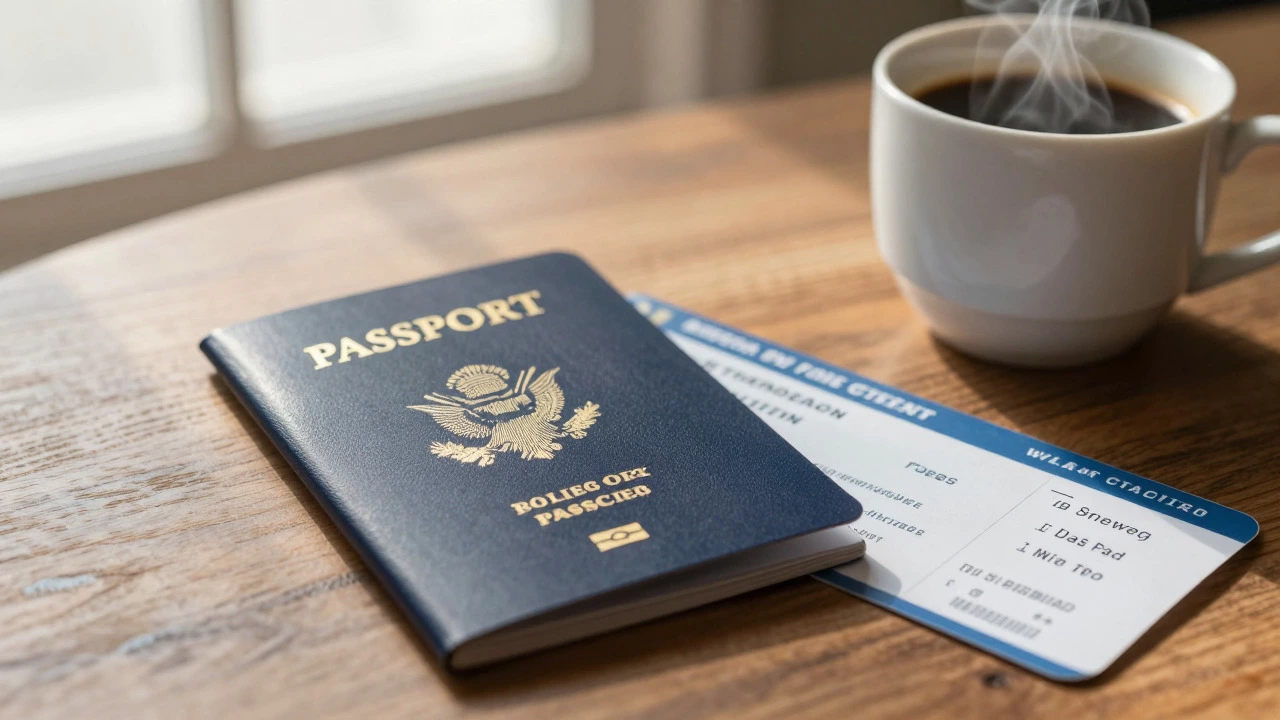
UK Entry Readiness Checker for US Citizens
Complete this step-by-step assessment to ensure you're fully prepared for your UK trip. The tool will check your documentation against current 2026 entry requirements.
Step 1: Passport Information
PASSPORT
United States of America
Step 2: Trip Details
Step 3: Documentation Checklist
Required Documents
Step 4: Additional Considerations
Imagine standing at the gate in New York or Los Angeles, ready to board your flight to London. You’ve got your suitcase packed, your itinerary planned, and maybe even a pint booked in your favorite pub. But wait-do you actually have everything you need to walk through UK border control? For American travelers, the short answer is usually "yes," but the long answer involves some critical details that change depending on how long you stay and what you plan to do.
In 2026, the landscape for US citizens visiting the United Kingdom has shifted slightly. While you still don’t need a traditional visa for short trips, new digital systems like ETIAS is the European Travel Information and Authorisation System, which may impact broader travel planning if you visit Europe before or after the UK are reshaping how we think about documentation. More importantly, the UK has its own specific rules regarding passport validity, financial proof, and return tickets that can get you turned away at the door if you aren’t prepared.
The Golden Rule: Your Passport Must Be Valid
Before you worry about visas or forms, let’s talk about the most important document you own: your passport. Many Americans make the mistake of assuming that as long as their passport hasn’t expired, they’re good to go. That’s not entirely true for the UK.
To enter the United Kingdom, your US passport must be valid for the entire duration of your stay. Unlike many countries in the Schengen Zone (which often require three months of validity beyond your departure date), the UK is strict about this. If your passport expires on October 1st, and you plan to leave the UK on September 30th, you are technically fine. But if you overstay by even one day, you could face issues upon re-entry or future travel bans.
Here’s a pro tip: Check your expiration date immediately. If it’s within six months, renew it now. The US State Department processes routine renewals in about 8-11 weeks, but expedited service takes 5-7 business days. Don’t wait until you’re at the airport.
| Requirement | Details |
|---|---|
| Validity Period | Must be valid for the entire duration of your stay |
| Blank Pages | No specific requirement, but having space is helpful |
| Type | Regular passport book (passport cards are NOT accepted) |
| Child Passports | Children under 16 need their own passport; no longer endorsed on parents' passports |
Do You Need a Visa?
This is the question everyone asks. For most tourists, business travelers, and family visitors, the answer is no. As a US citizen, you are granted permission to enter the UK as a visitor for up to six months without applying for a visa in advance. This falls under the "Standard Visitor" category.
However, "no visa required" doesn’t mean "no rules." You must meet certain conditions:
- You are coming to the UK for tourism, business meetings, academic conferences, or short-term medical treatment.
- You will not work for a UK employer or provide services to the public.
- You will not marry or form a civil partnership (you need a Marriage Visitor Visa for this).
- You have enough money to support yourself without working or accessing public funds.
- You intend to leave the UK at the end of your trip.
If you plan to study a short course (less than 6 months) or participate in sports events, you generally fall under the Standard Visitor rules. But if you want to work remotely for your US company while living in London for three months, things get tricky. While not explicitly banned, border officers may question your intent. It’s safer to declare your remote work status if asked.
The Digital Frontier: Electronic Gateways and eGates
When you arrive at Heathrow, Gatwick, Manchester, or other major airports, you’ll likely use the eGates. These automated border control gates speed up entry for eligible travelers. US citizens aged 18 and older with biometric passports (those with the little camera icon on the cover) can use them.
Using the eGate is straightforward:
- Go to the eGate lane.
- Scan your passport machine-readable zone (the page with your photo).
- Look into the camera for facial recognition.
- Wait for the green light and proceed.
Keep in mind: eGates don’t replace the need for a valid passport or the potential questioning by a Border Force officer. If the system flags anything unusual, you’ll be directed to a manual checkpoint. Always have your return ticket and accommodation details handy, just in case.

Proof of Onward Travel and Financial Means
Border Force officers have the right to ask two simple questions: "How long are you staying?" and "How will you support yourself?" While they don’t always ask, being unprepared can lead to delays or denial of entry.
Onward Travel: Have a confirmed return ticket or a ticket to another destination outside the UK. If you’re traveling open-ended, print out your booking history or show available funds for a last-minute ticket. Airlines sometimes check this before boarding, so don’t risk it.
Financial Proof: There’s no fixed amount, but you should show you can cover accommodation, food, and transport. Bank statements, credit card limits, or cash withdrawals from ATMs in the last few days help. If you’re staying with friends or family, bring a letter from them confirming free accommodation and their address.
Health Insurance and NHS Costs
Unlike some countries, the UK does not require health insurance for entry. However, the National Health Service (NHS) charges overseas visitors for non-emergency care. Emergency A&E visits are free, but follow-up treatments, prescriptions, and hospital stays cost money.
For a two-week trip, comprehensive travel insurance is wise. Look for policies that cover:
- Medical emergencies up to $100,000+
- Repatriation to the US
- Trip cancellation or delay
- Lost luggage
In 2026, with rising healthcare costs globally, skipping insurance is a gamble you probably don’t need to take.
Customs and What You Can Bring In
Once you’re through immigration, you’ll pass through customs. The UK has strict rules on goods:
- Cash: If you’re carrying £10,000 or more (or equivalent in other currencies), you must declare it.
- Food: Most fresh meat, dairy, and fruits are banned. Packaged snacks, chocolate, and coffee are usually fine.
- Duty-Free Allowances: You can bring in limited alcohol and tobacco. Exceeding these means paying duty.
- Prescription Medication: Bring original packaging and a doctor’s note if possible. Some meds legal in the US are controlled in the UK.
When in doubt, use the red channel (declare) rather than the green channel (nothing to declare). Honesty avoids fines.
Special Cases: Working, Studying, or Joining Family
If your trip isn’t just sightseeing, you might need a visa:
- Work Visas: Skilled Worker Visa requires a job offer from a licensed sponsor. Start-up and Innovator visas exist for entrepreneurs.
- Student Visas: Required for courses longer than 6 months. You’ll need proof of acceptance and finances.
- Family Visas: Partner or parent visas require relationship evidence and income thresholds.
Apply well in advance. Processing times vary, but delays are common during peak seasons.
Common Mistakes to Avoid
I’ve seen too many travelers stressed at the border because of small oversights. Here’s what to avoid:
- Assuming your passport card works (it doesn’t).
- Arriving with an expired hotel booking.
- Failing to explain your purpose clearly.
- Bringing prohibited food items.
- Not checking if your travel insurance covers pre-existing conditions.
A quick checklist before you fly saves hours of hassle.
Do US citizens need a visa to visit the UK in 2026?
No, US citizens do not need a visa for stays up to six months for tourism, business, or family visits. You enter as a Standard Visitor.
How long must my US passport be valid to enter the UK?
Your passport must be valid for the entire duration of your stay. There is no additional buffer period required, but renewing if it expires soon is recommended.
Can I work remotely for my US company while in the UK?
Technically, yes, as long as you’re not employed by a UK entity. However, border officers may question your intent. Declare it if asked, and ensure your activities align with visitor rules.
Do I need travel insurance to enter the UK?
It’s not mandatory for entry, but highly recommended. The NHS charges overseas visitors for non-emergency care, and medical bills can add up quickly.
What happens if I overstay my 6-month visitor limit?
Overstaying can lead to removal, fines, and bans on re-entering the UK for up to 10 years. Always track your entry date and leave before your permitted stay ends.
Can children use their parents' passports to enter the UK?
No. Since 2019, all travelers, including infants, must have their own individual passport. Endorsements on parents' passports are no longer valid.
Is ETIAS required for US citizens entering the UK?
No. ETIAS applies to the Schengen Area, not the UK. The UK has its own entry clearance system. However, if you visit Europe before or after the UK, you may need ETIAS for those countries.