

Pushup Hypertrophy & Nutrition Calculator
Your Parameters
Daily Protein Target
To support muscle repair and growth:
*Based on scientific guidelines for resistance training.
Hypertrophy Potential
Analyzing...
Enter your data to see the breakdown.
You wake up, drop to the floor, and start counting. One, two, three... by the time you hit forty, your arms are shaking, but you feel accomplished. You’ve done the work. But here is the hard truth that most fitness influencers won’t tell you: doing exactly 40 pushups every single day will not significantly build large, impressive muscles on its own.
It might make you stronger in the beginning, and it will definitely improve your endurance. But if your goal is visible muscle growth-what scientists call hypertrophy, which is the increase in the size of skeletal muscle fibers through resistance training-then volume alone isn't enough. You need intensity, progression, and recovery.
The Science of Muscle Growth
To understand why 40 pushups might fall short, we have to look at how muscles actually grow. Muscles don’t grow because you exercise them; they grow because you damage them and then repair them with extra protein. This process requires mechanical tension and metabolic stress.
When you do your first set of pushups, your nervous system learns to recruit more muscle fibers. For the first few weeks, you might see some definition simply because your nerves are getting better at signaling your chest (Pectoralis Major) and shoulders (Deltoids) to fire efficiently. This is neural adaptation, not necessarily new tissue creation.
Once your body adapts to the load of 40 pushups, it stops seeing the exercise as a challenge. It becomes efficient. Efficiency is the enemy of growth. If you can easily do 100 pushups without breaking a sweat, you are building endurance, not mass. To build size, you need to lift heavy weights or perform bodyweight movements that are difficult enough to cause micro-tears in the muscle fibers within the last 3-5 reps.
Why "Same Number Every Day" Is a Trap
The biggest problem with the "40 pushups a day" challenge is the lack of progressive overload. Progressive overload is the gradual increase of stress placed on the body during exercise training. Without it, progress stalls.
If you do 40 pushups on Monday, and you’re tired, you might struggle. On Tuesday, you recover slightly. By Friday, 40 pushups might feel easy. Your body has adapted. To keep growing, you need to make the exercise harder over time. You can’t just add more reps forever; eventually, you’ll just be doing cardio for your upper body.
Instead of fixing the number at 40, you should focus on making each rep count. Here is how you apply progressive overload to pushups:
- Decrease Rest Time: Try to complete your total volume in less time.
- Increase Difficulty: Move from standard pushups to diamond pushups (targeting triceps) or archer pushups (unilateral strength).
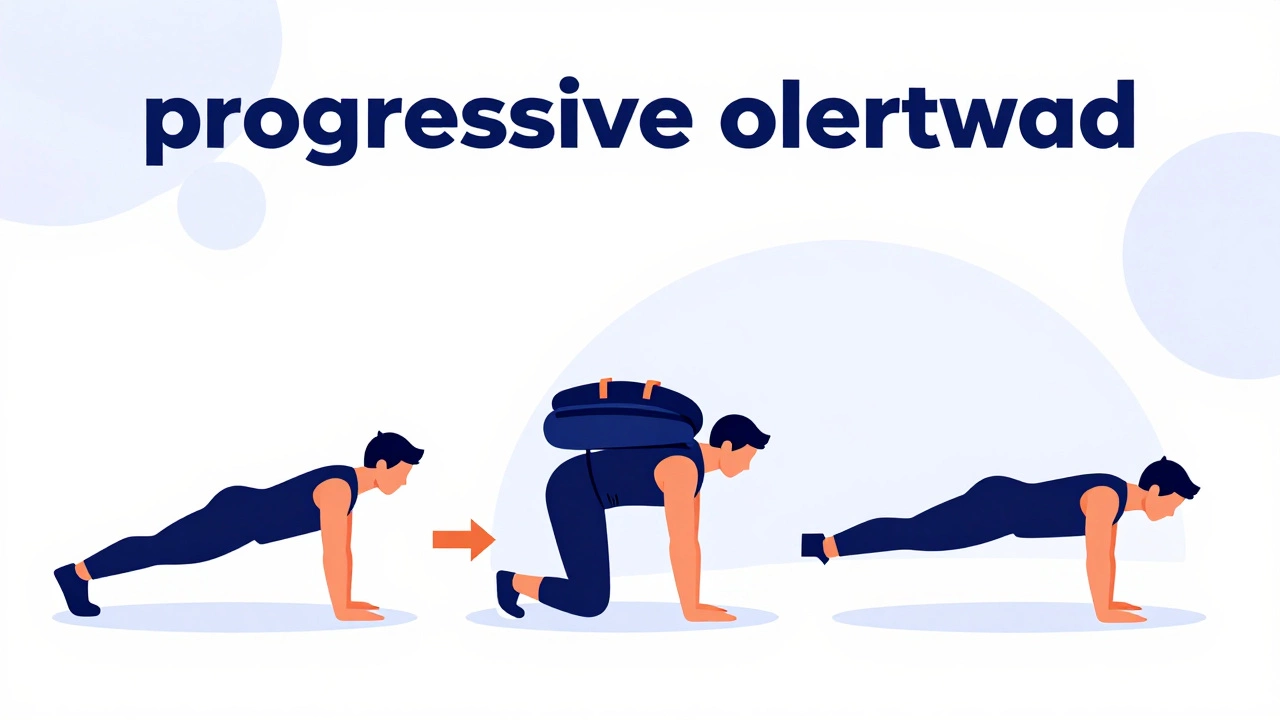
- Add Weight: Put a backpack filled with books on your back. This turns a bodyweight exercise into a weighted resistance exercise.
- Elevate Feet: Place your feet on a chair. This shifts more load onto your chest and shoulders.
Form Matters More Than Reps
I see so many people doing half-reps. They lower their chest an inch, tap the air, and push back up. That doesn’t count. Not only does it minimize muscle engagement, but it also increases the risk of shoulder injury.
A proper pushup requires full range of motion. Your body should form a straight line from your head to your heels. Engage your core and glutes to prevent your hips from sagging. Lower yourself until your chest nearly touches the floor, then push back up explosively. This full stretch and contraction stimulate more muscle fibers than partial movements.
If you cannot do 40 perfect pushups, don’t worry. Do 10 perfect ones. Quality always beats quantity when building muscle. A set of 10 strict, deep pushups with a weighted vest will build more muscle than 40 sloppy, shallow reps.
The Role of Nutrition in Muscle Building
You can do 100 pushups a day, but if you don’t eat enough, you won’t build muscle. Muscle growth is expensive for your body. It requires energy and raw materials. Specifically, it needs protein.
Protein provides the amino acids necessary to repair the micro-tears created during exercise. If you are in a calorie deficit (eating less than you burn), your body will prioritize survival over building new tissue. You might get leaner, but you won’t get bigger.
For muscle growth, aim for a slight caloric surplus. Most guidelines suggest consuming 1.6 to 2.2 grams of protein per kilogram of body weight daily. So, if you weigh 70kg, you need roughly 112-154 grams of protein a day. Sources like chicken breast, eggs, lentils, tofu, and Greek yogurt are excellent choices.
Also, don’t ignore carbohydrates. Carbs fuel your workouts. If you’re too tired to perform high-quality pushups because you haven’t eaten enough carbs, you’re sabotaging your gains.
Recovery: When the Magic Happens
Here is another counterintuitive fact: muscles grow while you sleep, not while you train. Training breaks muscle down; rest builds it back up stronger.
If you do 40 pushups every single day, including weekends, you never give your chest, shoulders, and triceps adequate time to recover. Overtraining leads to plateauing, decreased performance, and potential injury. Your central nervous system also needs rest.
A better approach is to train your pushing muscles 2-3 times a week with full intensity, allowing 48 hours of rest between sessions. On off-days, you can do light activity or focus on pulling exercises (like rows or pull-ups) to maintain balance in your upper body. Neglecting your back while focusing solely on pushups can lead to poor posture and rounded shoulders.

Pushups vs. Other Exercises
Are pushups enough? For general fitness and maintaining a healthy physique, yes. For significant muscle hypertrophy, probably not. Pushups primarily target the anterior chain (front of the body). To build a balanced, aesthetic physique, you need to engage other muscle groups.
| Exercise | Primary Muscles Targeted | Muscle Growth Potential | Equipment Needed |
|---|---|---|---|
| Standard Pushup | Chest, Shoulders, Triceps | Moderate (limited by body weight) | None |
| Bench Press | Chest, Shoulders, Triceps | High (easy to add weight) | Barbell/Bench |
| Pull-Up | Back, Biceps | High | Bar |
| Dips | Chest, Triceps, Shoulders | High | Parallel Bars |
| Plank | Core | Low (stability focused) | None |
To maximize results, combine pushups with pulling movements. Pull-ups or inverted rows are essential. They strengthen your back and biceps, balancing out the chest development from pushups. This symmetry prevents the hunched-over look that comes from overdeveloping the front of the body.
Realistic Expectations: What Will 40 Pushups Actually Do?
Let’s manage expectations. If you are a beginner, doing 40 pushups a day (broken into sets) will likely result in:
- Improved muscular endurance in the upper body.
- Slight toning of the chest and arms, especially if you lose fat simultaneously.
- Better posture if you engage your core correctly.
- Increased confidence and discipline.
However, you will not look like a bodybuilder. You will not see massive pecs or thick triceps unless you combine this habit with heavy lifting, strict nutrition, and genetic predisposition. For most people, 40 pushups is a great maintenance routine, not a transformation protocol.
If you want to accelerate results, treat the pushup like a weightlifting exercise. Track your progress. Add weight. Slow down the eccentric phase (the lowering part) to 3 seconds. These small tweaks turn a simple bodyweight move into a powerful hypertrophy tool.
Can I build muscle with only pushups?
You can build some muscle with only pushups, especially if you are a beginner. However, there is a limit. Once you become strong enough to do many reps easily, you stop building size and start building endurance. To continue building muscle, you must make the pushup harder by adding weight, changing leverage, or increasing difficulty variations like one-arm pushups.
How many pushups a day to build chest?
There is no magic number. It depends on your current strength level. The key is to perform sets close to failure. If you can do 40 pushups easily, do fewer reps with added weight or harder variations. Aim for 3-4 sets where the last 2-3 reps are challenging. Consistency and progressive overload matter more than hitting a specific daily count.
Do pushups burn belly fat?
No exercise spot-reduces fat. Pushups strengthen your core, which can help your abs look tighter if you lose overall body fat. However, to lose belly fat, you need a caloric deficit through diet and cardiovascular activity. Pushups alone will not melt fat off your stomach.
Is it bad to do pushups every day?
Doing light pushups every day is generally safe for most people. However, for muscle growth, daily intense training can hinder recovery. Muscles need rest to repair and grow. If you feel joint pain or persistent soreness, take rest days. A schedule of 3-4 days a week allows for better recovery and potentially faster strength gains.
What are the best pushup variations for muscle growth?
For maximum muscle stimulation, try decline pushups (feet elevated) to target the upper chest, diamond pushups for triceps, and wide-grip pushups for the outer chest. Archer pushups and pseudo-planche pushups are advanced variations that place significant load on the shoulders and chest, promoting hypertrophy even without external weights.