

Mental Energy Drain Calculator
How Much Mental Energy Are You Wasting?
Calculate your daily mental energy drain based on habits that sap focus. The goal is to minimize wasted energy so you can use your full brain capacity.
Your Mental Energy Drain
Your brain works at 85% efficiency. That means 15% of your mental energy is wasted on distractions, stress, and poor habits.
Your Biggest Drain
You’ve heard it a thousand times: we only use 10% of our brain. It’s a myth that won’t die - passed down by movies, self-help gurus, and lazy motivational posters. But here’s the truth: you use 100% of your brain. Every single part has a job. The question isn’t whether you’re using it - it’s whether you’re using it well.
Why the 10% Myth Is Wrong
Neuroscientists have known for decades that there’s no unused portion of the brain. Functional MRI scans show activity across the entire brain even during simple tasks like drinking water or tapping your finger. If you truly only used 10%, losing a single brain region wouldn’t cause major damage - but we know that’s not true. A small stroke in the motor cortex can paralyze an arm. Damage to Broca’s area can steal your ability to speak. Your brain doesn’t have idle zones. It’s more like a city where every street, power line, and sewer runs constantly - even when you’re asleep.The real issue isn’t unused brain tissue. It’s inefficient use. You’re not underutilizing neurons - you’re overloading attention, drowning in distractions, and letting stress drain your mental energy. That’s why you feel mentally exhausted after scrolling for an hour, even though you didn’t solve a single hard problem.
What Actually Drains Your Brain
Your brain doesn’t run on willpower. It runs on energy - glucose, oxygen, and clean neural pathways. When those get clogged, your performance drops. Here’s what’s quietly sapping your mental power:- Constant task-switching - Every time you check your phone between emails, your brain has to reload context. Studies show it takes over 20 minutes to fully refocus after a single interruption.
- Chronic stress - High cortisol levels shrink the prefrontal cortex, the part responsible for decision-making and focus. This isn’t just "feeling stressed." It’s biological erosion.
- Poor sleep - During deep sleep, your brain flushes out toxins like beta-amyloid, linked to brain fog and long-term decline. Missing sleep isn’t laziness - it’s brain pollution.
- Information overload - Your brain isn’t built for 50 tabs, 10 notifications, and 3 social feeds. It evolved to handle a handful of priorities in a stable environment.
- Passive consumption - Watching videos or scrolling doesn’t engage your brain. It lets it coast. Real mental growth happens when you’re solving, creating, or questioning.
How to Actually Use Your Brain Better
You don’t need to train your brain like a muscle. You need to remove the things that slow it down. Here’s how to start:- Protect your focus time like it’s gold - Block 90-minute chunks in your calendar for deep work. Turn off all notifications. Put your phone in another room. This isn’t about discipline - it’s about design. Your brain can’t focus if it’s constantly being pulled in ten directions.
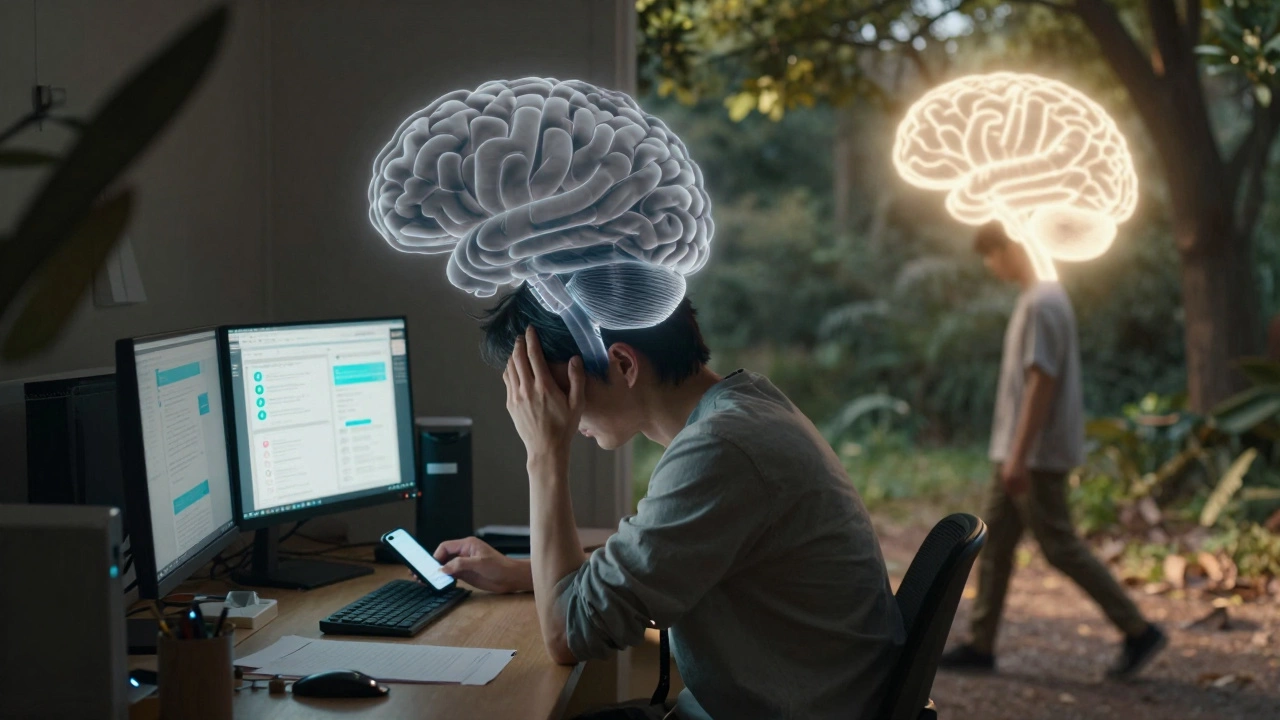
- Move before you think - A 10-minute walk before a meeting or creative task boosts blood flow to the prefrontal cortex by up to 15%. You don’t need to run. Just walk. Outside. Let your eyes land on trees, not screens.
- Sleep like your brain depends on it - because it does - Aim for 7-8 hours. Not 6.5. Not "I’ll catch up on weekends." Consistent, deep sleep is the only time your brain cleans house. Skip it, and you’re storing mental trash.
- Challenge your brain with novelty - Learn a new word every day. Try cooking a dish from a culture you’ve never tried. Take a different route to work. Novelty sparks dopamine and builds new neural connections. Routine kills them.
- Stop multitasking - even "productive" multitasking - Listening to a podcast while washing dishes? Fine. Writing a report while replying to Slack? That’s mental juggling. Your brain isn’t designed for parallel processing. It’s designed for deep, single-task focus.
- Reduce sugar and processed carbs - Blood sugar spikes crash your focus. You’ve felt it: sugar high → brain fog → hunger → irritability. Eat protein, healthy fats, and fiber. Your brain runs better on stable fuel.
- Practice one-minute breathing - When you feel overwhelmed, stop. Breathe in for 4 seconds. Hold for 4. Breathe out for 6. Repeat three times. This simple act lowers cortisol and resets your nervous system. It’s not meditation - it’s emergency brain maintenance.
What Doesn’t Work
There’s a whole industry selling "brain-boosting" supplements, apps, and games. Most of them don’t deliver. Here’s what to ignore:- Lumosity or similar brain games - They make you better at the game. Not at real-life thinking, decision-making, or creativity.
- Memory pills or nootropics - No supplement has been proven to enhance cognition in healthy adults long-term. Some even cause anxiety or insomnia.
- Listening to Mozart while studying - The "Mozart effect" was a misinterpreted 1993 study. It showed a temporary mood boost, not lasting IQ gains.
Real brain improvement isn’t about quick hacks. It’s about consistent habits that reduce friction, not add more noise.
Your Brain Is Not a Computer
People treat their brains like laptops: upgrade RAM, delete cache, reboot. But your brain isn’t a machine. It’s a living, breathing, emotional organ. It remembers feelings. It gets tired from loneliness. It thrives on connection. It forgets when you’re anxious.That’s why the most powerful way to use your brain better isn’t a technique - it’s a lifestyle. Spend time with people who make you feel safe. Sit in silence without your phone. Let yourself be bored. That’s when your brain does its most important work: making connections, solving problems, and dreaming.

Start Small. Think Long-Term.
You don’t need to overhaul your life tomorrow. Pick one thing from the list above and do it for 7 days. Maybe it’s walking before breakfast. Maybe it’s turning off notifications after 7 p.m. Maybe it’s going to bed 30 minutes earlier.Small changes compound. One week of better sleep makes you sharper. Two weeks of focused work builds momentum. Three months of reducing distractions rewires how your brain responds to stress.
You’re not trying to unlock hidden brain power. You’re trying to stop wasting the power you already have.
When to Seek Help
If you’ve tried these steps and still feel mentally drained, foggy, or disconnected, it might be more than just burnout. Persistent brain fog, memory lapses, or emotional numbness can signal underlying issues like thyroid imbalance, vitamin B12 deficiency, or depression. Talk to a doctor. Get blood work. Your brain deserves more than a quick fix.Can you really train your brain to be smarter?
You can’t make your IQ higher through apps or supplements, but you can train your brain to think more clearly, focus longer, and recover faster from stress. That’s not about raw intelligence - it’s about mental efficiency. Better sleep, less distraction, and regular movement improve how your brain performs every day.
Does meditation help your brain work better?
Yes - but not because it makes you "zen." Studies show regular meditation thickens the prefrontal cortex and reduces activity in the amygdala, the brain’s fear center. That means less reactivity, better focus, and calmer decision-making. Even 10 minutes a day helps. You don’t need to sit cross-legged for an hour.
Why do I feel smarter after a good night’s sleep?
While you sleep, your brain sorts through the day’s information, moves short-term memories into long-term storage, and clears out metabolic waste. Without enough sleep, your brain is like a full inbox - nothing gets processed properly. That’s why you feel foggy, forgetful, or easily annoyed when you’re tired.
Is it true that drinking water improves brain function?
Yes - even mild dehydration (as little as 1-2% loss of body weight) can reduce concentration, memory, and reaction time. Your brain is 75% water. If you’re not drinking enough, you’re running on low fuel. Keep a bottle nearby. Sip often. You’ll notice the difference by midday.
Can brain function decline be reversed?
Yes - in many cases. Research shows that people who start exercising, eating better, sleeping well, and reducing stress in their 50s and 60s can improve cognitive test scores within months. It’s never too late to give your brain a better environment. The brain is more adaptable than we used to think.