
Night Skincare Routine Builder
Select your skin type and primary concern to generate a personalized 3-step night routine.
Step 1: Cleanse
Remove the day's grime.
Step 2: Treat
Address specific concerns.
Step 3: Moisturize
Seal in hydration.
Weekly Schedule Recommendation
You spend eight hours sleeping. Your skin doesn't. While you're catching up on dreams, your body is busy repairing damage from the day-UV exposure, pollution, stress. That's why night skincare isn't just about washing off makeup; it's about capitalizing on your skin's natural repair cycle. If you've ever wondered what actually goes on your face before bed (and what's just marketing fluff), you're in the right place.
Here’s the thing: there is no single "perfect" night routine for everyone. Your skin type, age, climate, and specific concerns dictate what works. But the core principles remain the same. You need to clean, treat, and hydrate. Let's break down exactly how to do that without spending a fortune or wasting time.
The Core Principle: Repair Mode
Your skin behaves differently at night than it does during the day. During the day, your barrier is defending against external aggressors like UV rays and free radicals. At night, that defense shifts to internal repair. Blood flow increases, cell turnover speeds up, and collagen production kicks into high gear. This makes nighttime the ideal window for using active ingredients that might be too harsh or unstable in daylight.
Think of it this way: daytime is for protection (sunscreen, antioxidants); nighttime is for renovation (retinoids, exfoliants, heavy hydration). If you skip the night step, you’re leaving half the potential results on the table.
Step 1: The Cleanse (Don’t Skip This)
You cannot treat skin that is still covered in grime. Sunscreen, sebum, dust, and makeup create a barrier that prevents your expensive serums from penetrating. For most people, a double cleanse is the gold standard if you wear makeup or water-resistant sunscreen.
- First Cleanse: Use an oil-based balm or micellar water. Oil dissolves oil. It breaks down sunscreen and makeup without stripping your skin's natural lipids.
- Second Cleanse: Follow with a gentle, pH-balanced foaming or cream cleanser. This removes sweat and residue from the first step.
If you have dry or sensitive skin, a single gentle cream cleanser might suffice. Just ensure it leaves your skin feeling soft, not tight. If your face feels squeaky clean, you’ve stripped your moisture barrier, which leads to irritation later.
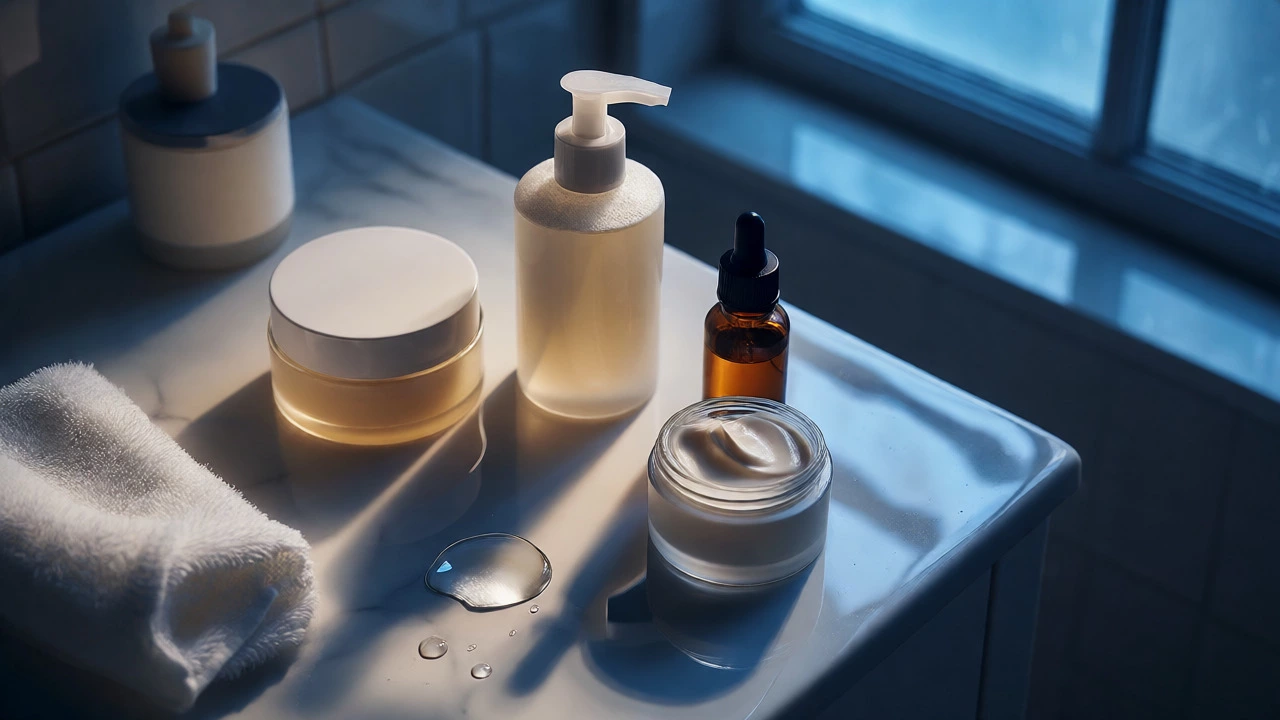
Step 2: Treatment (The Heavy Lifting)
This is where individual needs diverge significantly. What you apply here depends entirely on your primary concern. Here are the three most common categories:
For Anti-Aging and Texture: Retinoids
Retinol is a derivative of Vitamin A, widely considered the most effective topical ingredient for aging and acne. It accelerates cell turnover and boosts collagen. Start low and slow. If you’re new to it, use a 0.3% concentration twice a week, then gradually increase frequency. Never mix retinol with strong acids in the same routine unless you know your skin tolerates it well.
For Hyperpigmentation and Brightness: Vitamin C & Acids
While Vitamin C is often used in the morning, some formulations are stable enough for night use. However, AHAs (like glycolic acid) and BHAs (like salicylic acid) are potent night-time treatments. They dissolve dead skin cells, revealing fresher skin underneath. Use these 2-3 times a week, not daily, to avoid over-exfoliation.
For Hydration and Barrier Repair: Peptides and Ceramides
If your skin is red, flaky, or irritated, skip the actives. Focus on soothing ingredients. Peptides signal your skin to produce more collagen, while ceramides help rebuild the lipid barrier. These are safe to use every single night.
Step 3: Moisturize (Seal It In)
Even oily skin needs moisture at night. Without a moisturizer, your active ingredients can evaporate, and your skin may overproduce oil to compensate for dehydration. Choose a formula based on your skin type:
| Skin Type | Texture Preference | Key Ingredients to Look For |
|---|---|---|
| Dry | Creamy, rich | Hyaluronic Acid, Shea Butter, Squalane |
| Oily/Acne-Prone | Gel or lightweight lotion | Niacinamide, Aloe Vera, Non-comedogenic oils |
| Sensitive | Fragrance-free cream | Ceramides, Colloidal Oatmeal, Centella Asiatica |
| Mature | Balancing cream | Peptides, Retinol (if tolerated), Antioxidants |

Common Mistakes to Avoid
Many people sabotage their progress by trying too hard. Here are the pitfalls I see constantly:
- Over-exfoliating: Using a scrub, an acid toner, and a retinol all on the same night is a recipe for a compromised barrier. Pick one active per night.
- Ignoring the neck: Your neck ages just as fast as your face. Extend your products downward.
- Applying to damp skin incorrectly: Some ingredients (like hyaluronic acid) work best on damp skin to trap water. Others (like retinol) should go on completely dry skin to minimize irritation. Check the label.
- Expecting overnight miracles: Skincare is a marathon. Visible changes from retinoids or acids take 8-12 weeks. Consistency beats intensity.
A Sample Routine for Beginners
If you’re overwhelmed, start with this simple framework. Adjust as your skin adapts.
- PM: Remove makeup with micellar water.
- PM: Wash with a gentle gel cleanser.
- PM: Apply a hydrating serum (optional).
- PM: Apply a pea-sized amount of retinol (start 2x/week).
- PM: Lock it in with a basic moisturizer.
On nights you don’t use retinol, swap it for a vitamin C serum or just focus on extra hydration. Listen to your skin. If it stings, pause the actives and focus on barrier repair for a few days.
Do I really need a separate night cream?
Not necessarily. Many modern moisturizers are designed to be used both day and night. The key difference is usually texture-night creams are often thicker. If your current moisturizer keeps your skin hydrated until morning, stick with it. Save money by using one good product rather than buying two mediocre ones.
Can I use vitamin C at night?
Yes, but it’s less common. Vitamin C is primarily an antioxidant that protects against environmental damage, making it ideal for morning use under sunscreen. However, some derivatives are stable enough for night use and can help with brightening. Just ensure you aren’t mixing it directly with strong acids or retinol in the same layer if you have sensitive skin.
What if my skin gets worse when I start a night routine?
This is often called "purging," especially when starting retinoids or acids. It happens because increased cell turnover brings underlying congestion to the surface faster. Purging typically lasts 4-6 weeks. If you experience redness, itching, or burning instead of breakouts, it’s likely irritation, not purging. Scale back usage immediately.
Is eye cream necessary?
Eye creams are essentially moisturizers formulated for the delicate skin around the eyes. They aren't mandatory. If your regular moisturizer doesn't sting your eyes, you can gently pat it around the orbital bone. Eye creams are worth investing in only if you have specific concerns like puffiness (caffeine helps) or deep crepiness (peptides/retinol help).
Should I wash my face in the morning too?
It depends on your skin type. If you have oily skin, a quick rinse with water or a very gentle cleanser is fine. If you have dry or sensitive skin, splashing with lukewarm water is often enough to remove residual products and sweat. Over-washing can strip natural oils, so adjust based on how your skin feels upon waking.