Rule of 33 Wardrobe Planner
Item Breakdown
How it works
Use this planner to visualize your wardrobe distribution. The goal is to fit your visible wardrobe into 33 items total. Adjust the counts for each category to see how close you are to the limit.
Quick Tips:
- Shoes count as 1 per pair.
- Underwear and socks do not count.
- If over 33, look for duplicates to remove.
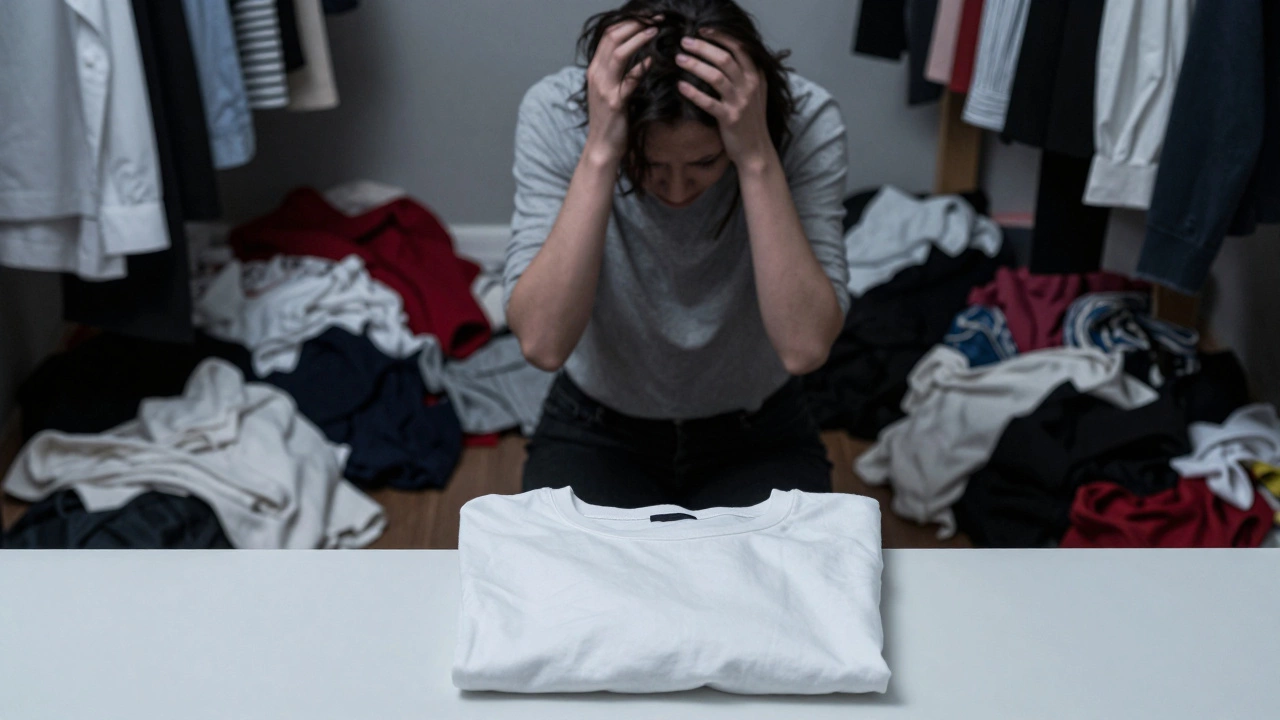
You look into your closet and feel nothing but stress. The door won’t close properly, or worse, it closes but you have no idea what to wear. You own hundreds of items, yet you tell yourself every morning that you have 'nothing to wear.' This is the exact problem Rule of 33 minimalism solves. It’s not just about throwing things away; it’s a specific framework for curating a life with less clutter and more intention.
The concept is simple on the surface: keep only thirty-three items in your entire wardrobe for one year. That includes clothes, shoes, accessories, and outerwear. No jewelry, no underwear, no socks. Just the visible stuff you wear. Why thirty-three? It sounds arbitrary until you realize it forces you to make hard choices. It strips away the noise of consumer culture and leaves you with only what truly serves you.
The Origins and Philosophy Behind the Number
Where did this number come from? The trend gained massive traction through social media challenges, particularly on TikTok and Instagram, around 2021-2022. While there isn’t one single inventor, the philosophy aligns closely with earlier movements like the Capsule Wardrobe, popularized by Susie Faux in the 1970s and later refined by Donna Karan. However, the Rule of 33 adds a strict numerical constraint that makes it a distinct challenge.
The core belief behind the rule is that decision fatigue drains your mental energy. Every time you choose an outfit, you’re making a micro-decision. Multiply that by seven days a week, fifty-two weeks a year, and you’ve got a significant cognitive load. By limiting your options to thirty-three pieces, you automate your style. You know everything works together because you curated them to do so. It’s a form of Mental Wellness disguised as fashion advice.
But why thirty-three and not twenty-five or fifty? Thirty-three is low enough to force elimination but high enough to allow for some variety. With twenty-five items, you might struggle to find options for different weather conditions or occasions. With fifty, the impact of minimalism diminishes. Thirty-three hits a sweet spot where you still feel dressed differently each day, but the selection process takes seconds, not minutes.
How to Start the Rule of 33 Challenge
Starting this challenge can feel intimidating. You don’t need to throw away your current clothes immediately. In fact, experts recommend a phased approach to avoid buyer’s remorse or regret over discarded sentimental items.
- Empty Your Closet: Take everything out. Lay it all on your bed or floor. See the sheer volume of what you own. This visual shock is necessary to reset your perspective.
- The "Keep" Pile: Go through each item. Ask yourself three questions: Does it fit perfectly right now? Do I love wearing it? Has it been worn in the last six months? If the answer is yes to all three, put it in the Keep pile.
- Count Down: Count your Keep pile. If you have more than thirty-three items, start eliminating. Look for duplicates. Do you really need five black t-shirts? Keep the best two. Remove the rest.
- Identify Gaps: Once you hit thirty-three, look at what’s missing. Do you lack a coat for winter? A pair of dress shoes for work? Note these gaps but don’t buy anything yet.
- The Quarantine Box: For items you aren’t sure about, put them in a box. Seal it and date it. If you don’t open the box in three months, donate the contents without looking inside.
This method ensures you aren’t just discarding value. You are actively choosing quality over quantity. The goal is to build a wardrobe where every piece earns its place.
What Counts Toward the Thirty-Three?
One of the biggest points of confusion is defining what constitutes an "item." Clarity here prevents cheating yourself. Here is the standard breakdown accepted by most practitioners of the Rule of 33:
- Clothing: Tops, bottoms, dresses, jumpsuits, skirts, pants, shorts, shirts, blouses.
- Shoes: Sneakers, boots, heels, sandals, flats. Each pair counts as one item.
- Outerwear: Coats, jackets, blazers, cardigans (if worn as outer layers).
- Accessories: Belts, scarves, hats, gloves, handbags. Small items like hair clips usually don’t count, but large statement pieces do.
Exclusions are equally important. Underwear, sleepwear, workout gear (unless you wear it casually), and jewelry are typically excluded. Some people also exclude seasonal items, keeping a separate "winter box" and "summer box," but purists argue that defeats the purpose of the challenge. The true test is living with thirty-three items regardless of the season. This forces you to think about layering and versatility.
| Category | Item Count | Examples |
|---|---|---|
| Tops | 8 | T-shirts, button-downs, sweaters |
| Bottoms | 6 | Jeans, trousers, skirts |
| Dresses/Jumpsuits | 4 | Linen dress, little black dress |
| Outerwear | 3 | Denim jacket, wool coat, blazer |
| Shoes | 5 | Sneakers, boots, loafers, sandals |
| Accessories | 7 | Bags, belts, scarves, hats |
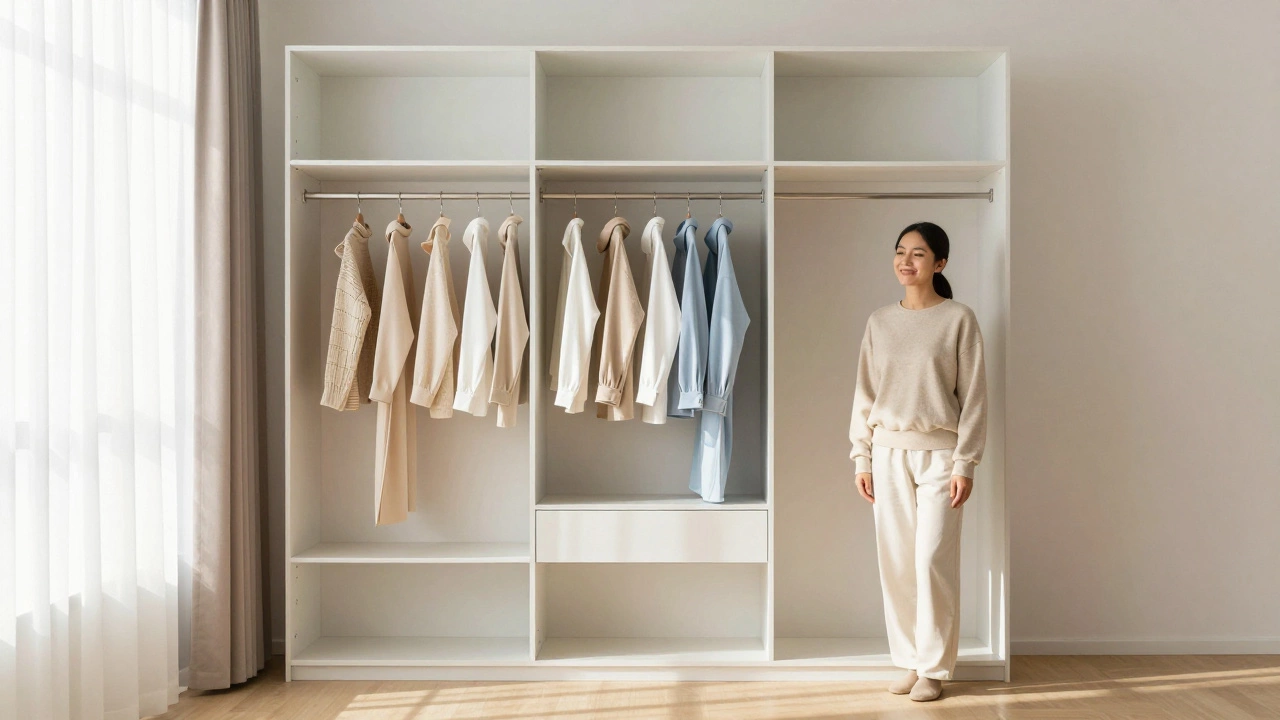
This distribution is flexible. If you live in a tropical climate, you might need more tops and fewer coats. If you work in corporate finance, you’ll likely have more blazers and fewer sneakers. Adjust the ratios to fit your lifestyle, but keep the total at thirty-three.
Benefits Beyond the Closet
Why go through the hassle of counting every sock and shirt? The benefits extend far beyond saving space in your closet. First, there’s the financial impact. When you stop buying impulse purchases, you save money. According to data from Sustainable Living advocates, the average person spends thousands of dollars annually on clothing they rarely wear. The Rule of 33 breaks this cycle by forcing you to evaluate the cost-per-wear of each item before acquiring it.
Second, there’s the environmental angle. The fashion industry is one of the largest polluters globally. Fast fashion relies on constant consumption. By adopting a minimalist wardrobe, you reduce your demand for new resources. You become a conscious consumer, opting for higher quality, durable pieces rather than cheap, disposable trends. This aligns with the principles of Sustainable Fashion, which emphasizes longevity and ethical production.
Third, and perhaps most importantly, is the psychological relief. Decision fatigue is real. Studies in behavioral psychology show that reducing trivial decisions frees up mental bandwidth for more important tasks. When you spend five minutes getting dressed instead of thirty, you start your day with clarity and confidence. You know you look good because every piece in your closet was chosen deliberately.
Common Pitfalls and How to Avoid Them
Even with the best intentions, many people fail the Rule of 33 challenge. Here are the most common mistakes and how to fix them.
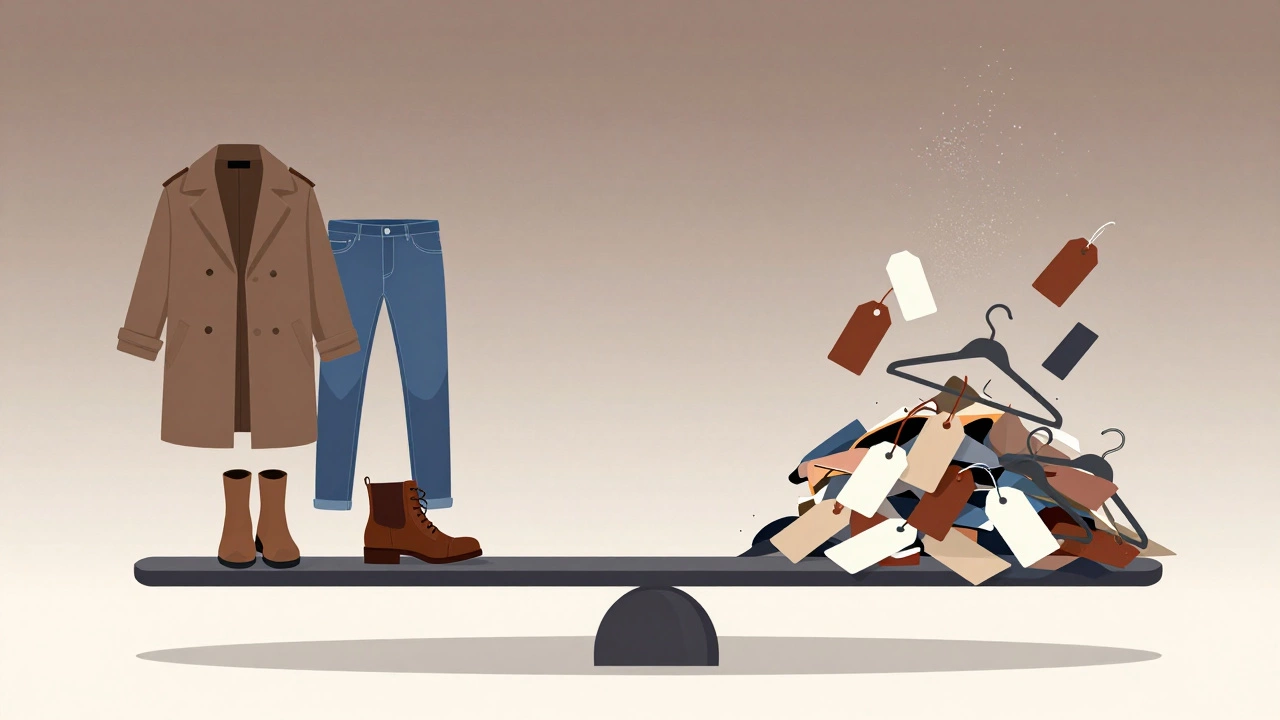
Mistake 1: Ignoring Seasonality. If you live in a place with four distinct seasons, thirty-three items might feel insufficient. You can’t wear linen shorts in January. Solution: Embrace layering. Invest in versatile pieces like a trench coat that works over summer dresses and winter sweaters. Alternatively, allow yourself a small seasonal swap, but keep the core wardrobe intact.
Mistake 2: Keeping "Just in Case" Items. You hold onto a formal gown because you might get invited to a wedding someday. Solution: Rent it when needed. Rental services exist for a reason. Owning an item that sits in your closet for years violates the spirit of minimalism. If you haven’t worn it in a year, let it go.
Mistake 3: Neglecting Fit. You keep clothes hoping to lose weight or gain muscle. Solution: Dress your current body. Clothes should fit well today. If they don’t, alter them or donate them. Holding onto ill-fitting clothes creates daily frustration and undermines your confidence.
Mistake 4: Buying Low-Quality Replacements. To fill the thirty-three slots, you buy cheap fast-fashion items. Solution: Prioritize quality. Spend more on fewer items. A $100 pair of jeans that lasts five years is cheaper than five $20 pairs that fall apart after six months. Check fabric composition, stitching, and hardware before purchasing.
Adapting the Rule for Real Life
Rigidity can be counterproductive. The Rule of 33 is a guideline, not a law. If thirty-three feels too restrictive, try forty. If you want more challenge, try twenty-five. The key is consistency and intentionality.
For parents, the rules often differ. Kids grow out of clothes quickly, and their needs change rapidly. Applying the Rule of 33 to children’s wardrobes requires flexibility. Focus on durability and ease of care. For professionals, consider your workplace dress code. If you need ten different suits for client meetings, adjust your category limits accordingly.
Some people adopt a hybrid approach. They keep a core of thirty-three everyday items and maintain a separate "occasion" box for weddings, galas, or interviews. This allows for special events without cluttering daily life. Just be honest with yourself. If you open the occasion box once a year, is it worth the storage space?
Building a Sustainable Style Identity
Ultimately, the Rule of 33 helps you discover your personal style. When you remove the excess, you see what you actually love to wear. Maybe you realize you prefer neutral tones and simple lines. Or maybe you thrive on bold colors and patterns. Knowing your style preferences saves time and money in the long run.
Start by identifying your color palette. What colors make you look vibrant? Stick to those shades. Next, define your silhouettes. Do you prefer fitted or loose cuts? Tailored or casual? Answering these questions makes shopping easier. You walk into a store knowing exactly what fits your aesthetic and functional needs.
This process also encourages creativity. With limited options, you learn to mix and match in new ways. That scarf you thought was boring becomes a statement piece when paired with a plain white tee. You become a stylist for yourself, finding joy in combination rather than accumulation.
The journey doesn’t end after one year. Many people continue the practice indefinitely. Others use it as a annual reset. Every spring, they purge their closet, reassess their lives, and rebuild their wardrobe. It becomes a ritual of renewal, a chance to shed not just old clothes, but old habits and mindsets.
Does underwear count towards the Rule of 33?
No, underwear, socks, and sleepwear are generally excluded from the count. The rule focuses on visible clothing items that contribute to your daily outfit choices. Including basics would make the challenge nearly impossible for most people.
Can I include workout clothes in my 33 items?
It depends on how you use them. If you wear gym clothes exclusively for exercise, they can be excluded. However, if you wear athleisure outfits for errands, coffee dates, or casual outings, they should count toward your total. Consistency is key.
What if I need clothes for a special event?
You have two options. First, rent the outfit for the event. Second, create a separate "occasion" box outside your main wardrobe. Just ensure you don't let this box become a dumping ground for unused items. Keep it strictly for rare, specific needs.
Is the Rule of 33 suitable for all climates?
Yes, but it requires strategic planning. In extreme climates, focus on layering. A lightweight base layer, a warm mid-layer, and a protective outer layer can adapt to various temperatures. Choose fabrics that regulate temperature well, such as merino wool or linen blends.
How do I handle gifts or free items?
If you receive a clothing gift, you must decide whether it fits your Rule of 33 criteria. If it does, you can add it and remove another item to stay within the limit. If it doesn't fit your style or needs, politely decline future similar gifts or donate the item after thanking the giver. Gratitude doesn't require keeping unwanted objects.