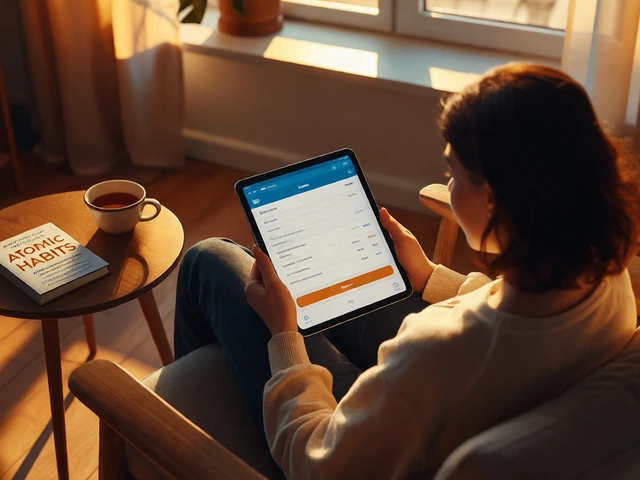

Work-Life Balance & Burnout Risk Checker
Daily Habits & Boundaries Audit
Select all statements that apply to your current situation.
Complete the checklist and click analyze to see your work-life balance score and personalized advice.
Picture this: It’s 8:30 PM on a Tuesday. You’re sitting at your kitchen table in Sydney, laptop open, staring at an email you’ve been meaning to send since Monday morning. Your partner is asking if you want to order dinner, but you can’t focus. Your shoulders are tight, your mind is racing, and you feel that familiar knot of guilt because you haven’t done the dishes, exercised, or actually relaxed all day. Sound familiar?
You are not alone. In 2026, the concept of work-life balance is the dynamic equilibrium between professional responsibilities and personal well-being, allowing individuals to thrive in both spheres without chronic stress or burnout. But let’s be honest-most of us have it wrong. We think balance means splitting our time 50/50 between work and life. That’s a myth. Real balance isn’t about equal hours; it’s about energy management, boundaries, and intentionality.
The Myth of Perfect Equilibrium
We’ve been sold a lie. For decades, corporate culture whispered that if you just worked harder, stayed later, and answered emails at midnight, you’d eventually “have it all.” Spoiler alert: you don’t. What you get is exhaustion, resentment, and health issues. The Australian Bureau of Statistics reported in early 2025 that over 40% of workers experienced high levels of psychological distress linked to job demands. That’s not resilience-that’s a system failure.
Healthy work-life balance doesn’t mean every day looks the same. Some weeks, work will demand more (launching a product, meeting a deadline). Other times, life takes priority (a sick child, a family event, a mental health day). The key is flexibility within structure. Think of it like surfing: you adjust your stance based on the wave, not by trying to stand still in the ocean.
Signs You’re Off-Balance (And How to Spot Them Early)
Burnout doesn’t hit overnight. It creeps in through small, ignored signals. Here’s what to watch for:
- Chronic fatigue: You wake up tired, even after eight hours of sleep.
- Irritability: Small annoyances trigger disproportionate reactions.
- Loss of interest: Hobbies you once loved now feel like chores.
- Guilt when resting: You feel productive only when working.
- Physical symptoms: Headaches, digestive issues, or muscle tension with no medical cause.
If three or more of these ring true, your balance is off. Don’t wait until you break down. Address it now.
Building Boundaries That Actually Stick
Boundaries aren’t walls-they’re gates. They decide who and what gets access to your time and energy. Without them, work bleeds into life, and vice versa. Here’s how to build effective ones:
- Define non-negotiables: Identify 2-3 daily activities that protect your well-being (e.g., no screens after 9 PM, lunch away from desk, Sunday mornings offline).
- Communicate clearly: Tell colleagues and family your availability. Use phrases like, “I’m available until 5 PM, then I’m offline until tomorrow.”
- Use technology wisely: Turn off non-urgent notifications. Schedule email sends. Use app blockers during focus or rest periods.
- Respect your own rules: If you say you’ll stop working at 6 PM, stop. Even if it feels uncomfortable at first.
In hybrid and remote work environments-which dominate much of Australia’s tech and creative sectors in 2026-boundaries are even more critical. When your home is your office, the line blurs fast. Create physical separation if possible: a dedicated workspace, a closing ritual (shut laptop, tidy desk, change clothes), and a start-of-day routine that signals “work mode” has begun.

Energy Management Over Time Management
Time is finite. Energy is renewable-if managed correctly. Most productivity advice focuses on squeezing more tasks into fewer hours. That’s backwards. Instead, track your energy peaks and valleys.
Are you sharpest in the morning? Schedule deep work then. Do you slump at 3 PM? Plan admin tasks or short walks then. Are you creative in the evening? Use that time for brainstorming or learning.
Try this experiment for one week: Log your energy levels hourly (1-10 scale). At the end of the week, match your most demanding tasks to your highest energy windows. You’ll likely complete more with less stress.
The Role of Recovery in Sustainable Performance
Recovery isn’t laziness-it’s performance optimization. Athletes know this. So should knowledge workers. Without adequate recovery, cognitive function declines, decision-making suffers, and creativity stalls.
Effective recovery includes:
- Sleep: 7-9 hours nightly. Non-negotiable for memory consolidation and emotional regulation.
- Movement: 30 minutes of moderate activity daily. Walking counts. Dancing counts. Stretching counts.
- Digital detoxes: Regular breaks from screens. Try a screen-free Saturday morning.
- Social connection: Meaningful interactions with friends, family, or community groups.
- Mental downtime: Meditation, journaling, reading fiction, or simply doing nothing.
A 2024 study published in the Journal of Occupational Health Psychology found that employees who took regular micro-breaks (5-10 minutes every 90 minutes) reported 27% lower stress levels and 18% higher task accuracy than those who worked continuously.
Navigating Workplace Culture in 2026
Your personal efforts matter, but so does your environment. Unfortunately, many workplaces still glorify hustle culture. Emails sent at 10 PM become expected responses. Meetings scheduled outside core hours become normalized.
How do you push back?
- Model the behavior: Reply to late-night emails in the morning. Let others see you logging off on time.
- Advocate collectively: Join or form employee resource groups focused on well-being. Strength in numbers.
- Choose employers wisely: During interviews, ask specific questions: “What does a typical workweek look like?” “How does the team handle urgent requests after hours?”
In Australia, the Fair Work Ombudsman continues to enforce right-to-disconnect laws in certain states, giving legal backing to boundary-setting. Know your rights.
Practical Tools for Daily Balance
Here’s a simple framework to implement today:
| Time Block | Action | Purpose |
|---|---|---|
| 6:30-7:30 AM | Morning routine (no phone) | Set intention, reduce cortisol |
| 9:00-11:30 AM | Deep work block | High-focus tasks during peak energy |
| 12:00-1:00 PM | Lunch away from screen | Mental reset, digestion support |
| 3:00-3:15 PM | Micro-break walk | Boost circulation, clear headspace |
| 5:30-6:00 PM | Closing ritual | Signal end of workday, transition to personal time |
| 8:00-9:00 PM | No-work zone | Protect evening wind-down, improve sleep quality |
Adjust times to fit your rhythm. The goal isn’t perfection-it’s consistency.
When to Seek Professional Support
Sometimes, self-help isn’t enough. If you’re experiencing persistent anxiety, depression, or physical symptoms despite making changes, talk to a professional. In Australia, services like Headspace, Beyond Blue, and private psychologists offer evidence-based support. Many employers provide Employee Assistance Programs (EAPs)-use them. There’s no shame in getting help; there’s strength in recognizing when you need it.
Final Thoughts: Balance Is a Practice, Not a Destination
You won’t achieve perfect work-life balance. And that’s okay. Aim for progress, not perfection. Reassess monthly. Tweak as needed. Celebrate small wins. Remember: your worth isn’t tied to your productivity. You are human first, worker second.
Start small. Pick one boundary to enforce this week. One recovery habit to add. One conversation to have with your manager or family. Build from there. Your future self will thank you.
What is the ideal ratio of work to personal time?
There is no universal ideal ratio. A healthy balance depends on your role, life stage, and energy levels. For most people, aiming for 40-50 hours of work per week (including commute and prep) leaves room for rest, relationships, and hobbies. Adjust based on seasonality-some months require more work, others allow more leisure.
How do I set boundaries with a demanding boss?
Frame boundaries as performance enhancers. Say, “To deliver my best work, I need to focus during core hours and disconnect afterward to recharge.” Provide examples of how rested you perform better. If resistance continues, document patterns and consider HR mediation or exploring other roles.
Can remote work improve work-life balance?
It can-but only with intentional structure. Remote work eliminates commute time but risks blurring lines between home and office. Success requires defined workspaces, strict schedules, and deliberate disconnection rituals. Without these, remote work often leads to longer hours and increased stress.
What should I do if I’m already burned out?
Prioritize immediate recovery. Take sick leave if needed. Reduce workload temporarily. Cut non-essential commitments. Seek therapy or counseling. Avoid pushing through-burnout worsens with continued strain. Once stabilized, rebuild routines gradually with stronger boundaries.
How can parents maintain work-life balance?
Parents face unique challenges. Focus on presence over perfection. Negotiate flexible hours with employers. Share household duties equitably. Accept that some days will be chaotic-and that’s normal. Protect at least one hour daily for yourself, even if it’s while kids nap or after bedtime.
Is it okay to say no to extra projects?
Absolutely. Saying no protects your capacity to say yes to what truly matters. Phrase refusals positively: “I’d love to help, but my current load limits my ability to contribute effectively right now.” Offer alternatives if possible, like deferring to next quarter or suggesting another team member.
How do I measure if my work-life balance is improving?
Track subjective well-being weekly. Rate stress, energy, satisfaction, and sleep quality on a 1-10 scale. Look for trends over 4-6 weeks. Also monitor objective markers: fewer sick days, improved relationships, consistent exercise, and reduced weekend work. Progress isn’t linear-celebrate incremental gains.
What role does diet play in work-life balance?
Diet directly impacts energy, mood, and cognition. Skipping meals or relying on caffeine crashes undermine focus and patience. Prioritize whole foods, hydration, and regular meal times. A balanced diet supports sustained energy throughout the day, reducing reliance on stimulants and improving emotional resilience.
Should I quit my job if balance is impossible?
Consider it if structural issues persist despite advocacy. Evaluate alternatives: internal transfer, part-time role, different company, or career pivot. Financially prepare before leaving. Sometimes, changing environments is necessary for long-term well-being. Your health matters more than any single position.
How can teams collectively improve work-life balance?
Teams succeed together. Establish shared norms: no after-hours messaging unless urgent, respect PTO, rotate meeting times across time zones, and celebrate non-work achievements. Leaders must model balance visibly. Regular check-ins on workload and morale prevent systemic overload. Culture shifts happen when everyone participates.