
Walking Fat Loss Calculator
Your Walking Fat Loss Estimate
Calculate your potential belly fat loss with regular walking based on your personal factors. This tool uses the science from the article to give you realistic expectations.
Estimated Results
Note: Results are estimates based on science from the article. Actual results vary based on individual metabolism, diet, and other factors.
You’ve heard it a hundred times: walking is good for you. But when you’re staring at your reflection, wondering if those extra steps around the block are actually doing anything about your belly fat, it’s hard to stay motivated. The truth? Walking alone won’t magically melt belly fat overnight-but it’s one of the most effective, underrated tools you already have access to. And if you’re doing it right, it can absolutely help you lose stubborn fat around your midsection.
How Belly Fat Works (And Why It’s Stubborn)
Belly fat isn’t just one thing. There’s subcutaneous fat-the soft layer you can pinch-and visceral fat, the deeper fat that wraps around your organs. Visceral fat is the real concern. It’s linked to insulin resistance, inflammation, and higher risk for heart disease and type 2 diabetes. And yes, it’s the kind most people want to lose.
Here’s the catch: you can’t spot-reduce fat. No crunches, no waist trainers, no magic supplements will target belly fat specifically. Your body decides where to pull fat from based on genetics, hormones, and overall energy balance. That means to lose belly fat, you need to lose fat overall. Walking helps by creating a calorie deficit without stressing your body like high-intensity workouts might.
How Many Calories Does Walking Burn?
A 70kg person walking at a moderate pace (5 km/h) for 30 minutes burns about 150 calories. That might not sound like much, but here’s the thing: walking is sustainable. You can do it every day, even on days you feel tired. Over a week, that’s 1,050 calories burned. Over a month? Over 4,000 calories. Since one kilogram of fat equals roughly 7,700 calories, that’s nearly half a kilo of fat lost-just from walking, no diet changes needed.
And if you increase your speed to 6.5 km/h or add hills? You can hit 200-250 calories per 30 minutes. That’s the same as a light jog, but without the joint stress. In Sydney, where the weather is mild most of the year, walking to the local café, the bus stop, or the park becomes part of your routine-not a chore.
Walking Alone Isn’t Enough-Here’s How to Make It Work
If you’ve been walking for months and your belly hasn’t budged, you’re probably doing it wrong. Walking for weight loss isn’t about steps-it’s about intensity, consistency, and pairing it with the right habits.
- Walk fast enough to raise your heart rate. You should be able to talk but not sing. This is called the “conversational pace” and it’s the sweet spot for fat burning.
- Walk for at least 45 minutes most days. Short walks help, but fat loss needs longer sessions. Aim for 5-6 days a week.
- Add inclines or stairs. A 5% incline boosts calorie burn by 30-50%. Even a small hill on your route makes a difference.
- Walk after meals. A 15-20 minute walk after lunch or dinner helps lower blood sugar spikes, which reduces fat storage-especially around the belly.
- Track your progress. Use a simple pedometer or phone app. Don’t obsess over steps, but do notice trends. If you’re stuck at 8,000 steps a day for weeks, it’s time to push higher.
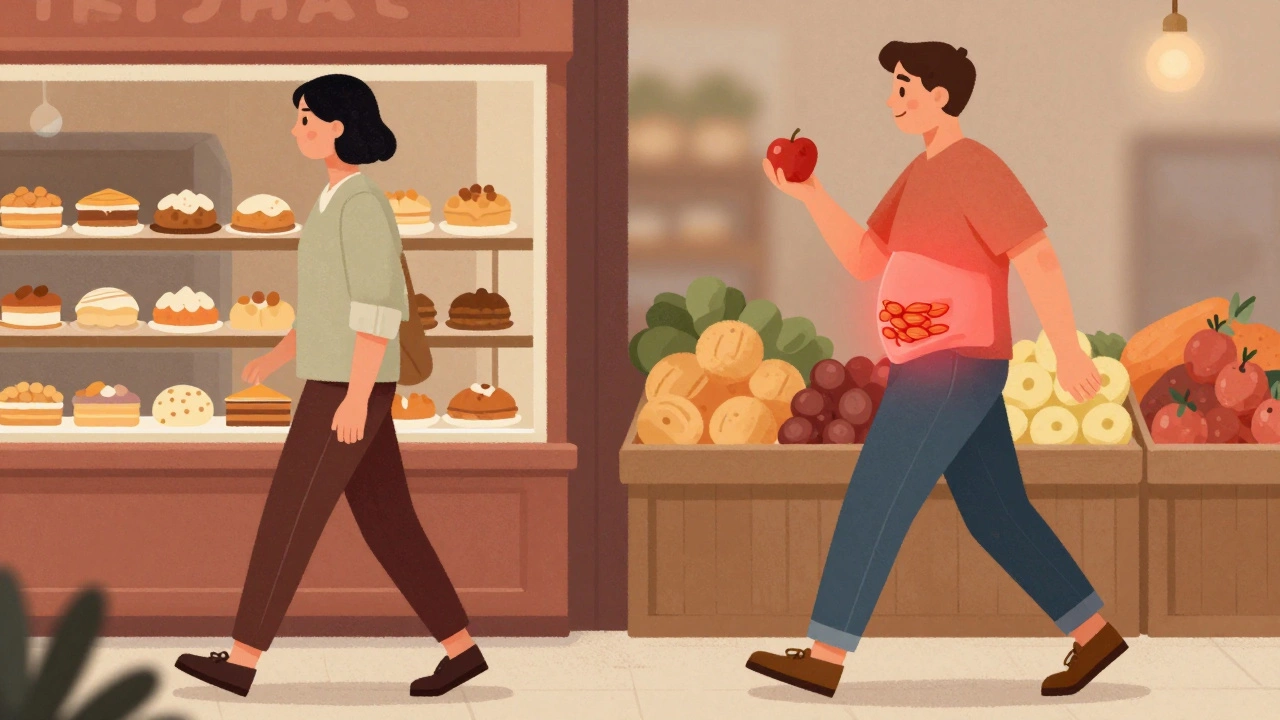
What Happens When You Combine Walking With Better Eating
Walking without changing your diet might get you a little leaner-but it won’t transform your belly. The real magic happens when you pair walking with smarter food choices.
Think less about “dieting” and more about reducing the foods that spike insulin: sugary drinks, white bread, pastries, and processed snacks. Swap them for protein-rich meals, fiber-filled veggies, and healthy fats. A simple lunch of grilled chicken, quinoa, and roasted broccoli doesn’t just fill you up-it keeps your blood sugar stable, so your body stops storing fat.
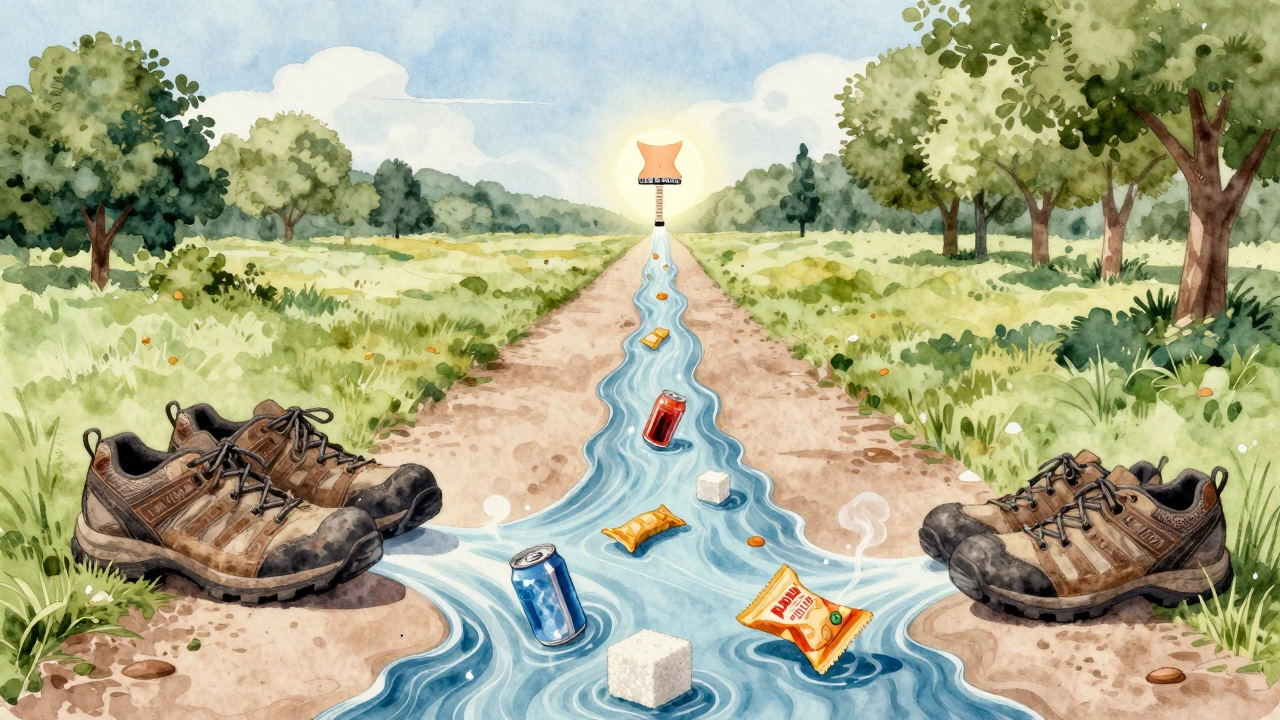
Studies from the University of Sydney show that people who walked 10,000 steps a day and cut out added sugar lost 2-3 times more belly fat over 12 weeks than those who only walked. The difference? Food choices. Walking clears the path. Better food makes the journey faster.
When Walking Stops Working (And What to Do Next)
After 4-6 weeks of consistent walking, your body adapts. You burn fewer calories per step. That’s not failure-it’s biology. When this happens, you need to change things up.
- Try interval walking: Walk fast for 1 minute, then slow for 2 minutes. Repeat 5-8 times. This boosts metabolism for hours after your walk.
- Add bodyweight exercises twice a week: squats, lunges, push-ups. Muscle burns more calories at rest.
- Get more sleep. People who sleep under 6 hours a night have higher cortisol levels, which increases belly fat storage.
- Manage stress. Chronic stress = more visceral fat. Walking helps here too-just make sure it’s not rushed. A slow, mindful walk in the park counts.
Real People, Real Results
Emma, 42, from Bondi, started walking 45 minutes every morning after dropping her kids at school. She didn’t change her diet at first. After 8 weeks, she lost 1.8 kg total-and 3 cm off her waist. Then she swapped her afternoon cookie for a handful of almonds and a piece of fruit. In another 6 weeks, she lost another 2.5 kg and 5 cm off her waist. She didn’t join a gym. She didn’t buy special shakes. She just walked more and ate less junk.
Same with James, 56, who walked his dog twice a day. He added a 20-minute evening walk after dinner and cut out soda. In 4 months, his waist size dropped from 98 cm to 89 cm. His doctor said his liver enzymes improved.
These aren’t outliers. They’re everyday people doing what science says works: consistent movement + better food.
What Doesn’t Work
Don’t fall for these myths:
- “Walking won’t burn fat because it’s too easy.” False. Low-intensity steady-state cardio burns a higher percentage of fat as fuel than running.
- “I need to walk 10,000 steps to see results.” Not true. People who walk 7,000-8,000 steps daily and eat well lose belly fat just as effectively.
- “I’ll walk more once I lose weight.” That’s the trap. Movement helps you lose weight. Waiting until you feel ready means you’ll never start.
Final Answer: Yes, Walking Can Burn Belly Fat-If You Do It Right
Walking doesn’t burn belly fat like a magic wand. But it’s one of the most reliable, low-cost, low-risk tools you have. When you walk regularly, at a brisk pace, for long enough, and pair it with better eating habits, your body starts pulling from stored fat-including that stubborn belly fat.
It’s not glamorous. There’s no app that makes it easy. But it’s real. And it works for people who don’t have time for fancy workouts, who hate gyms, or who just want to feel better without drastic changes.
Start tomorrow. Lace up your shoes. Walk for 30 minutes. Then, tomorrow, walk for 35. Add a hill. Skip the soda. That’s it. No need to wait. No need to overcomplicate it. Your belly fat doesn’t care about your Instagram feed. It only cares about calories in versus calories out-and walking is the simplest way to tip that scale in your favor.
Can I lose belly fat by walking only, without changing my diet?
You can lose some fat by walking alone, but it will be slow and limited. Belly fat is stubborn, and without reducing sugar, refined carbs, and excess calories, your body won’t tap into those fat stores efficiently. Walking creates the opportunity-better food makes it happen.
How long does it take to see results from walking for belly fat loss?
Most people notice small changes in waist size after 4-6 weeks of consistent walking (45-60 minutes, 5-6 days a week). Visible fat loss usually shows up between 8-12 weeks, especially when paired with better eating. Progress isn’t always visible on the scale-waist measurements are more telling.
Is morning walking better than evening walking for fat loss?
There’s no big difference in fat burning between morning and evening walks. But walking after meals-especially dinner-helps control blood sugar, which reduces fat storage. Morning walks help set your metabolism for the day and make it easier to stick to the habit. Choose the time that fits your life.
Does walking on a treadmill burn belly fat as well as outdoor walking?
Yes, if you match the intensity. Treadmills are great for consistency, especially in bad weather. But outdoor walking has an edge: wind resistance, uneven terrain, and changes in elevation burn more calories. If you’re on a treadmill, add a 3-5% incline to make it comparable.
Can walking help reduce visceral fat specifically?
Yes. Multiple studies, including one from Harvard Medical School, show that regular walking reduces visceral fat more than sedentary behavior-even without weight loss. Walking lowers inflammation and insulin resistance, two key drivers of visceral fat. The longer and more consistently you walk, the more visceral fat you’ll lose.
If you’re serious about losing belly fat, start walking today-not tomorrow, not next week. Just walk. Then, tomorrow, walk a little longer. And when you’re ready, swap one unhealthy snack for something real. That’s how real change happens.