
London Safety Risk Calculator
When people ask about the most crime-ridden area in London, they’re usually trying to figure out where to avoid-not because they’re scared, but because they want to stay safe. Whether you’re visiting for the first time or just moved here, knowing where crime is actually concentrated helps you make smarter choices. The truth? There’s no single neighborhood that’s "the worst" all the time. Crime doesn’t stay still, and neither do police patterns. But based on the latest data from the Metropolitan Police (2025), one area consistently stands out: Westminster.
Why Westminster tops the list
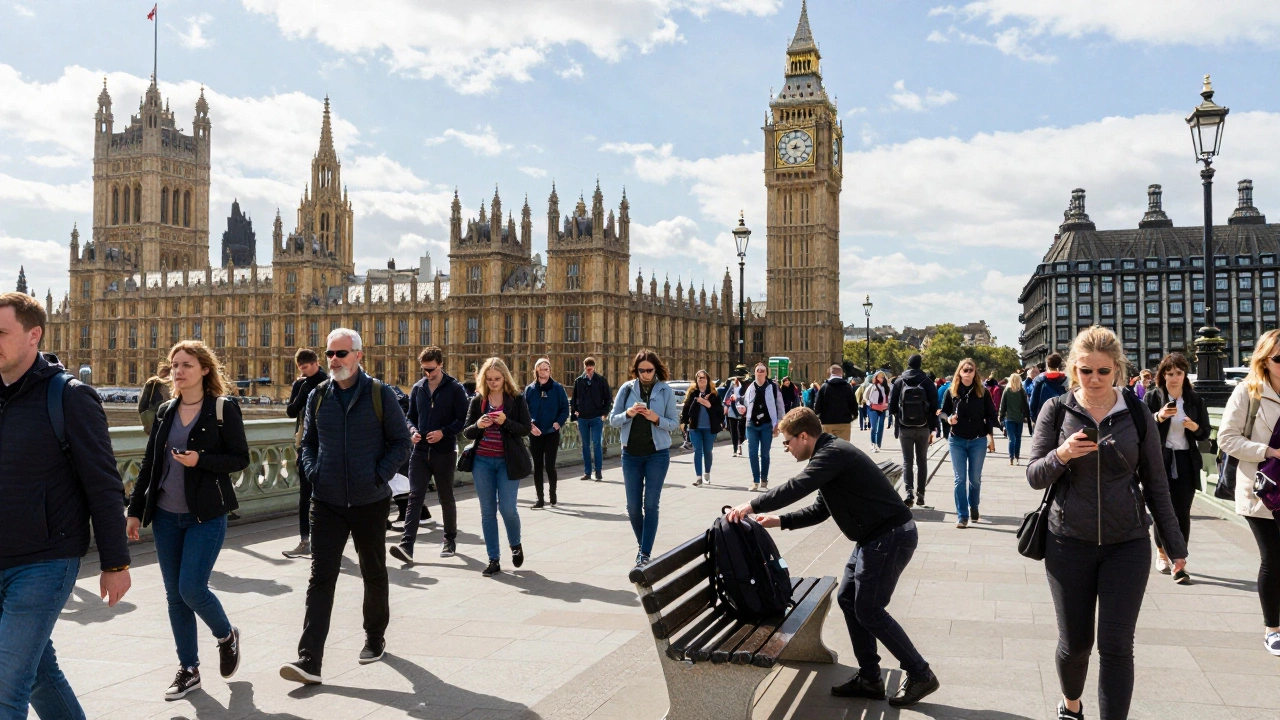
Westminster isn’t just the political heart of London-it’s also the most visited. With Buckingham Palace, the Houses of Parliament, Big Ben, and dozens of major tourist attractions packed into a small area, it’s no surprise that crime numbers climb. Pickpocketing, theft from vehicles, and aggressive street begging are the most common incidents. In 2025, Westminster recorded over 58,000 reported crimes, the highest in London. That’s more than double the rate of some other boroughs with larger populations.Here’s the catch: most of these crimes aren’t violent. They’re opportunistic. Tourists leave bags unattended near the London Eye. People take selfies on busy streets without noticing someone slipping a phone from their pocket. A 2025 report from London’s Metropolitan Police showed that 73% of thefts in Westminster happened between 10 a.m. and 7 p.m., especially near major transit hubs like Westminster Station and Victoria Coach Station.
How crime in London really works
It’s easy to think crime is spread evenly, but it’s not. London’s crime map looks like a heatmap-some areas glow red, others stay mostly green. The top five crime hotspots in 2025 were:- Westminster (58,120 incidents)
- Southwark (47,890 incidents)
- Lambeth (46,510 incidents)
- Camden (44,230 incidents)
- Islington (41,980 incidents)
Notice something? All of these are central boroughs with high foot traffic. Compare that to outer boroughs like Havering or Bromley, where populations are larger but crime rates are half as high. Why? Fewer tourists, fewer crowded streets, fewer wallets on display.
Violent crime, like stabbings or assaults, is more concentrated in areas like Brent, Croydon, and parts of Southwark. But for the average visitor, the biggest risk isn’t violence-it’s theft. And that’s why Westminster leads the list.
What you can do to stay safe
You don’t need to avoid Westminster. You just need to be smart. Here’s what works:- Keep your phone and wallet in a front pocket, not your back pocket or a bag you leave on the floor.
- Never leave bags unattended-even for 10 seconds-at tourist spots. Thieves work fast.
- Use contactless payment. Less cash = less temptation.
- Stick to well-lit, busy streets after dark. The Tube is safe, but avoid walking alone through parks or side alleys near Piccadilly Circus or Oxford Street.
- Download the official Metropolitan Police app. It sends real-time alerts about crime hotspots near you.
Most tourists who get robbed didn’t do anything wrong. They just didn’t know how fast things happen. A study by the University of London’s Crime Prevention Unit found that people who used even basic safety habits reduced their risk of theft by 62%.

Other areas to watch
Westminster isn’t the only place you should be cautious. Southwark, near the Tate Modern and London Bridge, sees a lot of bag snatching and pickpocketing, especially around the Borough Market on weekends. Camden’s famous market draws crowds-and thieves. The area around King’s Cross Station has improved dramatically since the 2010s, but pickpockets still target tourists near the Eurostar terminal.Islington and Lambeth have higher rates of property crime and burglary, but these mostly affect residents, not visitors. If you’re just passing through, your biggest risk is still in the central tourist zones.
Myth busting: What you’ve heard isn’t always true
You’ve probably heard that Brixton, Peckham, or Tottenham are the most dangerous. In 2025, those areas had higher rates of violent crime, but their overall crime numbers were lower than Westminster’s because fewer people walk through them every day. A neighborhood can have high violence and low theft-or vice versa. Crime type matters.Also, don’t believe the myth that crime is getting worse everywhere. London’s overall crime rate dropped 12% between 2022 and 2025. The increase in thefts in central areas is mostly because tourism rebounded after the pandemic. More people = more targets.

What to do if something happens
If you’re robbed or pickpocketed:- Stay calm. Don’t chase the person. Your safety comes first.
- Go to the nearest police station or use the emergency button on the Met Police app.
- Report it within 24 hours. Reports filed later are harder to investigate.
- If your passport or cards are stolen, contact your embassy and bank immediately.
Most stolen items are never recovered, but reporting helps police track patterns and catch repeat offenders. In 2025, 17% of reported thefts in Westminster led to arrests because enough people filed reports.
Final thought: Don’t let fear stop you
London is still one of the safest major cities in the world. Millions of people visit every year without incident. Westminster’s crime stats sound scary, but they’re mostly non-violent and preventable. If you stay alert, keep your belongings secure, and avoid flashing valuables, you’ll be fine.The real danger isn’t the neighborhood-it’s distraction. Stay present. Look up. Notice your surroundings. That’s the best safety tip you’ll ever need.
Is Westminster the most dangerous area in London for tourists?
Yes, for theft-related crimes. Westminster has the highest number of reported incidents in London, mostly pickpocketing and bag snatching. It’s not the most violent area, but it’s the most targeted because of the sheer volume of tourists. If you’re visiting landmarks like Big Ben or Buckingham Palace, you’re in the highest-risk zone for opportunistic theft.
Are outer London boroughs safer than central ones?
Generally, yes. Outer boroughs like Havering, Bromley, or Sutton have lower overall crime rates because they have fewer tourists and less foot traffic. But they aren’t crime-free. Violent crime can still occur, especially in areas with higher deprivation. For visitors, the safest areas are usually quiet residential zones away from major transport hubs.
Can I walk around London at night?
Yes, but stick to main roads and well-lit areas. The Tube runs 24/7 on weekends, and most central areas are safe if you’re not alone in quiet streets. Avoid parks like Hyde Park or Regent’s Park after dark unless you’re with a group. Stick to busy routes like Oxford Street, Shaftesbury Avenue, or the South Bank. Never assume a neighborhood is safe just because it’s popular during the day.
Do police patrol tourist areas more heavily?
Yes. Westminster, Camden, and Southwark have dedicated tourist safety units. You’ll often see plainclothes officers near major attractions. There are also CCTV cameras everywhere. If you feel unsafe, go to a shop, café, or Tube station-the staff are trained to help. Don’t hesitate to ask for assistance.
Should I avoid London because of crime?
Absolutely not. London remains one of the safest global cities for visitors. In 2025, over 21 million tourists visited without incident. Crime is concentrated in specific areas and types. With basic awareness-keeping valuables secure, staying alert, and avoiding distractions-you’ll have a safe and amazing experience. Fear is often worse than the actual risk.