Healthy Weight Gain Calculator
Personal Info
Your Results
Enter your information above to see your recommended daily calorie intake.
If you're losing weight when you don't want to, you're not alone. Many people struggle with unintentional weight loss-whether it's from stress, aging, illness, or just not eating enough. The good news? You don’t need fancy supplements or extreme diets to turn it around. It starts with what’s on your plate. This isn’t about packing on junk food. It’s about eating more of the right stuff-foods that give you energy, build muscle, and keep you feeling full without making you sick of your meals.
Why You’re Losing Weight (And Why It Matters)
Weight loss isn’t always a win. If you’re losing more than 5% of your body weight in six months without trying, it’s a red flag. Your body might be burning more than it’s taking in. Maybe you’ve cut carbs thinking they’re bad. Maybe you’ve been too busy to cook. Or maybe your appetite just vanished. Whatever the reason, your body needs fuel to function. Without enough calories, it starts breaking down muscle and fat just to keep your heart beating and your brain thinking.
For older adults, this is especially common. Metabolism slows. Taste buds dull. Digestion gets slower. A 70-year-old might eat one small meal a day and wonder why they’re shrinking. For younger people, it could be anxiety, over-exercising, or not eating enough after workouts. The fix? Eat more calories-but smart ones.
Start With Calorie-Dense Foods You Actually Like
You can’t force yourself to eat foods you hate. The key is finding calorie-rich foods that feel satisfying, not punishing. Here are the top five categories that work for most people:
- Nuts and seeds - A handful of almonds (28g) has 164 calories. Cashews, walnuts, and sunflower seeds are just as good. Keep a small jar at your desk or in your bag. Sprinkle them on salads, yogurt, or oatmeal.
- Fully fat dairy - Full-fat yogurt, whole milk, cheese, and butter aren’t the enemy. One cup of whole milk has 150 calories and 8g of protein. Two tablespoons of cream cheese add 100 calories and zero sugar. Swap skim milk for whole. Use butter instead of margarine.
- Healthy oils - Olive oil, avocado oil, and coconut oil are calorie bombs in a bottle. One tablespoon = 120 calories. Drizzle it on roasted veggies, pasta, or rice. Use it to sauté eggs or chicken. Mix it into smoothies-yes, really.
- Starchy carbs - Potatoes, rice, oats, bread, and pasta aren’t bad. They’re your best friends here. A medium baked potato has 160 calories. One cup of cooked white rice = 200 calories. Eat them warm, with butter or olive oil. Add honey or maple syrup if you like sweet.
- Protein-rich snacks - Eggs, cottage cheese, canned tuna, and peanut butter are easy, shelf-stable, and packed with protein. Two eggs = 140 calories and 12g protein. Two tablespoons of peanut butter = 190 calories. Keep a tub of cottage cheese in the fridge. Eat it with fruit or toast.
Build Meals That Actually Add Up
Snacking helps, but meals are where the real gain happens. You need to eat like you’re training for a marathon-not skipping meals or eating light. Here’s how to structure your day:
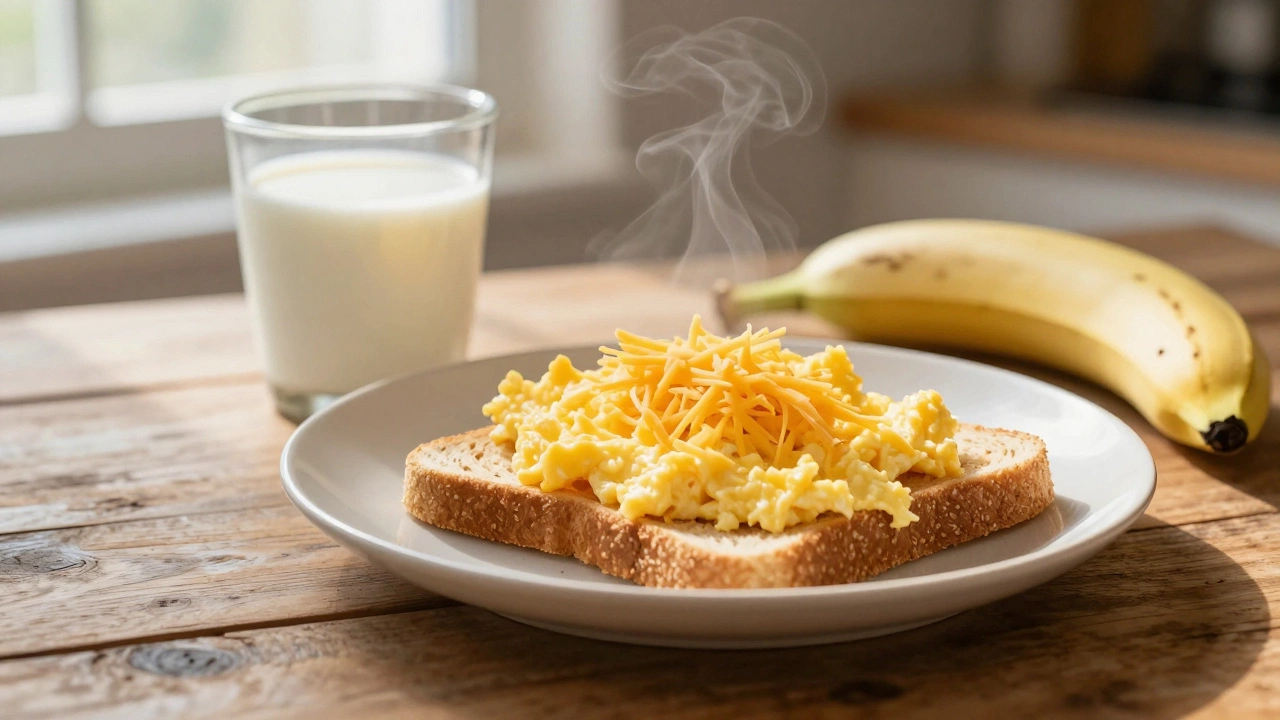
- Breakfast - Skip the plain toast. Go for scrambled eggs cooked in butter, topped with grated cheddar, served with whole-grain toast and a glass of whole milk. Add a banana on the side. That’s 500+ calories before you leave the table.
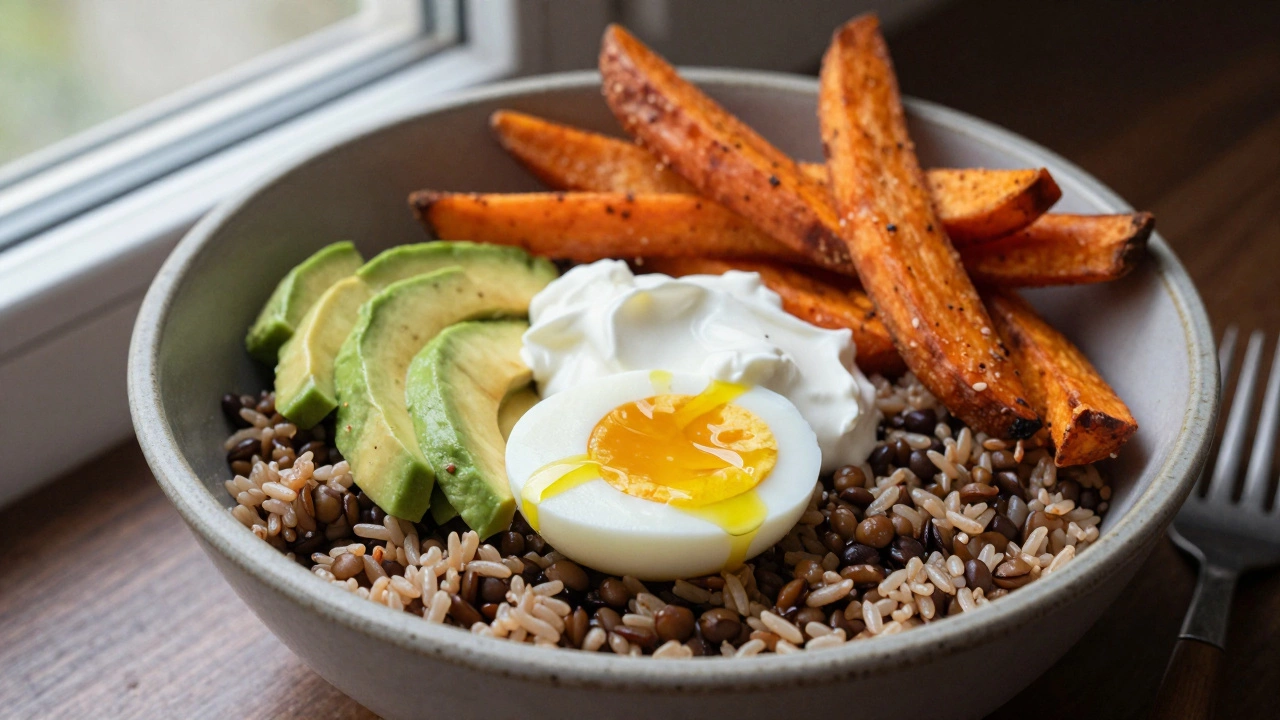
- Lunch - Make it hearty. Brown rice with lentils, sautéed in olive oil, mixed with diced avocado and a spoonful of sour cream. Add a boiled egg on top. A side of sweet potato fries baked with oil. This meal easily hits 700 calories.
- Dinner - Grilled chicken or salmon with mashed potatoes made with whole milk and butter. Add steamed broccoli drizzled with olive oil. A small slice of whole-grain bread with honey. Add a cup of full-fat yogurt with a spoon of jam.
- Snacks (2-3 times a day) - Trail mix (nuts, dried fruit, dark chocolate), cheese sticks, peanut butter on apple slices, or a smoothie made with whole milk, banana, oats, and almond butter.
These aren’t fancy recipes. They’re simple, real-food meals you can make in 15 minutes. No kale salads. No detox juices. Just food that gives you energy.
Drink Your Calories (Yes, Really)
If you feel full too fast, liquid calories can be your secret weapon. Solid food takes up space in your stomach. Liquids don’t. A smoothie can pack 500-800 calories without making you feel stuffed.
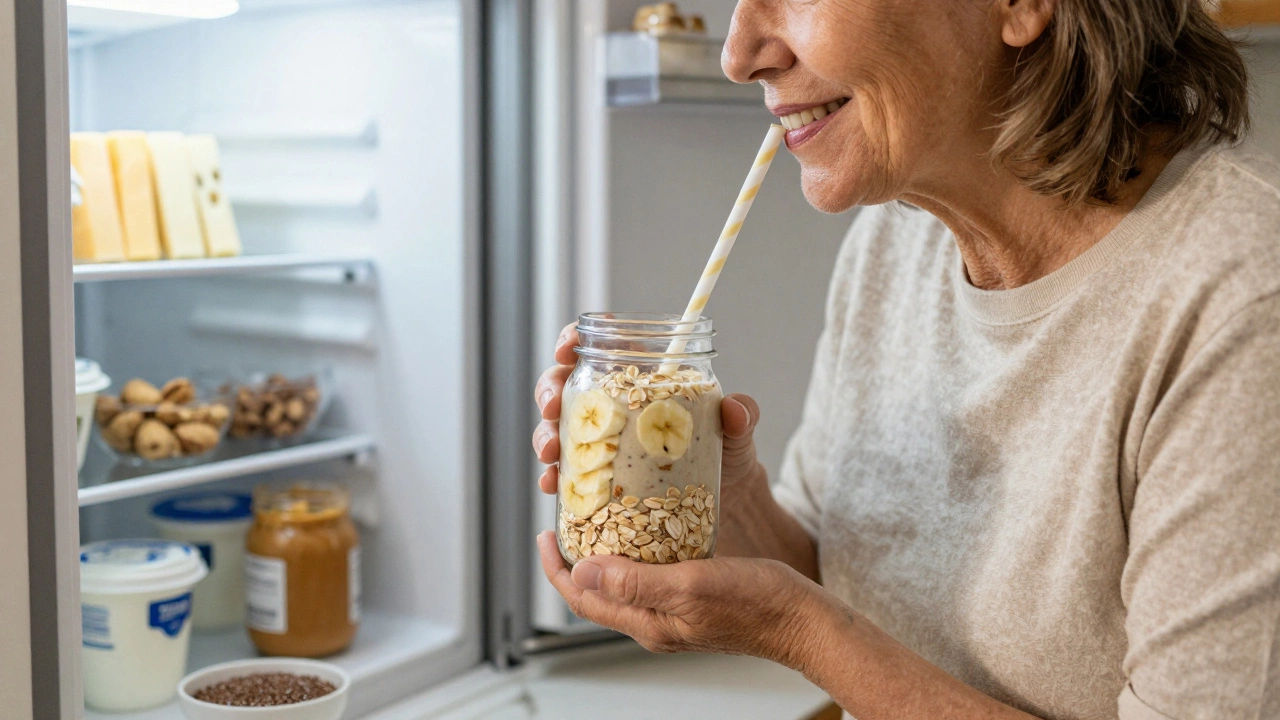
Try this easy recipe: Blend 1 cup whole milk, 1 banana, 2 tablespoons peanut butter, 1/4 cup oats, 1 tablespoon flaxseed, and a scoop of vanilla protein powder (if you have it). That’s about 700 calories. Drink it after breakfast or before bed. You can make it ahead and keep it in the fridge for two days.
Other options: Hot chocolate made with whole milk and a spoon of cocoa powder. A milkshake with ice cream and a banana. Even a glass of 100% fruit juice with a meal adds calories without filling you up.
When to See a Doctor
Food can fix a lot-but not everything. If you’ve been eating more, still losing weight, and feel tired, dizzy, or nauseous, see a doctor. Unintentional weight loss can signal thyroid issues, diabetes, digestive disorders like Crohn’s or celiac, or even cancer. Blood tests can rule out hidden problems.
Also, if you’ve lost weight and now have loose skin, muscle weakness, or trouble getting up from a chair, you’re not just underweight-you might be losing muscle. That’s serious. A dietitian can help you build a plan that adds both fat and muscle.
What Not to Do
Don’t chase fast weight gain with junk food. Cookies, chips, and fried chicken might add pounds, but they won’t help your energy, mood, or long-term health. You want quality weight-muscle, not just fat.
Don’t skip meals to "save" calories for later. Your body needs consistent fuel. Eating one big meal a day won’t work. Spread it out.
Don’t assume you need protein powders or weight-gainer shakes. Real food works better. Most powders are expensive, over-processed, and full of sugar. Stick to eggs, milk, nuts, and rice.
Track Progress, Not Just the Scale
The scale doesn’t tell the whole story. You might be gaining muscle, not fat. Look for these signs:
- Your clothes feel looser around the waist but tighter around the arms and legs
- You have more energy during the day
- You’re sleeping better
- You’re not getting dizzy when you stand up
- You can climb stairs without stopping
Take a photo every two weeks. Compare how you look. Muscle weighs more than fat, so the number might not move fast-but your strength and appearance will.
Real-Life Example: How Sarah Gained 8kg in 4 Months
Sarah, 68, lost 7kg over a year after her husband passed away. She stopped cooking. Ate toast and tea for breakfast. A sandwich for lunch. No dinner. Her doctor warned her about frailty. She started with simple changes: two eggs with buttered toast every morning. A glass of whole milk with lunch. A bowl of oatmeal with honey and nuts before bed. She added peanut butter to apple slices as an afternoon snack. Three months in, she gained 4kg. Four months later, 8kg. She’s stronger. She walks her dog every day. She says she feels like herself again.
It wasn’t magic. It was consistency.
Can I gain weight by eating more carbs?
Yes, but not just any carbs. Focus on whole, unprocessed carbs like brown rice, oats, potatoes, whole-grain bread, and pasta. These give you energy and fiber. Avoid sugary cereals and white bread with no nutrition. Carbs alone won’t build muscle-you need protein too. Pair them with eggs, cheese, or beans.
How many calories should I eat to stop losing weight?
There’s no one-size-fits-all number. Most adults need 1,800-2,500 calories just to maintain weight. If you’re losing, you likely need 300-500 extra calories a day. Start by adding one extra snack and one extra serving of fat (like oil or butter) to each meal. Track your weight for two weeks. If you’re not gaining, add another 200 calories. Slow and steady works best.
Is it okay to eat dessert to gain weight?
Occasionally, yes. A small piece of cake or a bowl of ice cream once in a while won’t hurt. But don’t rely on it. Desserts give you sugar and fat, but little protein or nutrients. Use them as a treat, not your main strategy. Focus on nutrient-dense foods first, then add sweets if you still need more calories.
Should I lift weights to gain weight?
Yes, especially if you want to gain muscle, not just fat. Lifting light to moderate weights two to three times a week helps your body store calories as muscle instead of fat. You don’t need to go to a gym. Bodyweight exercises like squats, push-ups, and lunges work. Just make sure you’re eating enough protein (about 1.2-1.6g per kg of body weight) to support muscle growth.
How long does it take to gain weight naturally?
Healthy weight gain is slow. Aim for 0.25-0.5kg per week. That’s about 1-2kg a month. Gaining too fast can mean you’re storing mostly fat, not muscle. It also increases your risk of blood sugar spikes and digestive issues. Be patient. If you’re eating consistently and still not gaining after 6-8 weeks, talk to a dietitian or doctor.