Work-Life Balance Recovery & Boundary Estimator
Your Balance Analysis
Recommended Strategy
Enter your details to generate your personalized plan.
Quick Win Tip:
Tip will appear here.

Fill in the form to calculate your balance score and get recovery strategies.
Quick Wins for a Better Daily Flow
- The "Hard Stop" Rule: Pick a time-say 6:00 PM-where you shut down your computer and stop checking emails. No "just one last thing."
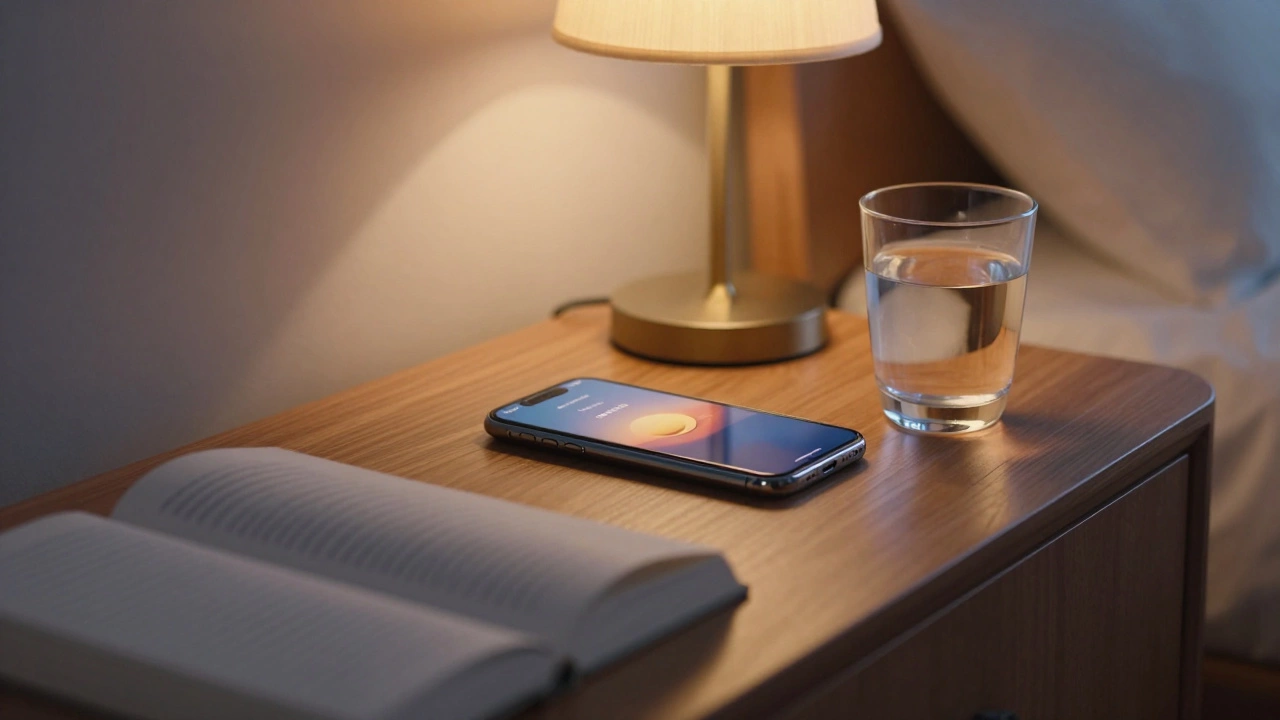
- Digital Sunset: Put your phone in a different room 60 minutes before bed to stop your brain from looping through tomorrow's to-do list.
- Micro-Breaks: Use the 50/10 rule. Work for 50 minutes, then spend 10 minutes away from all screens. Stretch, grab water, or just stare at a wall.
- Batching Tasks: Stop reacting to every notification. Check your messages three times a day instead of every three minutes.
Setting Boundaries in a Hybrid World
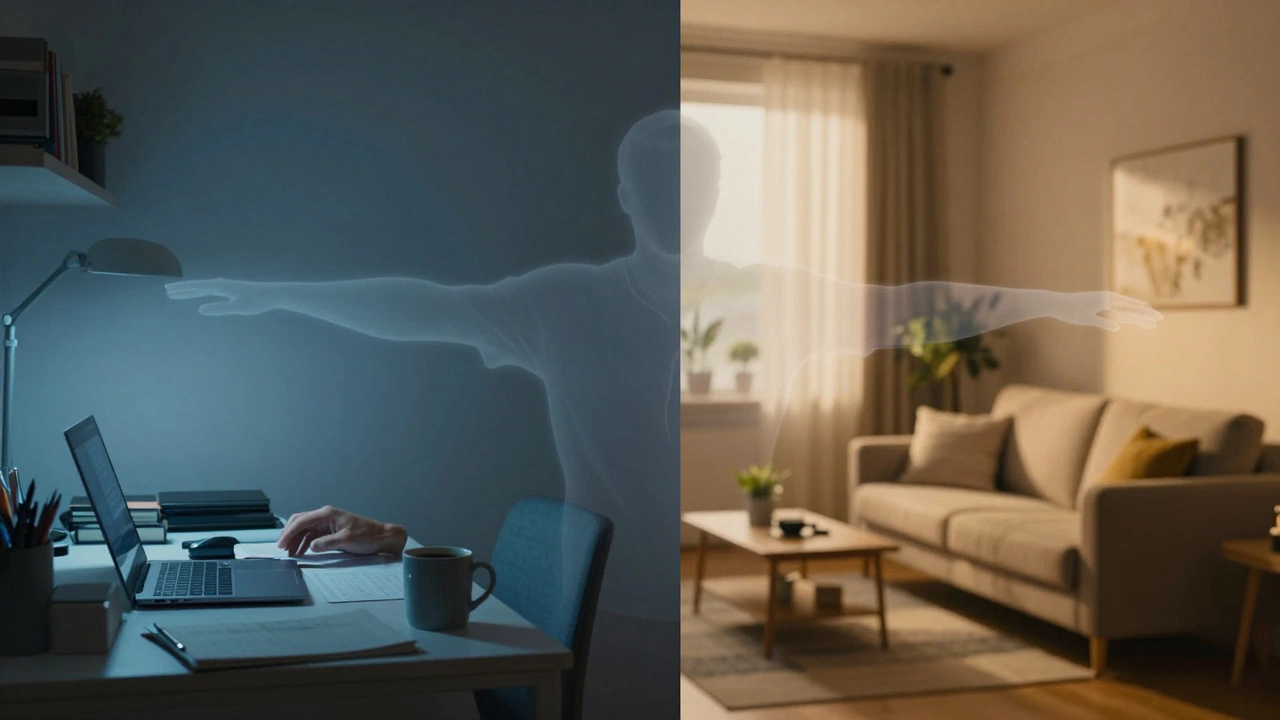
When you work from home, your commute is often just the distance from your bed to your desk. Without that physical transition, your brain never gets the signal that work is over. If you're using Slack or Microsoft Teams, you're essentially carrying your office in your pocket. This creates a state of "hyper-availability" that is a fast track to burnout.
Start by creating a physical boundary. Even if you don't have a separate office, a specific chair or a certain desk lamp that you only turn on during work hours can act as a psychological trigger. When the lamp goes off, the "employee" version of you disappears. If you find yourself answering emails at 9:00 PM, ask yourself: is this a genuine emergency, or am I just anxious about appearing unproductive? Usually, it's the latter. True productivity is measured by output, not by who responds to a message the fastest at midnight.
Managing the Mental Load and Burnout
Burnout isn't just being tired; it's a state of emotional, physical, and mental exhaustion caused by excessive and prolonged stress. It happens when you feel overwhelmed, emotionally drained, and unable to meet constant demands. To fight this, you need to address the Mental Load-the invisible labor of remembering everything that needs to happen in both your professional and personal life.
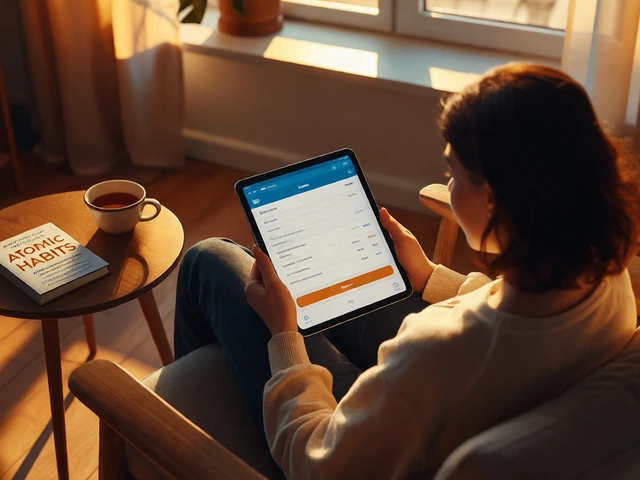
One effective way to lower this stress is by utilizing an external brain. Stop trying to remember every deadline in your head. Use a system like Getting Things Done (GTD) or a simple digital planner. By offloading the data, you free up cognitive space to actually enjoy your downtime. If you're constantly thinking about a project while playing with your kids or eating dinner, you aren't actually "off," regardless of whether your laptop is closed.
| Work Style | Primary Challenge | Best Strategy | Expected Outcome |
|---|---|---|---|
| Fully Remote | Blurring of home/work space | Physical workspace separation | Clearer mental transition |
| Corporate Office | Commute stress & rigid hours | Time-blocking & active breaks | Reduced daily fatigue |
| Freelance/Gig | Unpredictable income/hours | Strict scheduling & set "office hours" | Preventing 24/7 work mode |
The Art of Saying No Without Guilt
A huge part of balance is capacity management. Many of us suffer from "yes-man syndrome," where we agree to every project or social invite because we fear missing out or looking lazy. But every time you say yes to something that doesn't align with your priorities, you are implicitly saying no to your sleep, your health, or your family.
Try using "the positive no." Instead of a blunt "I can't do that," try: "I'd love to help with that project, but my current plate is full until Friday. Can we look at it then?" This frames your refusal as a matter of quality control rather than a lack of willingness. You're essentially telling the other person that if you took on more, the quality of your work (and their project) would suffer. Most reasonable managers and colleagues respect a person who knows their limits because it means they are reliable when they actually do commit.

Prioritizing Mental Wellness and Recovery
Recovery is not a reward for hard work; it is a requirement for it. Think of your energy like a battery. If you only ever charge it to 20% and then run it back down to 0%, the battery eventually dies. Mindfulness and Cortisol management are key here. When you're stressed, your body pumps out cortisol, which in high doses ruins your sleep and makes you irritable.
Active recovery is better than passive recovery. Scrolling through social media for three hours is passive; it keeps your brain stimulated but doesn't actually refresh you. Active recovery-like a 20-minute walk, reading a physical book, or a hobby that requires your hands (gardening, cooking, painting)-forces your brain to switch gears completely. This "cognitive shift" is what actually lowers your stress levels and makes you feel human again.
Creating a Sustainable Long-Term System
Balance isn't a destination you reach and then stop. It's a constant adjustment. Some weeks, a big project at work will demand 80% of your energy. That's fine, as long as the following week you intentionally swing the pendulum back toward your personal life. The danger is when the "crunch time" becomes the permanent state of existence.
Audit your time once a month. Look at your calendar and ask: where did my time go? If you spent 60 hours on work and 0 hours on a hobby you love, your system is broken. Adjust your boundaries for the next month. Maybe that means delegating more tasks or finally turning off email notifications on your phone. Remember, the company will replace you in a heartbeat if you burn out, but your family and your health are irreplaceable.
Is a perfect 50/50 balance actually possible?
Honestly, no. Trying to hit a perfect 50/50 split every day is a recipe for stress. Balance is more like a pendulum. Some days work takes the lead, and some days your personal life does. The goal is "work-life integration"-where you can navigate both without one causing the other to collapse. Aim for a balance over a month, not a single day.
How do I tell my boss I'm overwhelmed without sounding incompetent?
Focus on the work, not your feelings. Instead of saying "I'm stressed," say "I currently have five priority projects. To ensure the quality of the most important one, I need to shift the deadline for the other two. Which of these should I prioritize?" This puts the decision-making on the manager while demonstrating that you are thinking about the quality of the output.
What is the fastest way to recover from a period of extreme burnout?
The fastest way is complete disconnection. A "digital detox" for a weekend-no email, no LinkedIn, no work-related news-is essential. Combine this with high-quality sleep and physical movement. Avoid using alcohol to "unwind," as it disrupts the REM sleep you need to actually recover mentally.
Does working shorter hours always lead to better balance?
Not necessarily. It's about the intensity and the mental presence. Someone working 40 hours who can't stop thinking about work is less balanced than someone working 60 hours who can fully disconnect during their time off. Focus on boundaries and mental presence rather than just the number on the clock.
How can I maintain balance if I'm a business owner?
As an owner, the boundary is even harder because you feel responsible for everything. The key is delegation. Identify tasks that don't require your specific expertise and hand them off. Also, set a "hard off" time for yourself and communicate it to your team. If you reward your employees for working 24/7, they will expect you to do the same.