Minimalist Decor Scorecard
Is your space curated or cluttered? Answer five quick questions and see where you stand — plus tips to make it feel calmer.
Your result will appear here.
Your Strengths
Areas to Refine
The Two-Question Filter
Before adding anything to your home, ask yourself:
- Does this make my daily life easier?
- If I looked at this every day for five years, would I still love it?
If both are yes, it's decor. If not, it's clutter.
Walk into a minimalist apartment and you might expect stark white walls, empty shelves, and not a single object in sight. But here’s the twist: most people who live this way don’t actually hate things. They just hate clutter. So, do minimalists have decorations? Yes, but they look nothing like what you’d find in a typical interior design magazine.
The misconception that minimalism means austerity is one of the biggest barriers to adopting the lifestyle. In reality, it’s about curation, not deprivation. If your space feels cold or lifeless, you’re probably confusing minimalism with spartan living. True minimalism is warm, inviting, and deeply personal. It’s about keeping only what serves a purpose or brings genuine joy, which leaves room for meaningful decorative elements.
Defining the Difference: Clutter vs. Character
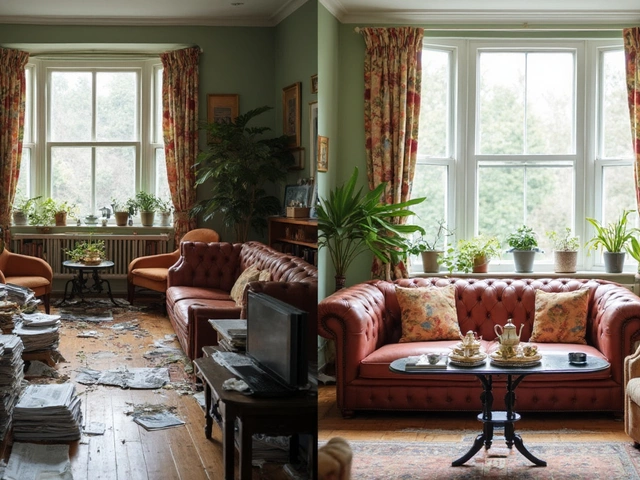
To understand how minimalists approach decor, we first need to define what counts as clutter. Clutter is any object that does not serve a functional purpose or evoke a positive emotional response. It’s the stack of magazines from 2024, the broken lamp you “might fix someday,” or the generic vase that matches nothing.
On the other hand, Minimalist Decor consists of intentionally selected items that enhance the living experience through beauty, function, or memory. A minimalist doesn’t remove all art; they remove art that makes them feel anxious or indifferent. They don’t banish plants; they choose low-maintenance species that thrive in their specific light conditions.
The key distinction is intentionality. When you add an item to your home, ask yourself two questions:
- Does this make my daily life easier?
- If I looked at this every day for five years, would I still love it?
If the answer to both is yes, it’s decor. If the answer is no, it’s clutter. This simple filter allows for a rich variety of objects without the visual noise.
The Core Principles of Minimalist Aesthetics
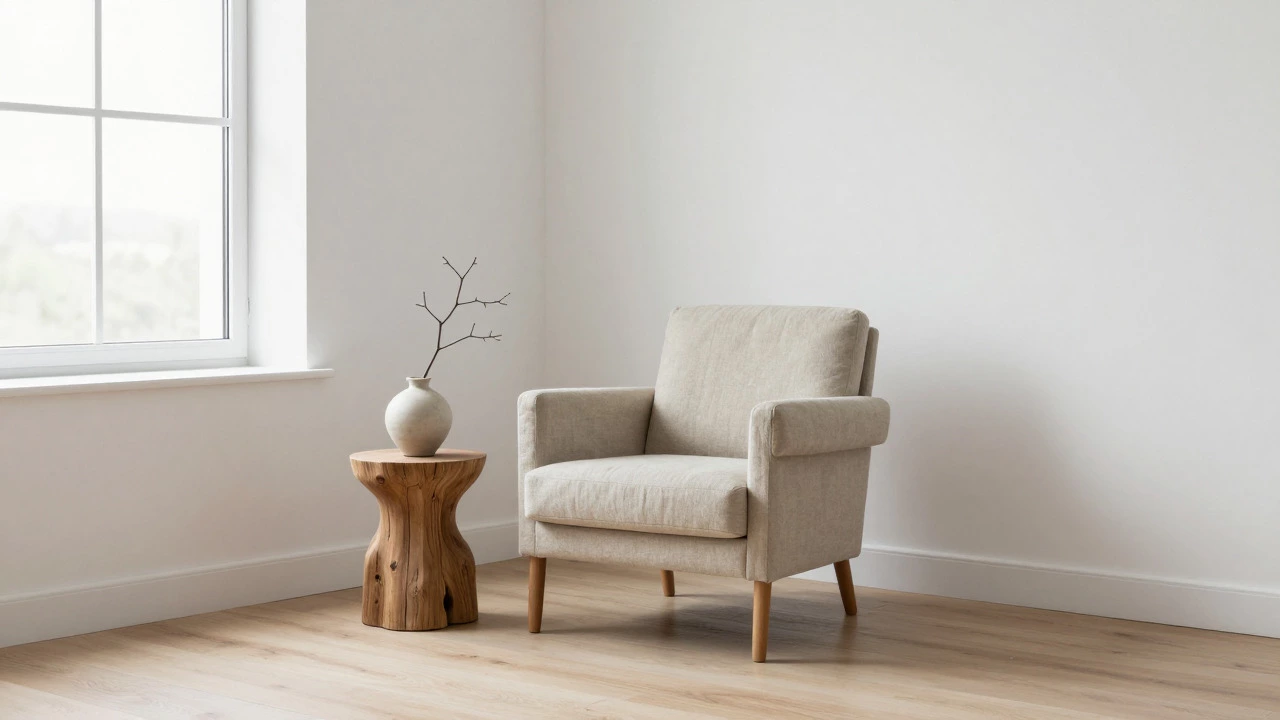
While individual tastes vary, most minimalist interiors share three foundational principles: negative space, neutral palettes, and quality over quantity.
Negative Space (or white space) is the empty area around objects. It acts as a frame, allowing each piece to breathe. Without negative space, even beautiful objects can create a sense of chaos. Think of it like punctuation in writing; without pauses, the sentence becomes hard to read. In a room, negative space gives your eyes a place to rest.
Neutral Palettes typically involve earth tones, whites, greys, and beiges. These colors are calming and versatile. However, “neutral” doesn’t mean boring. You can introduce depth through texture-think chunky knit throws, linen curtains, or rough-hewn wood. Texture adds warmth without adding color complexity.
Quality Over Quantity is perhaps the most important rule. Instead of owning ten cheap plastic frames, a minimalist owns one high-quality wooden frame. The craftsmanship matters. You can see the grain in the wood, feel the weight of the material, and trust that it will last decades. This approach reduces waste and creates a more cohesive look.
| Aspect | Conventional Approach | Minimalist Approach |
|---|---|---|
| Selection Criteria | Trend-driven, impulse buys | Purpose-driven, long-term value |
| Color Palette | Bright, varied, seasonal | Neutral, muted, consistent |
| Object Density | High (surfaces covered) | Low (surfaces cleared) |
| Emotional Response | Stimulation, novelty | Calm, clarity, peace |
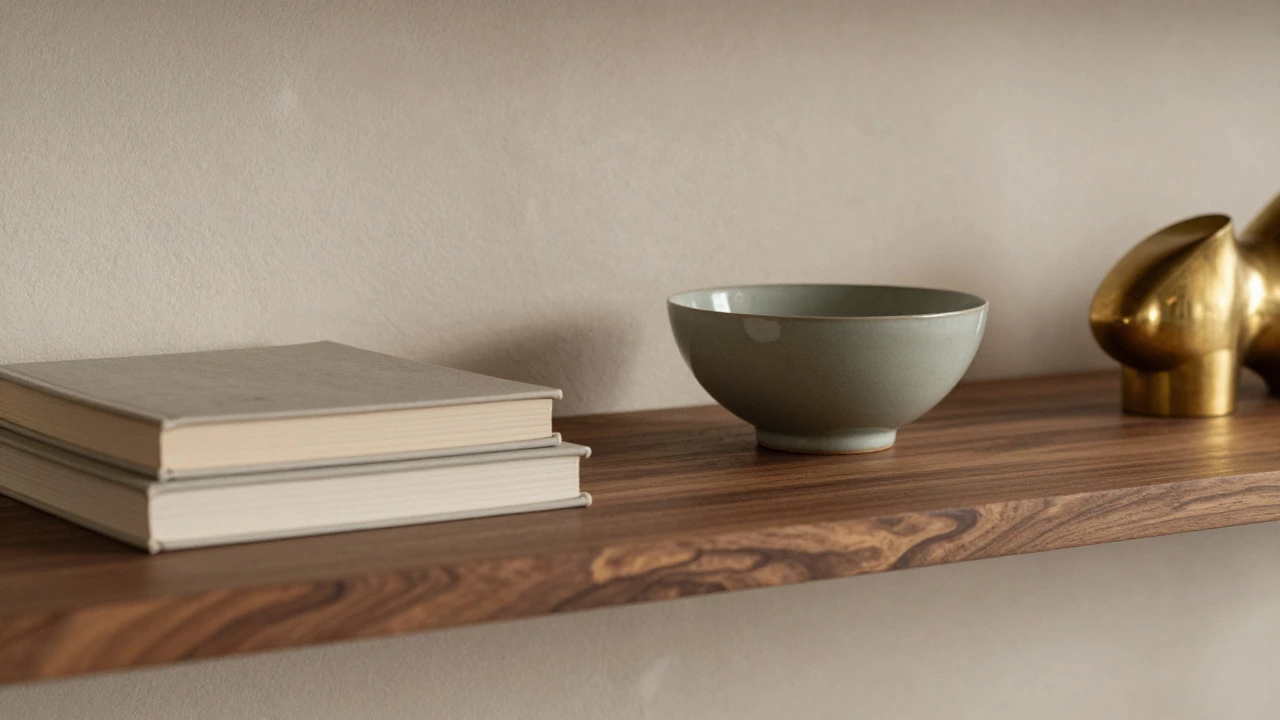
Common Decor Items That Fit the Minimalist Vibe
So, what actually goes on the shelves? Here are some examples that balance aesthetics with practicality:
- Botanicals: Plants like Snake Plants, Pothos, or Fiddle Leaf Fig trees bring life indoors. They require minimal maintenance and improve air quality. A single large plant often has more impact than a dozen small potted ones.
- Artwork: One large, striking piece of art is better than a gallery wall of small, mismatched prints. Choose art that resonates emotionally. Abstract pieces often work well because they don’t dictate a specific theme.
- Textiles: Linen bedding, wool rugs, and cotton towels add softness. Look for natural fibers that age well. Avoid synthetic materials that shed or pill easily.
- Lighting: Lighting sets the mood. Opt for warm-toned bulbs (2700K-3000K). A floor lamp with a clean silhouette or a pendant light with interesting materiality can become a focal point.
- Books: Keep only books you’ve read recently or plan to re-read. Use a bookshelf as a display for these curated titles, mixing them with decorative objects like ceramic vases or sculptures.
Notice the common thread: simplicity in form, richness in material. The goal isn’t to hide the fact that you live there; it’s to highlight the best parts of your home.
How to Start Without Feeling Overwhelmed
Transitioning to a minimalist aesthetic doesn’t happen overnight. You don’t need to throw everything away today. Start with one small area, like a nightstand or a shelf.
1. Clear the Surface: Remove everything from the chosen area. 2. Sort Items: Place items into three piles: Keep, Donate/Sell, Discard. 3. Curate the Keeps: From the “Keep” pile, select only the top 3-5 items that truly stand out. 4. Arrange Intentionally: Place these items back, leaving plenty of empty space. Step back and assess. Does it feel calm? If not, remove another item.
This process teaches your brain to value space. Once you get comfortable with the feeling of emptiness, you’ll realize that less is indeed more. You’ll start noticing how much clearer your thoughts become when your visual environment is uncluttered.
Misconceptions to Avoid
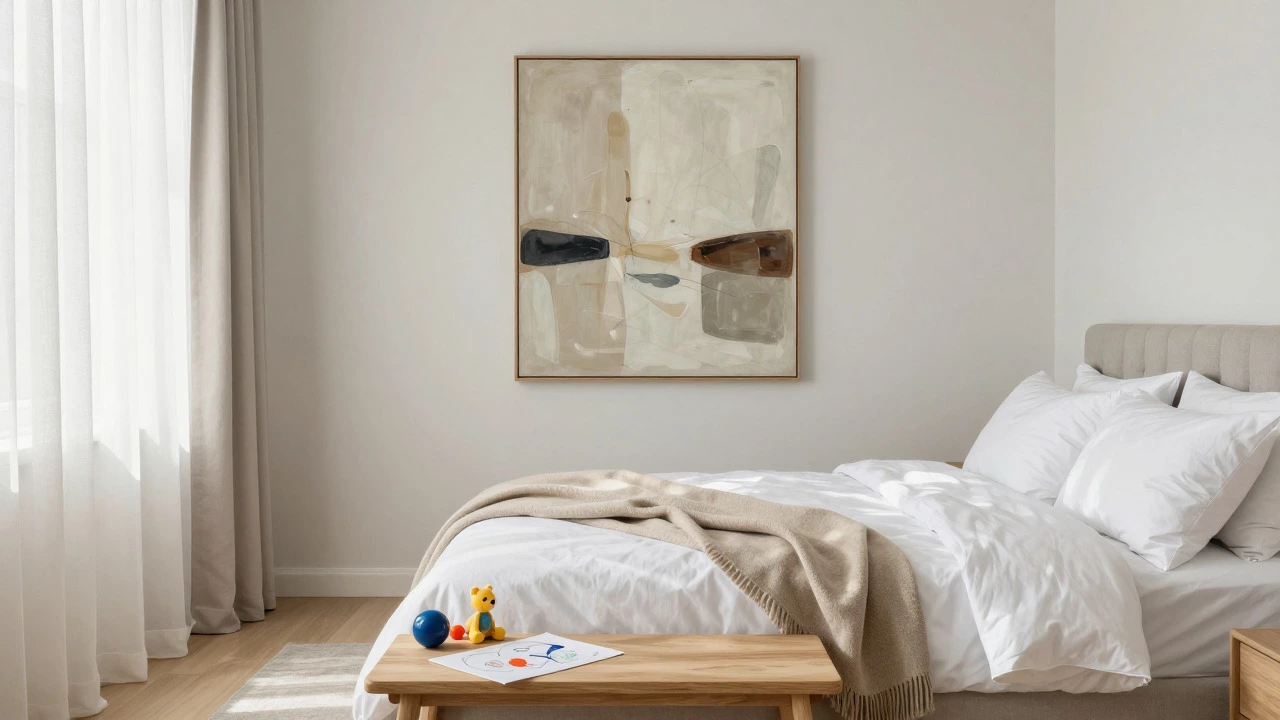
One major misconception is that minimalists are rigid perfectionists. They aren’t. Life happens. Kids draw on walls. Guests leave mugs behind. The goal is not to maintain a museum-like state 24/7, but to return to a baseline of calm regularly.
Another myth is that minimalism is expensive. While buying high-quality furniture upfront costs more, you save money in the long run by replacing fewer items. Plus, many minimalist decorators upcycle existing pieces, painting old doors new colors or refinishing worn wood.
Finally, don’t confuse minimalism with monotony. Your home should reflect your personality. If you love bright yellow, use it as an accent. If you prefer dark woods, lean into that. The style is a framework, not a prison.
Frequently Asked Questions
Is it okay to have colorful decorations if I’m a minimalist?
Yes, absolutely. Color is subjective. As long as the color palette feels cohesive and doesn’t create visual noise, you can include vibrant accents. Many minimalists use one bold color sparingly to create interest against a neutral background.
How many items should be on a coffee table?
There is no strict rule, but a good heuristic is the “odd number rule.” Display three or five items maximum. For example, a stack of two books, a small bowl, and a candle. This creates a balanced composition without looking crowded.
Do minimalists have family photos?
Yes, but usually in limited quantities. Instead of covering walls with dozens of small frames, minimalists often choose one or two large, high-quality prints of their favorite moments. This keeps the focus on the memory rather than the accumulation of images.
What if I have a lot of sentimental items?
Create a dedicated “memory box” for items that hold sentimental value but don’t fit your daily aesthetic. Rotate these items seasonally. This allows you to keep the memories close while maintaining a clear visual space for the rest of the year.
Is minimalism suitable for families with children?
Yes, though it requires flexibility. Children’s toys and artwork are part of life. The strategy is to keep adult spaces relatively clear and allow kids’ areas to be more dynamic. Focus on durable, open storage solutions that make cleanup easy for everyone.