
Mindfulness Practice Builder
Choose Your Daily Trigger
Link your mindfulness practice to an existing habit for better consistency.
Your Personalized Mindfulness Routine
Your Practice Steps:
- Set aside 5 minutes at your chosen time
- Sit comfortably with spine straight but not rigid
- Close your eyes or soften your gaze
- Focus on the physical sensation of breathing
- When mind wanders, gently return to breath
- End with gratitude for showing up
Have you ever stared at a meditation app’s subscription fee and thought, "Do I really need this?" It is a common hesitation. We live in an era where everything seems to require a coach, a course, or a monthly payment. But when it comes to mindfulness, the truth might surprise you: yes, you can absolutely teach yourself. In fact, some of the most profound shifts in awareness happen not in a guided studio, but in the quiet moments you carve out for yourself.
Mindfulness is not a mystical ritual reserved for monks on mountain peaks. At its core, it is simply the act of paying attention to the present moment without judgment. It is a skill, much like learning to ride a bike or cook a decent pasta sauce. And like any skill, it requires practice, patience, and a bit of trial and error. You do not need a guru to tell you to breathe; you just need to remember how.
Is self-taught mindfulness as effective as guided programs?
Research suggests that consistent self-practice yields similar benefits to formal training for general stress reduction. However, for clinical conditions like severe anxiety or trauma, guided therapy is often recommended.
The Core Pillars of Self-Guided Mindfulness
To teach yourself effectively, you first need to understand what you are actually building. Mindfulness rests on three main pillars: attention, attitude, and consistency. If you skip one, the structure wobbles. Let us break down how you can cultivate each on your own.
Attention is the ability to focus your mind on a single object, sensation, or thought. For beginners, this usually means focusing on the breath. Why the breath? Because it is always there. You do not have to wait for a quiet room or a specific time of day. Your breath is available right now, whether you are stuck in Sydney traffic or waiting for the kettle to boil. The goal is not to control the breath, but to notice it. When your mind wanders-and it will-gently bring it back. That moment of noticing is the rep. That is the exercise.
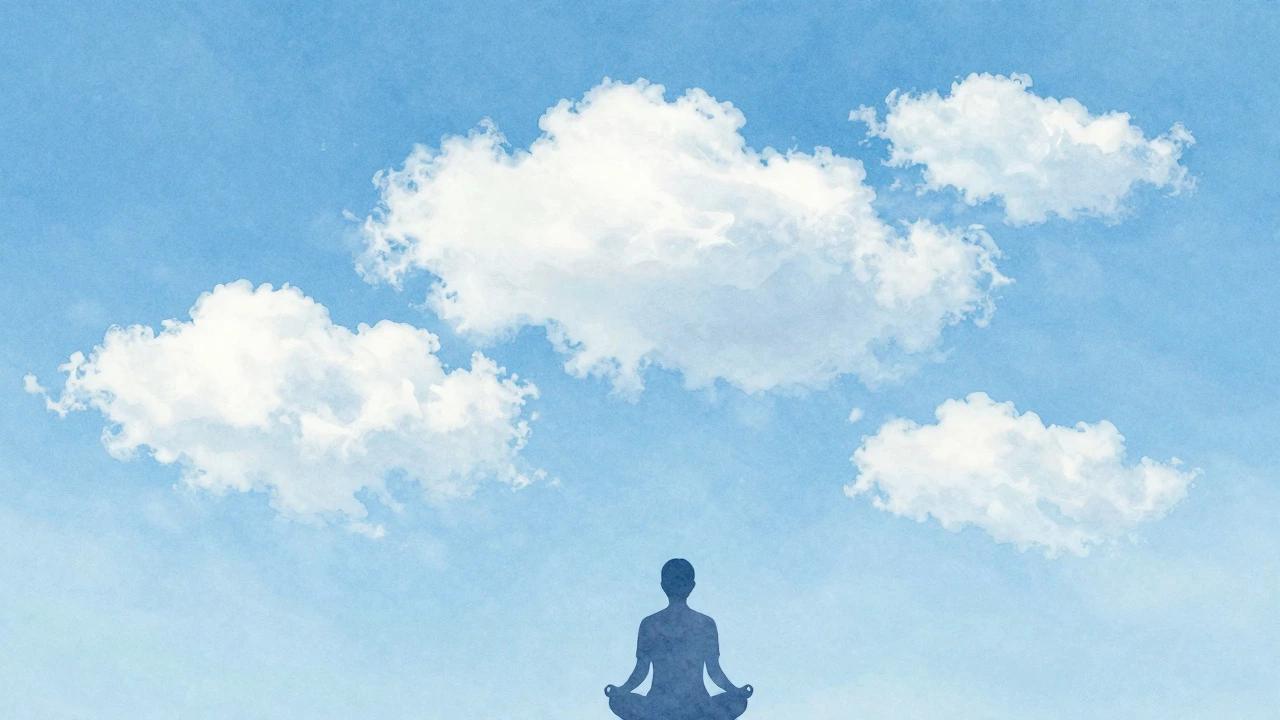
Attitude is the non-judgmental stance you take toward your thoughts and feelings. This is the hardest part for most people. We tend to criticize ourselves for having distracting thoughts. "I am bad at meditating," we think. "My mind is too noisy." But mindfulness teaches us that the noise is normal. The practice is not about stopping thoughts; it is about changing your relationship with them. Imagine your thoughts are clouds passing across the sky. You watch them drift by without chasing them or pushing them away.
Consistency is the regular repetition of the practice to build neural pathways. Five minutes every day is far more powerful than an hour once a week. Neuroplasticity-the brain's ability to rewire itself-responds to frequency, not just duration. By practicing daily, you strengthen the prefrontal cortex, the area responsible for decision-making and emotional regulation, while calming the amygdala, your brain's alarm system.
Step-by-Step: Building Your Own Routine
You do not need a complex schedule. Start small. Here is a simple framework you can adapt to your life.
- Choose a trigger. Link your mindfulness practice to an existing habit. Maybe it is after you brush your teeth, before you check your email, or during your lunch break. This technique, known as habit stacking, removes the friction of deciding when to practice.
- Set a timer. Start with just two to five minutes. Use your phone's timer if needed. Knowing there is an end point makes it easier to commit.
- Find a posture. You do not need to sit cross-legged on the floor. Sit in a chair with your feet flat on the ground. Keep your spine straight but not rigid. Rest your hands on your lap. Comfort supports focus.
- Focus on the sensation. Close your eyes or soften your gaze. Bring your attention to the physical sensation of breathing. Feel the cool air entering your nostrils and the warm air leaving. Or feel the rise and fall of your chest.
- Notice the wanderings. Within seconds, your mind will drift to your grocery list, an awkward conversation from last year, or the itch on your nose. This is not failure. It is the practice. Notice where your mind went, label it gently (e.g., "thinking"), and return to the breath.
- End with gratitude. When the timer goes off, take a moment to appreciate that you showed up for yourself. This positive reinforcement helps build long-term adherence.
Common Pitfalls and How to Avoid Them
Even with the best intentions, self-taught practitioners often hit roadblocks. Recognizing these early can save you from quitting.
- The "Empty Mind" Myth. Many people believe they should achieve total silence. This sets you up for disappointment. Instead, aim for "awareness." Even if your mind is chaotic, if you are aware of the chaos, you are being mindful.
- Over-Reliance on Apps. While apps are helpful tools, relying on them exclusively can hinder independence. Try to transition from guided sessions to silent sitting. This builds your internal compass.
- Ignoring Physical Discomfort. Pain in the knees or back can distract you. Adjust your posture. Use cushions. Mindfulness does not mean enduring suffering; it means observing experience clearly.
- Comparing Yourself to Others. Social media is full of perfect, serene images of meditators. Remember, you are doing this for your own mental health, not for likes. Your practice is private and personal.
Mindfulness Beyond Meditation: Daily Integration
Meditation is just one form of mindfulness. You can practice it throughout the day without sitting still. This is often called "informal practice."
Try Mindful Eating, which is the practice of paying full attention to the experience of eating and drinking. Put down your phone. Look at your food. Smell it. Chew slowly. Notice the textures and flavors. This not only enhances enjoyment but also helps regulate appetite and digestion.
Practice Mindful Walking, which is bringing awareness to the physical sensations of walking. Feel your feet connect with the ground. Notice the rhythm of your steps. Listen to the sounds around you. This is particularly useful if you find sitting still difficult or boring.
Engage in Mindful Listening, which is fully focusing on what another person is saying without planning your response. In conversations, try to listen to understand, not to reply. Notice the tone, the pace, and the emotions behind the words. This deepens relationships and reduces misunderstandings.
When to Seek Professional Help
While self-teaching is powerful, there are times when additional support is beneficial. If you are dealing with severe trauma, PTSD, or clinical depression, mindfulness can sometimes bring up difficult emotions that feel overwhelming. In these cases, working with a therapist trained in Mindfulness-Based Stress Reduction (MBSR) or Mindfulness-Based Cognitive Therapy (MBCT) can provide a safe container for your practice.
Think of it like fitness. You can learn to jog on your own, but if you have a knee injury, a physiotherapist can help you heal correctly. Similarly, a mental health professional can guide you through challenging psychological terrain.

Measuring Your Progress
How do you know if it is working? Progress in mindfulness is subtle. It is not about feeling euphoric every day. Look for these signs:
- Reduced Reactivity. Do you pause before snapping at a colleague? Do you take a breath before sending an angry text? This pause is a sign of growing mindfulness.
- Increased Awareness. Do you notice when you are stressed earlier? Do you catch yourself worrying before it spirals? Early detection is a key benefit.
- Better Sleep. Many people report improved sleep quality as their nervous system learns to relax more easily.
- Enhanced Focus. Can you concentrate on tasks for longer periods without getting distracted by your phone? This indicates strengthened attention muscles.
Resources for the Self-Taught Practitioner
You do not need to be alone in this journey. There are free resources available that can supplement your practice.
- Books. Titles like "Wherever You Go, There You Are" by Jon Kabat-Zinn or "The Power of Now" by Eckhart Toffer offer foundational wisdom.
- Online Courses. Platforms like Coursera or edX offer free courses on mindfulness from universities around the world.
- Community Groups. Local community centers or yoga studios often host free or low-cost meditation groups. Connecting with others can provide motivation and accountability.
Final Thoughts on Self-Directed Growth
Teaching yourself mindfulness is an act of self-trust. It says, "I am capable of understanding my own mind." It is a journey that unfolds over years, not days. There will be good days and bad days. There will be moments of clarity and moments of confusion. All of it is part of the process.
Start today. Not tomorrow. Not next Monday. Right now. Take one conscious breath. Feel the air fill your lungs. Feel it leave. That was mindfulness. You did it. Now, try again.
How long does it take to see results from mindfulness?
Some people notice reduced stress within weeks, while structural brain changes may take several months of consistent practice. Regularity is more important than duration.
Can I practice mindfulness if I have trouble sitting still?
Absolutely. Mindful walking, yoga, or even mindful dishwashing are excellent alternatives. The key is bringing awareness to whatever activity you are doing.
Is it normal to feel frustrated during meditation?
Yes, frustration is a common emotion. Instead of fighting it, observe it. Ask yourself, "Where do I feel this frustration in my body?" This turns frustration into an object of mindfulness.
What is the difference between mindfulness and relaxation?
Relaxation aims to reduce tension, while mindfulness aims to increase awareness. You can be mindful of stress without necessarily relaxing immediately. However, mindfulness often leads to relaxation as a byproduct.
Do I need to be spiritual to practice mindfulness?
No. Mindfulness has roots in Buddhist traditions, but modern secular mindfulness is based on psychology and neuroscience. It is accessible to people of all beliefs and none.