Eco-Friendly Product Checker
Is This Product Truly Eco-Friendly?
Use this tool to evaluate products based on the criteria from the article. Answer the questions below to see if the product meets genuine eco-friendly standards or if it's just greenwashing.
You see it everywhere: "green," "eco-friendly," "sustainable." Labels on shampoo bottles, coffee cups, T-shirts, even batteries. But here’s the truth-just because something says "green" doesn’t mean it’s actually better for the planet. And "eco-friendly"? That’s not always what you think it is. The difference between these two terms isn’t just semantics-it’s the difference between a marketing trick and real change.
Green Isn’t Always Green
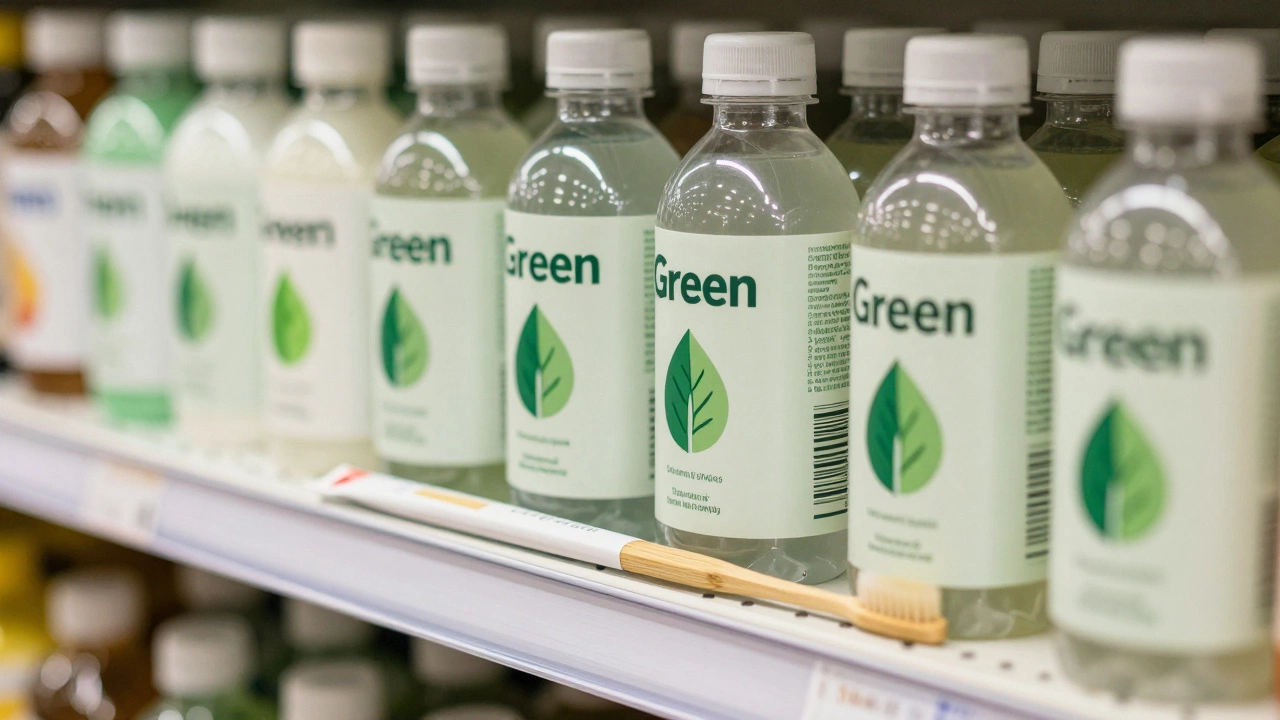
"Green" is the catchall word. It’s vague. It’s emotional. It’s what companies use when they want you to feel good about buying something without actually changing how it’s made. A plastic water bottle labeled "green" might be made from 10% recycled plastic. The rest? Fresh oil. The packaging? Still single-use. The shipping? Emitted a ton of CO2. But the label says "green," so you feel okay buying it. In Australia, a 2024 ACCC report found that 43% of environmental claims on household products were misleading. That’s almost half. Companies use "green" to tap into your values, not to deliver real environmental benefits. It’s a shortcut. A visual cue. A way to sell more without doing the hard work.Eco-Friendly Means Real Impact
"Eco-friendly" sounds similar, but it carries a heavier weight. True eco-friendly products are designed to reduce harm to the environment across their entire life cycle. That means:- Materials are renewable, recycled, or compostable
- Manufacturing uses minimal water and energy
- No toxic chemicals are released during use or disposal
- Packaging is either absent or fully recyclable
- The product can be repaired, reused, or safely returned to nature
Why the Confusion Exists
The confusion isn’t accidental. It’s profitable. "Green" is cheaper to claim. "Eco-friendly" requires third-party certifications, supply chain audits, and real investment. Companies know most people won’t dig deeper. They rely on that. Think of it like this: "green" is like saying "healthy" on a box of sugary cereal. It’s not wrong-it’s just incomplete. And misleading. In Sydney, a 2025 survey by the University of Technology found that 68% of shoppers believe "eco-friendly" means the product is completely harmless to the environment. Only 12% could correctly define what that actually entails. That gap? That’s where greenwashing thrives.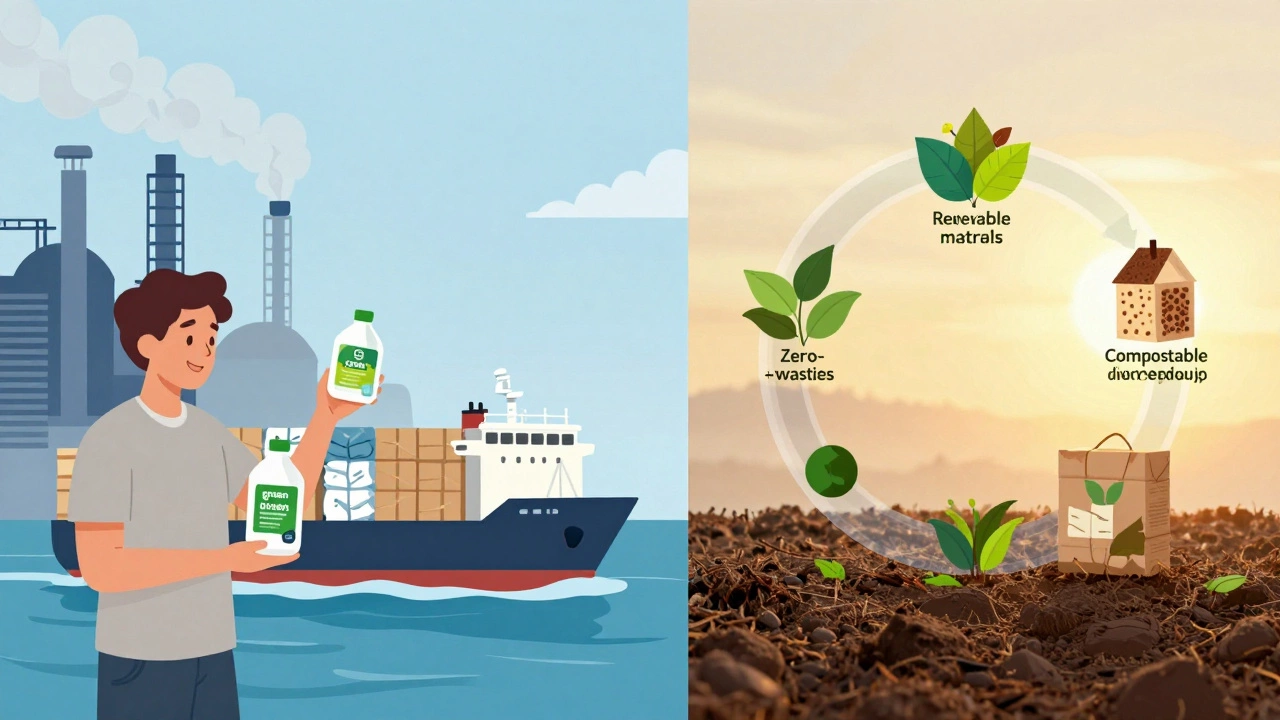
How to Tell the Difference
You don’t need a degree in environmental science. Here’s how to spot the real deal:- Look for certifications: Crabtree & Evelyn uses "green"-but Ecocert or Global Organic Textile Standard (GOTS) are verified standards. If you don’t see one, be skeptical.
- Check the ingredients: If you can’t pronounce half of them, it’s probably not eco-friendly. Natural doesn’t mean safe, but synthetic chemicals like phthalates, parabens, and sulfates? They’re red flags.
- Ask: Where did this come from? If the company won’t say where materials are sourced, or how it’s made, they’re hiding something.
- Look at packaging: Is it plastic? Is it layered? Is it recyclable in your local bin? If the answer is yes to the first two and no to the last, it’s not eco-friendly.
- Research the brand: A company that publishes a sustainability report, sets clear reduction targets, and tracks progress? That’s real. A company with a single Instagram post about "saving the planet"? Probably not.
Real Examples You Can Trust
Here’s what eco-friendly looks like in practice:- Blueland cleaning tablets: You buy a reusable bottle, add water, and drop in a tablet. Zero plastic bottles shipped. Made in the US with plant-based ingredients.
- Who Gives A Crap toilet paper: 100% recycled paper, plastic-free packaging, and they donate 50% of profits to build toilets in developing countries.
- Stasher silicone bags: Replace thousands of plastic zip-lock bags. Made in the US, recyclable at end-of-life, and backed by a 10-year warranty.
The Bigger Picture
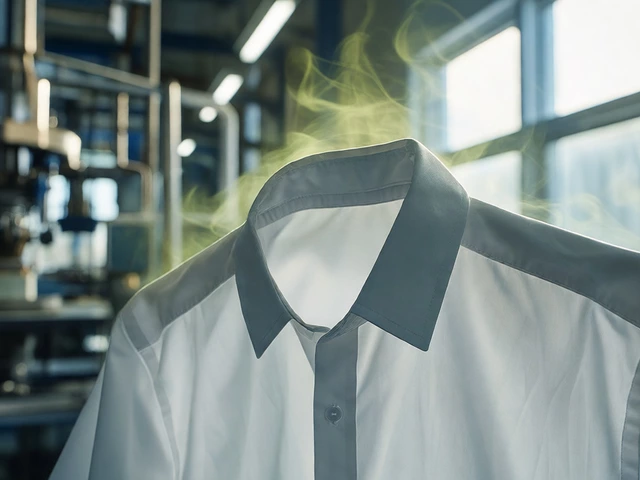
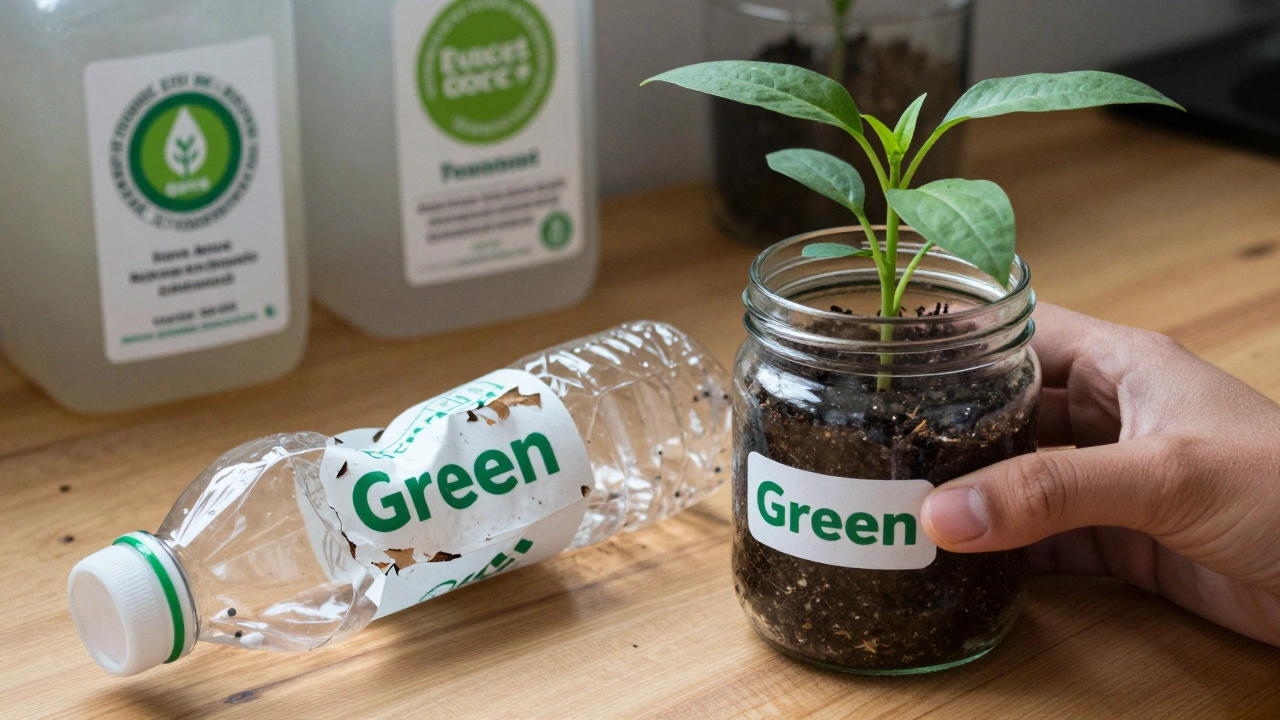
The difference between green and eco-friendly isn’t just about labels. It’s about systems. Green tries to make you feel better. Eco-friendly tries to fix the system. Buying a "green" cotton t-shirt? Cotton uses 2,700 liters of water to make one shirt. Even if it’s labeled organic, it’s still a huge water hog. An eco-friendly alternative? A shirt made from hemp, grown without pesticides, dyed with natural pigments, and sewn locally. That’s real change. And here’s the hard truth: You can’t buy your way out of the climate crisis. But you can vote with your wallet. Choose products that don’t just say they care-they prove it.What to Do Next
Start small. Pick one item you buy every week-dish soap, laundry detergent, a snack wrapper. Look at the label. Google the brand’s sustainability page. Check if they have any certifications. Talk to the company. Ask: "What makes this product truly eco-friendly?" You’ll be surprised how often the answer is silence. Don’t settle for green. Demand eco-friendly. Because the planet doesn’t need more buzzwords. It needs fewer plastic bags, less toxic runoff, and more honest choices.Are "green" and "eco-friendly" the same thing?
No. "Green" is a vague marketing term that suggests environmental benefits without proof. "Eco-friendly" means a product has been designed to reduce harm across its entire life cycle-from materials to disposal-with verifiable actions behind it.
Can a product be green but not eco-friendly?
Yes. A product can be labeled "green" because it uses slightly less plastic or has a plant-based scent, but still be made with toxic chemicals, shipped overseas in single-use packaging, or produced in a factory that pollutes waterways. Without full lifecycle responsibility, it’s not eco-friendly.
How do I know if a product is truly eco-friendly?
Look for third-party certifications like Ecocert, GOTS, or B Corp. Check if the brand discloses its supply chain, manufacturing process, and end-of-life plan. Avoid vague terms like "natural" or "earth-friendly." Real eco-friendly products are transparent and traceable.
Is bamboo always eco-friendly?
Not always. Bamboo grows fast and is renewable, but if it’s processed with harsh chemicals to turn it into fabric (like bamboo viscose), or shipped from halfway across the world in plastic, it’s not eco-friendly. Look for bamboo products that are mechanically processed and locally made.
Why do companies use "green" instead of "eco-friendly"?
Because "green" is easier and cheaper to claim. It doesn’t require audits, certifications, or changes to production. "Eco-friendly" implies accountability. Companies avoid it because they don’t want to be held to a standard.