Food Safety Checklist
Check your meal prep practices against the 4 C's to avoid food poisoning. Answer honestly for accurate results.
Clean
Cook
Chill
Cross-Contamination
Your Food Safety Score
out of 12 points
Every year, millions of people get sick from food poisoning-not because they ate something spoiled, but because they skipped a few simple steps during meal prep. You don’t need a chemistry degree or a fancy kitchen to keep your meals safe. You just need to remember the four C’s: Clean, Cook, Chill, and Cross-contamination. Skip one, and you’re rolling the dice with your health-or your family’s.
Clean: Wash Everything, Every Time
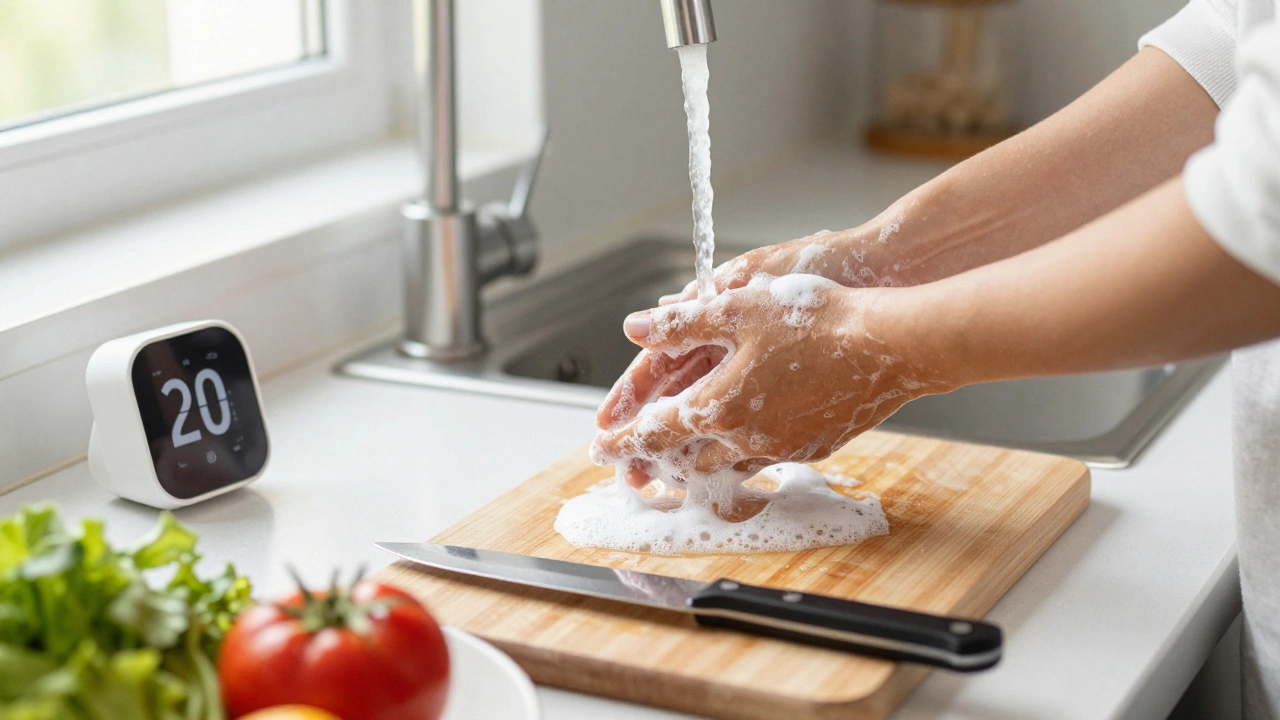
Washing your hands isn’t just for after the bathroom. It’s the first line of defense against foodborne illness. Before you touch any food, before you chop vegetables, before you even open a can-wash your hands with soap and warm water for at least 20 seconds. That’s about the time it takes to sing "Happy Birthday" twice.
But it’s not just your hands. Cutting boards, knives, countertops, and even the outside of produce like melons or oranges need cleaning. Bacteria can hide on rough surfaces or in crevices. A damp cloth with a drop of dish soap works fine. Don’t just wipe-scrub. Rinse well. Dry with a clean towel or let air-dry.
And yes, rinse your fruits and veggies under running water, even if you plan to peel them. A study from the FDA found that rinsing produce reduces E. coli and Salmonella by up to 90%. Don’t use soap, bleach, or special produce washes-plain water is all you need.
Cook: Heat Is Your Best Friend
Germs don’t survive high heat. That’s why cooking food to the right temperature matters more than how long you’ve been simmering it. Guessing isn’t enough. You need a thermometer.
Here’s what you’re aiming for:
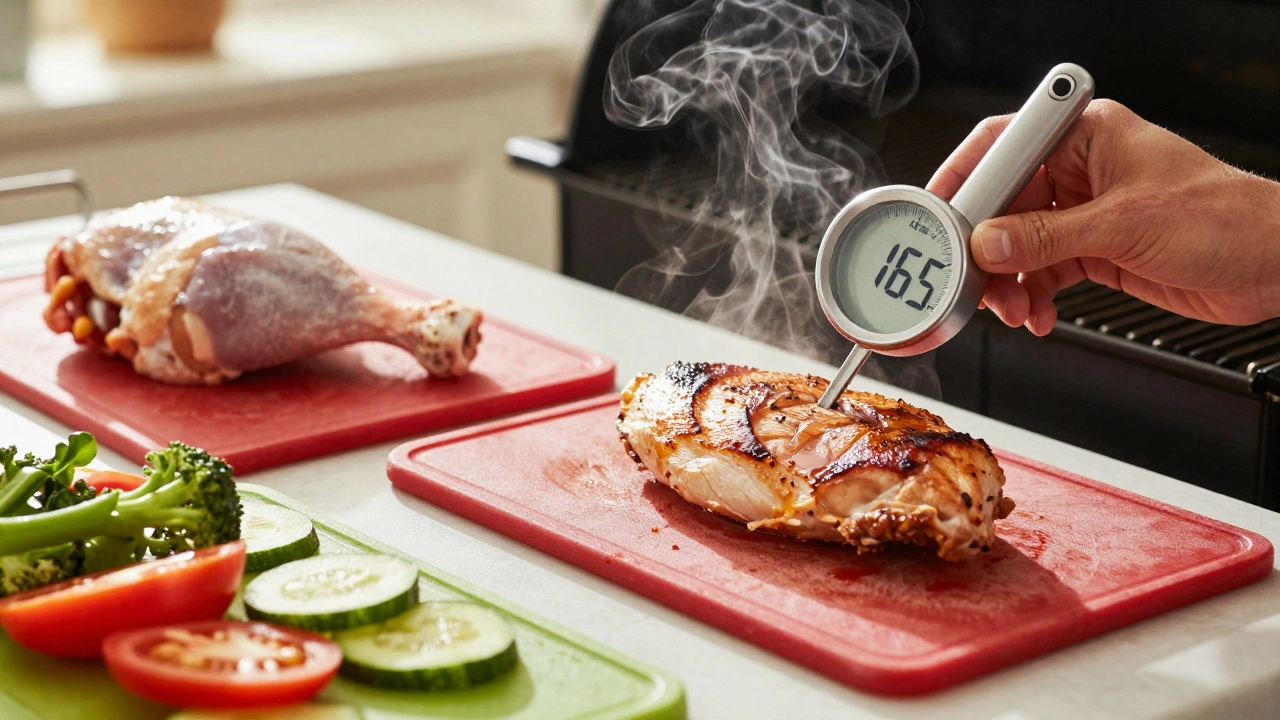
- Poultry (chicken, turkey): 165°F (74°C)
- Ground beef, pork, lamb: 160°F (71°C)
- Pork chops, steaks, fish: 145°F (63°C), then let rest 3 minutes
- Eggs: Cook until yolks are firm, or use pasteurized eggs for dishes like Caesar dressing or homemade ice cream
Don’t rely on color. Pink chicken doesn’t mean undercooked-it just means it’s pink. Some chicken stays pink even after hitting 165°F. That’s normal. The thermometer is the only truth-teller.
Leftovers? Reheat them to at least 165°F. Microwaves heat unevenly, so stir food halfway through and check the temperature in a few spots. Cold spots = bacterial safe zones.
Chill: Don’t Let Bacteria Throw a Party
Bacteria multiply fastest between 40°F and 140°F. That’s called the "danger zone." And it doesn’t take long. Two hours is the max you should leave food out at room temperature. If it’s over 90°F outside-like during a summer picnic-that drops to just one hour.
That means: refrigerate leftovers fast. Don’t wait for your soup to cool on the counter. Put hot food in shallow containers and pop it in the fridge within 30 minutes. The smaller the container, the faster it chills.
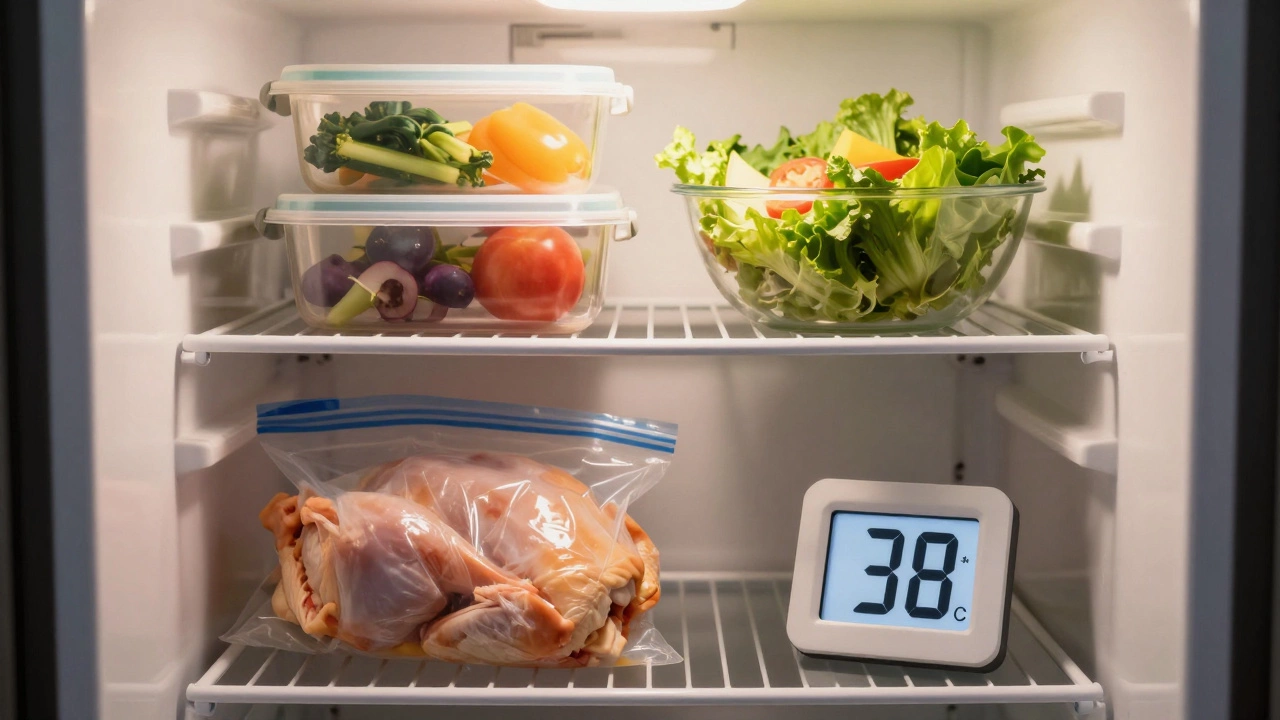
Your fridge should be at or below 40°F. Most people don’t check. Grab a fridge thermometer-it costs less than $5. If your fridge is set to "coldest," it might be too cold and freeze things you don’t want frozen. If it’s at "medium," it’s probably too warm.
And don’t overstuff your fridge. Cold air needs to circulate. If you can’t open the door without knocking over a container, you’re risking spoilage.
Cross-Contamination: Keep Raw and Ready-to-Eat Apart
This is where most people mess up-even if they wash their hands and cook properly. Cross-contamination happens when bacteria from raw meat, poultry, seafood, or eggs get onto food that’s already cooked or ready to eat.
Think about it: you chop raw chicken on a board, then slice your tomatoes on the same board without washing it. Boom. Salmonella on your salad.
Fix it with three simple rules:
- Use separate cutting boards: one for raw meat, one for veggies and bread.
- Never put cooked food back on a plate that held raw meat.
- Wash utensils, tongs, and spoons after touching raw ingredients.
Store raw meat on the bottom shelf of your fridge. That way, if it drips, it won’t land on your lettuce or yogurt. Use sealed containers or zip-top bags. Label them if you’re storing multiple items.
And here’s a pro tip: wash your hands after handling raw meat-even if you used gloves. Gloves can tear, and bacteria can cling to your skin underneath.
Putting It All Together: A Real Meal Prep Day
Let’s say you’re prepping meals for the week: grilled chicken, quinoa, roasted veggies, and a side salad.
Start by washing your hands. Then wash the veggies. Use one cutting board for the veggies, another for the chicken. Marinate the chicken in the fridge-not on the counter. Use a bowl, not a dish you’ll later use for serving.
Grill the chicken until it hits 165°F. Let it rest. While it’s resting, wash your cutting board and knife with hot soapy water. Dry it. Now chop your onions and peppers on the clean board.
Once everything’s cooked, let it cool for 15 minutes. Then divide into meal containers. Pop them in the fridge within 30 minutes. Keep the salad ingredients separate until you’re ready to eat. Dressing on top? Add it fresh, not the night before.
When you reheat your meal on Wednesday, check the temperature. Stir it. Make sure it’s steaming hot all the way through.
What If You Already Ate Something Suspicious?
Food poisoning symptoms-nausea, vomiting, diarrhea, fever-usually show up 6 to 48 hours after eating contaminated food. Most cases go away on their own in a few days.
But if you’re pregnant, over 65, have a weak immune system, or if symptoms last more than three days, see a doctor. Dehydration is the real danger. Drink water. Sip broth. Eat bland foods like toast or rice if you can keep them down.
Don’t take anti-diarrhea meds unless your doctor says so. Your body’s trying to flush out the bad stuff. Stopping it too soon can make things worse.
Common Myths That Get People Sick
- "If it smells bad, it’s spoiled." Not true. Salmonella and E. coli don’t change the smell or taste of food.
- "I’ve eaten this raw chicken before and never got sick." Luck isn’t a food safety strategy. One time is all it takes.
- "Washing meat removes bacteria." Actually, washing meat spreads bacteria around your sink and counters. Don’t do it.
- "Microwaving kills everything." Only if you heat it evenly. Cold spots still harbor bacteria.
The 4 C’s aren’t complicated. They’re practical. And they work-every time.
Do I need special cleaners to wash my kitchen surfaces?
No. Plain soap and water are enough for most surfaces. Bleach solutions can be used for disinfecting after handling raw meat, but only if you follow the right dilution (1 tablespoon per gallon of water). Always rinse after using bleach. Harsh chemicals aren’t needed for everyday prep.
Can I reuse plastic containers for meal prep?
Yes, as long as they’re food-grade and not cracked or warped. Avoid using old takeout containers for reheating-they’re not designed for high heat. Glass or BPA-free plastic labeled "microwave-safe" is best. Wash them after each use, and replace them if they show signs of wear.
Is it safe to thaw meat on the counter?
No. Thawing meat at room temperature lets bacteria grow rapidly on the outside while the inside is still frozen. Always thaw in the fridge, in cold water (in a sealed bag, changing water every 30 minutes), or in the microwave if you’re cooking it right away.
How long can I keep leftovers in the fridge?
Most cooked leftovers last 3 to 4 days in the fridge. After that, bacteria can grow even if the food looks and smells fine. If you won’t eat it within 4 days, freeze it. Frozen meals stay safe indefinitely, but quality drops after 2 to 6 months.
What’s the safest way to handle eggs?
Always buy eggs refrigerated and keep them that way. Don’t wash them before storing-they’re coated with a natural protective layer. Cook eggs until both yolk and white are firm. For recipes that call for raw eggs (like hollandaise), use pasteurized eggs. They’re available in most grocery stores now.