Clothing Safety Checker
Answer these quick questions about a garment you own or are considering buying to estimate its chemical risk level.
Your Clothing Risk Assessment
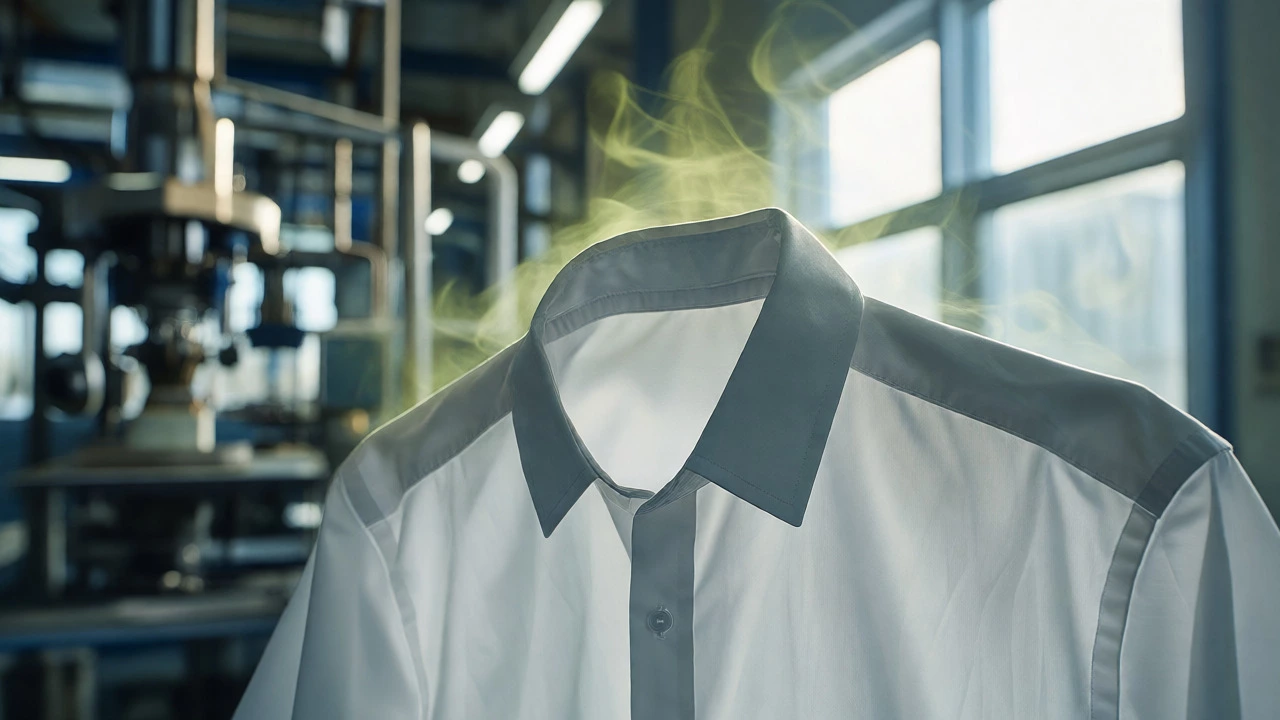
You wash your favorite shirt. You wear it all day. But have you ever stopped to think about what’s actually on that fabric? It’s not just cotton or polyester. It’s often a cocktail of industrial chemicals designed to make clothes wrinkle-free, stain-resistant, and vibrant. The problem is, some of these ingredients aren’t exactly friendly to your skin or the planet.
If you’ve ever felt an itch after putting on a new pair of jeans, or noticed a strange chemical smell coming from a fast-fashion jacket, you’re not imagining things. We are talking about toxic residues left behind during manufacturing. This isn’t just about hygiene; it’s about health risks linked to endocrine disruptors and carcinogens. So, which brands are playing it safe, and which ones are still cutting corners with hazardous dyes?
The Invisible Threat: Why Clothes Smell Like Plastic
Let’s be real for a second. That "new clothes" smell? It’s rarely just fresh laundry. In many cases, it’s volatile organic compounds (VOCs) off-gassing from the factory floor. Fast fashion relies on speed and low costs. To achieve this, manufacturers use cheap finishing agents. These agents keep colors bright and prevent shrinking. But they leave behind formaldehyde, phthalates, and heavy metals.
Your skin is your largest organ. It absorbs things. When you sweat, your pores open up. If your shirt is soaked in chemical residues, those toxins can enter your bloodstream. Studies from the Greenpeace Detox campaign have found traces of NPEs (nonylphenol ethoxylates) in garments from major global retailers. These chemicals break down into nonylphenols, which mimic estrogen in the body. For pregnant women and children, this is a legitimate concern.
You don’t need a degree in chemistry to spot potential issues. Look at the price tag. If a $5 t-shirt looks pristine, feels stiff, and smells sharp out of the bag, ask yourself: how much money went into safety testing? Probably very little.
Red Flags: What to Avoid Before Buying
Not every brand is guilty, but some practices raise eyebrows. Here is what usually signals trouble:
- Excessive Wrinkle Resistance: If a cotton shirt never needs ironing, it likely has a formaldehyde-based resin finish. Formaldehyde is a known carcinogen.
- Vivid, Unnatural Colors: Cheap azo dyes can release aromatic amines, which are potentially cancer-causing. Bright reds and blues are common culprits if not properly fixed.
- Stiff Synthetic Fabrics: Polyester and nylon often carry per- and polyfluoroalkyl substances (PFAS), especially if marketed as "stain-proof." PFAS are called "forever chemicals" because they don’t break down.
- Strong Chemical Odor: A pungent smell that doesn’t fade after one wash suggests high levels of residual solvents.
It’s easy to blame the big names like H&M or Zara. They are huge targets. But size doesn’t always equal toxicity. Some smaller, trendy brands use even cheaper suppliers with less oversight. Conversely, some mass-market giants have invested heavily in their "Conscious" or "Eco" lines, though critics argue these are often greenwashing tactics.

Who Is Doing It Right? The Safe List
So, where do you shop if you want peace of mind? Transparency is key. Brands that publish their supplier lists and chemical management policies are generally safer bets. They adhere to standards like OEKO-TEX® Standard 100, which tests for hundreds of harmful substances.
| Brand Type | Transparency Level | Chemical Risk | Price Point |
|---|---|---|---|
| Patagonia | High (Publishes full supply chain) | Low (Bluesign® certified) | $ |
| Pact | Medium-High (GOTS certified) | Low (Organic focus) | $$ |
| H&M Conscious | Medium (Improving, but complex) | Moderate (Mixed materials) | $ |
| Shein/Temu | Low (Opaque supply chain) | High (Unknown testing rigor) | $ |
| Levi's | Medium-High (Water| Moderate-Low (Specific lines only) |
$$ |
|
Patagonia is a brand widely recognized for its commitment to environmental sustainability and ethical sourcing. They use Bluesign® approved fabrics, meaning the entire production process meets strict safety standards. You won’t find hidden nasties here.
Pact focuses exclusively on organic cotton basics certified by the Global Organic Textile Standard (GOTS). GOTS prohibits most synthetic pesticides and fertilizers, ensuring the raw material itself is clean before processing begins.
What about the middle ground? Levi's has made strides with their Water
On the flip side, ultra-fast fashion platforms like Shein operate on an ultra-fast model with thousands of new items daily, making rigorous individual chemical testing difficult to verify publicly. While they claim improvements, the sheer volume raises questions about consistency.
Decoding the Labels: Your Cheat Sheet
You can’t test every shirt in the store. But you can read labels. Ignore the marketing fluff like "eco-friendly" or "green." Those words mean nothing legally in many countries. Look for specific certifications instead.
- GOTS (Global Organic Textile Standard): Covers both ecological and social criteria. If it says GOTS, the organic content is verified.
- OEKO-TEX® Standard 100: Tests the final product for harmful substances. It doesn’t guarantee the farming was organic, but it ensures the shirt is safe to wear.
- Bluesign®: Focuses on resource efficiency and consumer safety throughout the manufacturing process.
- Cradle to Cradle Certified™: Looks at material health, circularity, and renewable energy use.
If a garment has none of these logos, assume it contains conventional chemicals unless stated otherwise. This applies to everything from socks to jackets.

How to Reduce Exposure at Home
Even if you buy from a "safe" brand, pre-washing is non-negotiable. Washing new clothes removes loose fibers, excess dye, and surface chemicals. Use a gentle detergent without optical brighteners, which can add more synthetic fragrances to the mix.
For deeper cleaning, consider adding half a cup of white vinegar to the rinse cycle. Vinegar helps neutralize alkaline residues from detergents and can help set colors naturally. Air drying is also better than tumble drying, which can heat-set any remaining chemical finishes into the fabric fibers.
Wear underlayers. A simple cotton undershirt acts as a barrier between your skin and a synthetic outer layer. This trick is especially useful for winter coats or waterproof jackets that might contain PFAS treatments.
The Future of Fabric: Are Things Getting Better?
Consumer pressure works. The EU’s REACH regulation restricts certain chemicals, forcing global brands to comply if they want to sell in Europe. Australia’s ACCC has also stepped up scrutiny on misleading sustainability claims. This means brands are slowly reformulating their processes.
New technologies are emerging too. Waterless dyeing methods, like CO2 dyeing, reduce chemical waste significantly. Bio-based finishes are replacing petroleum-based resins. It’s a slow shift, but the tide is turning. As shoppers, our power lies in voting with our wallets. Every time we choose a certified item over a uncertified bargain, we signal to the industry that safety matters.
Don’t let perfection be the enemy of good. You don’t have to throw out your current wardrobe. Start by checking labels on your next purchase. Ask questions. Demand transparency. Your skin will thank you.
Do expensive brands always have fewer toxic chemicals?
Not necessarily. Price does not correlate directly with chemical safety. Luxury brands may use high-quality natural fibers but still apply harsh finishing agents for durability or sheen. Always check for third-party certifications like OEKO-TEX or GOTS rather than relying on price tags alone.
Is washing new clothes enough to remove all toxins?
Washing removes surface-level residues, excess dyes, and some water-soluble chemicals. However, it cannot remove chemicals that are bonded deeply into synthetic fibers, such as certain flame retardants or permanent press finishes. Pre-washing reduces exposure significantly but does not eliminate all potential risks.
Why do dark-colored clothes seem more toxic?
Dark colors, especially blacks and deep blues, require higher concentrations of dye and fixatives to achieve saturation. These fixatives often contain heavier metals or stronger binding agents compared to lighter shades. Additionally, dark fabrics hide staining from chemical spills during manufacturing, potentially masking quality control issues.
Are organic cotton clothes completely free of chemicals?
No. Organic certification refers primarily to the growing process of the cotton, prohibiting synthetic pesticides and GMOs. However, the post-harvest processing-dyeing, printing, and finishing-may still involve chemicals unless the garment also holds a separate certification like OEKO-TEX or GOTS (which regulates processing inputs).
What are PFAS and why should I avoid them in clothing?
PFAS (per- and polyfluoroalkyl substances) are used to make fabrics water-repellent and stain-resistant. They are linked to various health issues, including immune system effects and cancer. Because they persist in the environment and human body, they are nicknamed "forever chemicals." Many outdoor gear brands are now phasing them out due to regulatory pressure.