
Work-Life Balance Risk Assessment
Based on the signs of imbalance described in the article, estimate your average weekly hours spent working beyond necessary duties and your current stress level to see where you stand.
Imagine your phone battery. You ignore the low-battery warning until it hits 1%. Suddenly, everything shuts down. Your apps freeze, the screen goes black, and you’re stranded without a charger nearby. That is exactly what happens to your body and mind when you ignore work-life balance for too long. It’s not a gradual decline; it’s often a sudden crash.
We live in a culture that glorifies the grind. We wear our exhaustion like a badge of honor. But ignoring the boundary between your career and your personal life doesn’t make you a hero. It makes you a ticking time bomb. So, what actually happens when that balance tips? The answer isn’t just about feeling tired. It’s about a systemic breakdown of your health, relationships, and ability to function.
The Physical Toll of Chronic Overwork
Your body keeps score. When you are constantly stressed, your brain triggers the release of cortisol and adrenaline. This is the "fight or flight" response, designed for short-term survival, not for staring at a spreadsheet for ten hours straight. When this system stays switched on, it wreaks havoc on your physical health.
First, your sleep suffers. You might lie in bed exhausted but wired, unable to shut off your racing thoughts. This leads to insomnia or poor-quality sleep. Without restorative sleep, your immune system weakens. You find yourself catching every cold that goes around the office. Headaches become frequent companions, and tension migrates to your neck and shoulders, leading to chronic pain.
Long-term, the risks are far more serious. Studies consistently link chronic overwork to cardiovascular issues. High blood pressure and heart disease are not just problems for older adults; they can strike anyone who lives in a state of perpetual stress. Your digestion slows down, leading to weight gain or loss, and your skin may break out due to hormonal imbalances. Ignoring work-life balance is literally eating away at your physical foundation.
Mental Fog and Cognitive Decline
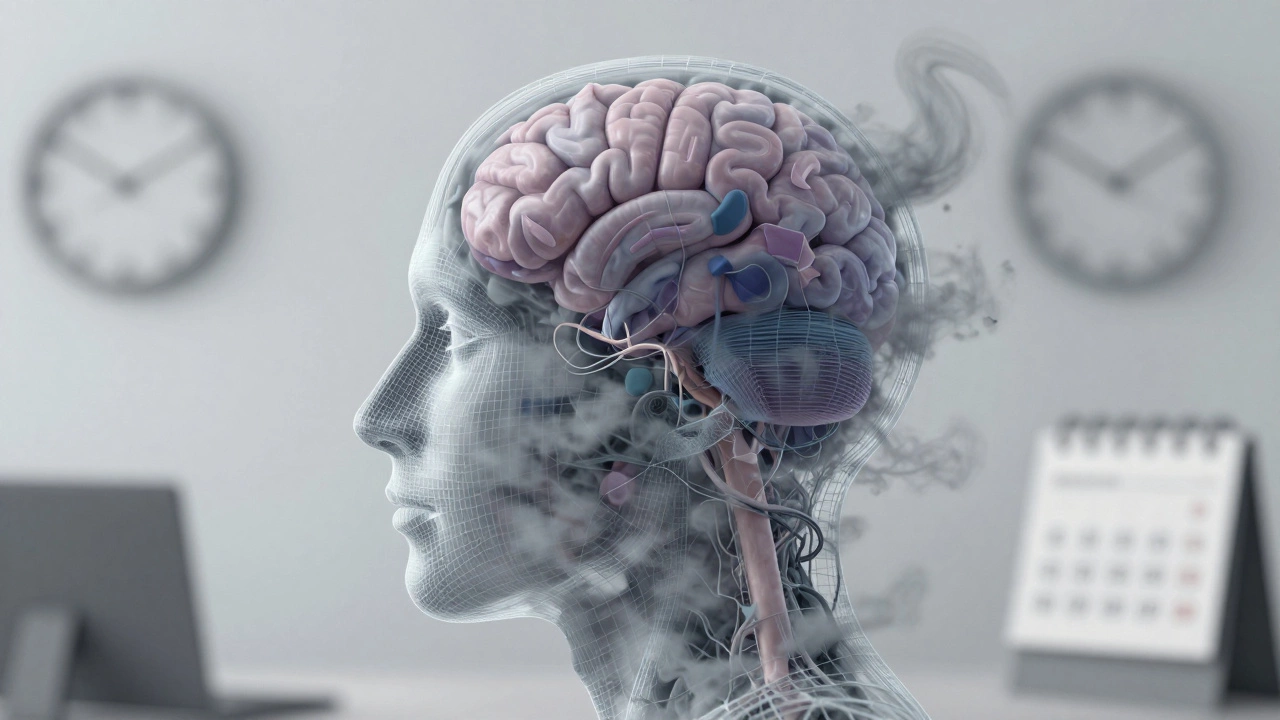
You’ve probably heard the phrase "brain fog." It’s not just a buzzword. When you are burned out, your prefrontal cortex-the part of your brain responsible for decision-making, focus, and emotional regulation-starts to malfunction. You feel sluggish, confused, and unable to concentrate on simple tasks.
This cognitive decline creates a vicious cycle. Because you can’t focus, you take longer to complete tasks. Because you take longer, you have to work later to catch up. Working later means less sleep, which makes your brain fog worse the next day. You start making mistakes you never used to make. You forget names, miss deadlines, and struggle to recall information you know you studied.
Creativity also takes a hit. Innovation requires a relaxed mind that can make unexpected connections. When you are in survival mode, your brain narrows its focus to immediate threats. You stop seeing the big picture. You become rigid in your thinking. For professionals whose jobs rely on problem-solving or creative output, losing work-life balance is directly costing them their professional edge.
The Erosion of Relationships
Work-life imbalance doesn’t happen in a vacuum. It spills over into every other area of your life. The most visible casualty is usually your relationships. When you are always working, you are emotionally absent from the people who matter most. You might be physically present at dinner, but your mind is still on that email you didn’t send.
This presence-absence dynamic frustrates partners, friends, and family. They feel ignored and unimportant. Arguments increase because you are irritable and short-tempered. Stress lowers your threshold for patience. A minor comment from your partner feels like an attack because your nervous system is already overloaded. Over time, this emotional distance grows into resentment. Divorce rates are significantly higher among couples where one partner is chronically overworked and disconnected.
Social isolation follows. You cancel plans because you’re too tired. You stop calling friends because you don’t have the energy. Eventually, people stop inviting you. You end up alone, which increases stress levels, pushing you back into work as a safe, predictable environment. It’s a lonely trap.
Professional Paradox: Less Work, More Errors
Here is the irony: sacrificing your personal life to work harder often results in worse performance. This is known as the law of diminishing returns. After a certain number of hours, your productivity plummets. You are typing faster, but the quality of your work drops. You are attending more meetings, but you are contributing less value.
Burnout leads to cynicism. You start to resent your job, your boss, and your colleagues. This attitude is contagious. It affects team morale and culture. Moreover, burnt-out employees are more likely to call in sick or quit entirely. The turnover cost for companies is huge. By trying to save time by working weekends, you might actually be setting yourself up for a medical leave or a forced departure due to poor performance.
| Area | No Work-Life Balance (Burnout) | Healthy Balance |
|---|---|---|
| Energy Levels | Chronic fatigue, needing caffeine to function | Stable energy, natural rhythms |
| Focus | Distracted, brain fog, multitasking errors | Deep focus, clear prioritization |
| Emotions | Irritable, anxious, cynical | Resilient, patient, optimistic |
| Health | Frequent illness, tension headaches | Strong immunity, regular exercise |
| Relationships | Conflict, isolation, neglect | Connection, support, joy |

The Emotional Spiral: Anxiety and Depression
When you lose control over your time, you lose a sense of agency. This helplessness is a key driver of anxiety and depression. You feel trapped in a loop you cannot escape. The constant pressure to perform erodes your self-esteem. You begin to tie your entire worth to your output. If you aren’t producing, you feel worthless.
Anxiety manifests as worry about the future. Will I meet the deadline? Will my boss be angry? What if I get sick? These thoughts keep you awake at night. Depression sets in when the effort no longer feels rewarding. You feel numb, detached, and empty. Hobbies you once loved bring no joy. This is called anhedonia, and it is a hallmark of severe burnout.
In Australia, mental health services report a surge in cases related to workplace stress. The stigma around taking mental health days is fading, but many people still wait until they are in crisis before seeking help. Recognizing these emotional shifts early is crucial. They are not signs of weakness; they are signals that your system is overloaded.
How to Reclaim Your Balance
If you recognize these symptoms in yourself, it’s not too late to turn things around. Rebuilding work-life balance isn’t about doing less work; it’s about protecting your energy. Start by setting hard boundaries. Define your work hours and stick to them. Turn off notifications after hours. Learn to say "no" to non-essential tasks.
Prioritize recovery. Sleep is non-negotiable. Exercise helps metabolize stress hormones. Spend time in nature, especially if you live in a city like Sydney where green spaces are accessible. Connect with friends face-to-face. These activities aren’t distractions from work; they are fuel for sustainable performance.
Finally, talk to your employer. Many companies now understand that rested employees are productive employees. Discuss flexible working arrangements or workload adjustments. You deserve a career that enhances your life, not one that consumes it.
How quickly can burnout set in?
Burnout can develop in as little as three months if you are under high stress with no recovery time. However, for many, it is a slow build over years of neglecting self-care. Early signs include irritability and trouble sleeping.
Is work-life balance important for remote workers?
Yes, even more so. Remote workers often struggle to separate work from home life because the physical boundaries are gone. Without intentional breaks and a dedicated workspace, it’s easy to work 24/7, leading to faster burnout.
Can lack of work-life balance cause physical illness?
Absolutely. Chronic stress weakens the immune system, increases blood pressure, and raises the risk of heart disease, diabetes, and gastrointestinal issues. It is a significant contributor to long-term physical health problems.
What is the difference between stress and burnout?
Stress is characterized by having too much to do and feeling overwhelmed but still motivated. Burnout is characterized by having too little energy left, feeling cynical, and being emotionally detached from your work. Stress is overload; burnout is emptiness.
How can I tell if I am losing my work-life balance?
Look for changes in your sleep, mood, and relationships. If you are constantly tired, snapping at loved ones, and dreading Monday mornings, you are likely out of balance. Pay attention to your body’s signals before they become crises.