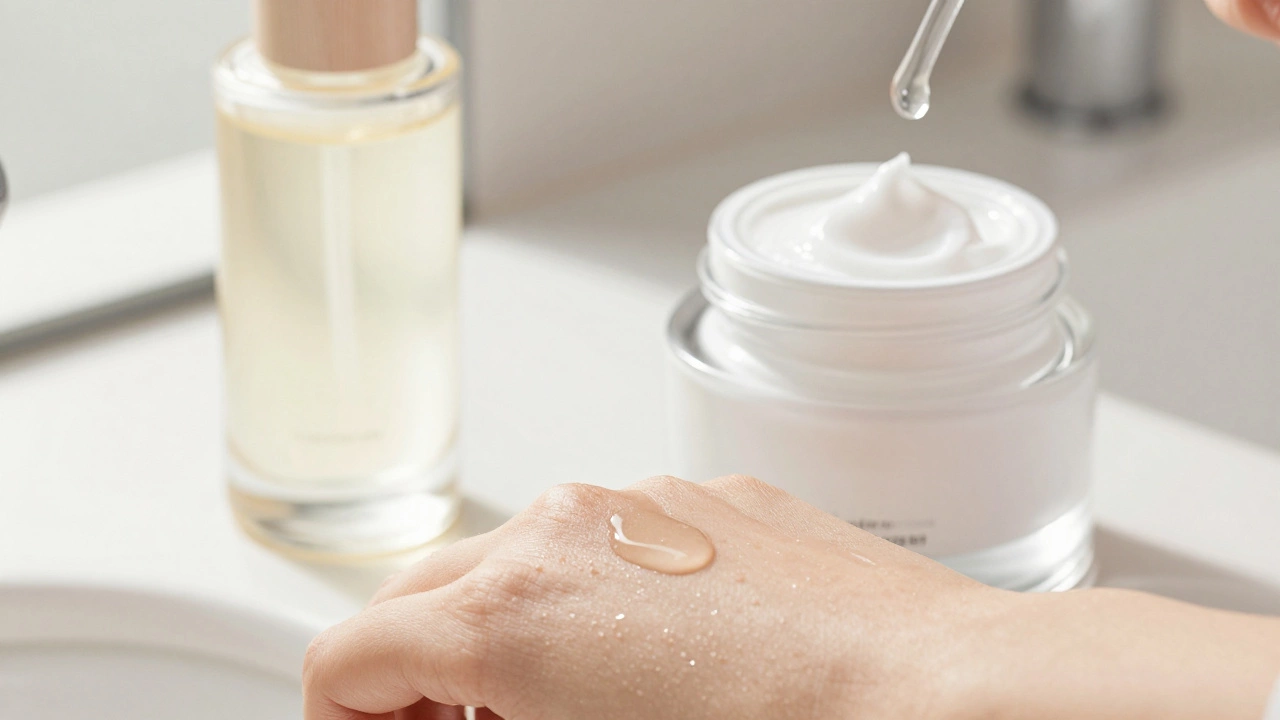
You've spent a decent amount of money on a high-end vitamin C serum and a rich cream, but if you apply them in the wrong order, you're basically flushing that money down the drain. The common struggle isn't just about which bottle to open first-it's about whether the ingredients are actually reaching your skin or just sitting on top of a thick layer of cream. If you put your moisturizer on first, your expensive serum can't penetrate the barrier, leaving you with a greasy face and zero results.
Quick Guide: The Golden Rule of Layering
- The Rule: Always go from thinnest to thickest consistency.
- The Order: Cleanser → Toner → serum or moisturizer first (Serum wins) → Moisturizer → SPF.
- The Reason: Moisturizers are designed to seal things in; serums are designed to sink in.
Why the Order Matters for Your Skin
Think of your skin like a sponge. If you coat a sponge in wax (your moisturizer), water (your serum) will just bead off the surface. Your skin works the same way. Moisturizer is an occlusive or emollient product designed to trap moisture in the skin and prevent transepidermal water loss. It creates a physical barrier on the surface of the epidermis.
On the flip side, Serum is a lightweight, highly concentrated liquid containing active ingredients that target specific skin concerns like aging or acne. Because serums have smaller molecules, they need a clear path to dive deep into the pores. If you apply a moisturizer first, you've essentially put up a "Do Not Enter" sign for those active ingredients.
How to Use Serums Correctly
Since the serum comes first, you want to make sure your skin is ready to absorb it. Applying serum to bone-dry skin is a common mistake. Most active ingredients, especially those that attract water, work better on slightly damp skin. After cleansing, pat your face with a towel but leave it a little moist, or apply a hydrating toner first.
Depending on what's in your bottle, your approach might change. For example, if you're using Hyaluronic Acid, which is a humectant that pulls moisture from the environment into your skin, you must follow up with a moisturizer immediately. If you don't, and you're in a dry environment, the hyaluronic acid can actually pull moisture *out* of your skin, leaving you drier than before.
The Role of Your Moisturizer
Once your serum has had a minute to sink in, it's time for the moisturizer. This isn't just a "finishing touch." The moisturizer locks in the serum and provides the lipids your skin needs to stay healthy. Depending on your skin type, you might choose a gel-based formula for oily skin or a heavy cream for dry skin.
For those with very oily skin, you might feel like you don't need a moisturizer after a serum. Resist that urge. Even oily skin needs a barrier to prevent moisture loss. If you skip this step, your skin might overproduce oil to compensate for the dryness, leading to more breakouts. A lightweight, non-comedogenic moisturizer is the perfect way to seal the deal without clogging pores.
| Feature | Serum | Moisturizer |
|---|---|---|
| Consistency | Light, watery, or oily | Creamy, gel, or lotion |
| Primary Goal | Targeted treatment (e.g., brightening) | Hydration and barrier protection |
| Molecule Size | Small (deep penetration) | Large (surface protection) |
| Application Order | Before moisturizer | After serum |

Dealing with Multiple Serums
What happens when you have three different serums? You can't just slap them all on at once and hope for the best. The "thinnest to thickest" rule still applies. If you have a watery Vitamin C serum and a thicker, oil-based Retinol product, the Vitamin C goes first.
However, some ingredients don't play well together. For instance, using Vitamin C and Retinol at the same time can cause irritation or cancel each other out. A pro tip is to use your antioxidants (like Vitamin C) in the morning to fight free radicals from the sun, and your cell-communicating ingredients (like Retinol) at night to help with skin regeneration while you sleep.
Morning vs. Evening Routines
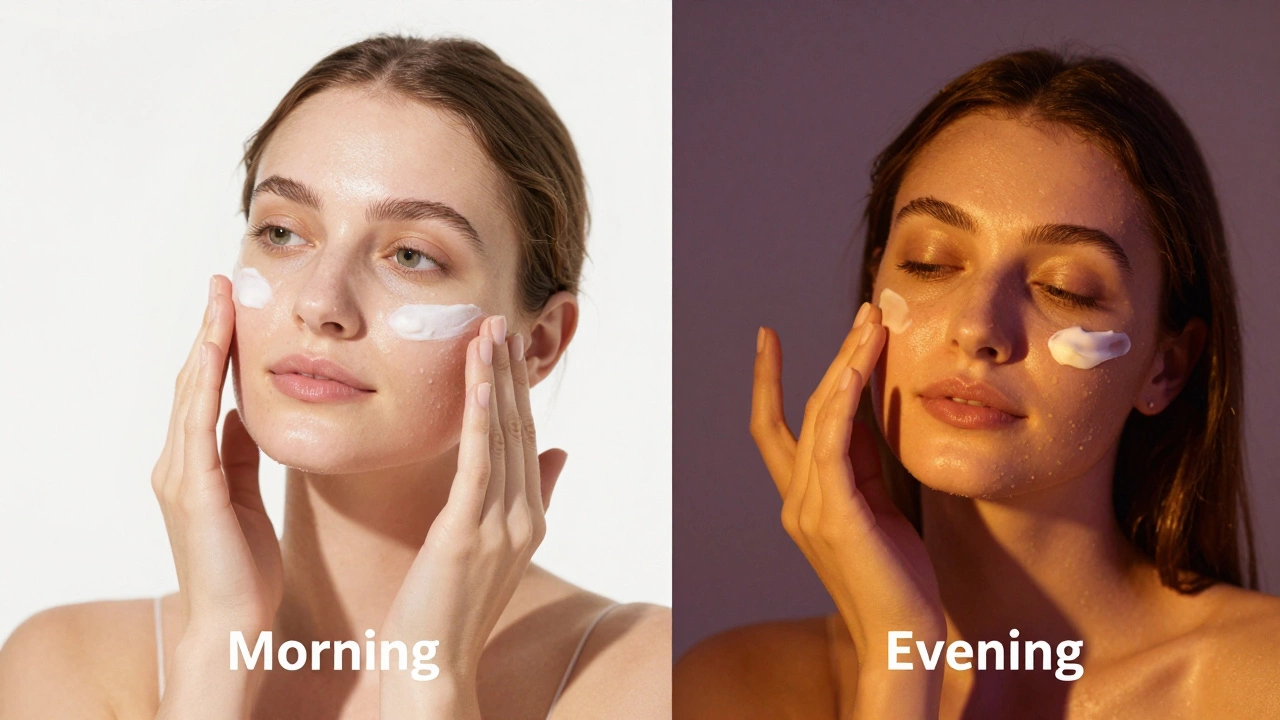
Your skin's needs shift throughout the day, so your layering strategy should too. In the morning, your focus is protection. Your routine should look like this: Cleanse, Vitamin C serum, moisturizer, and most importantly, Sunscreen. Sunscreen is the final layer because it's designed to reflect or absorb UV rays; if you put anything on top of it, you're diluting the protection.
At night, the focus shifts to repair. This is where you can be more aggressive with your serums. Use a chemical exfoliant like Salicylic Acid or a hydrating serum, followed by a richer night cream. Since you aren't worrying about makeup or sun exposure, you can use heavier occlusives to keep the skin plump and hydrated until morning.
Common Layering Mistakes to Avoid
One of the biggest pitfalls is rushing the process. If you apply your moisturizer ten seconds after your serum, you're just mixing them together on your face. Give your serum 60 seconds to absorb. You'll know it's ready when your skin feels slightly tacky but not dripping wet.
Another mistake is using too much product. A few drops of serum are enough for the entire face. Using half a bottle doesn't make it work faster; it just leads to "pilling," where the product clumps up into little balls on your skin. If you experience pilling, it's usually a sign that you've used too much product or that the ingredients in your serum and moisturizer are chemically clashing.
Adapting to Your Skin Type
Not every face is the same. If you have Sensitive Skin, you might find that layering too many actives causes redness. In this case, you can try the "sandwich method" for strong ingredients like Retinol: apply a thin layer of moisturizer, then your serum, then another layer of moisturizer. This slows down the absorption and reduces irritation without completely blocking the benefits.
For those with very dry skin, you can incorporate a facial oil. Oils are the thickest of all and should actually go *after* your moisturizer or be mixed into it. Because oils are occlusive, they seal in everything beneath them. If you put oil first, your serum and moisturizer will just slide right off.
Can I skip moisturizer if my serum is hydrating?
Generally, no. While some serums provide intense hydration, they don't always have the occlusive properties needed to keep that moisture from evaporating. A moisturizer acts as the seal that keeps the serum's benefits locked into your skin. Skipping it can lead to dehydration over time, regardless of how "hydrating" your serum is.
What if my serum is an oil?
If your serum is oil-based, the rules flip. Oils have larger molecules and are occlusive. In this specific case, apply your water-based serums first, then your moisturizer, and finish with the oil. This ensures the water-based actives can penetrate before the oil creates a barrier.
Do I need to wait between applying serum and moisturizer?
Yes, waiting about a minute is ideal. This allows the active ingredients in the serum to bond with the skin cells. If you apply moisturizer immediately, you risk diluting the serum and pushing it around the surface of the skin rather than letting it absorb.
Can I mix my serum into my moisturizer?
While it's tempting for the sake of speed, it's not recommended. Mixing them can alter the pH levels of the active ingredients in your serum, potentially making them less effective or even unstable. To get the most value from your products, layer them separately.
Does the order change for different skin types?
The fundamental "thinnest to thickest" rule stays the same. However, the *types* of products change. Oily skin might use a gel-moisturizer, while dry skin uses a thick cream. The sequence remains Serum → Moisturizer, but the specific products are chosen based on whether the skin needs more oil or more water.