
Room Decluttering Strategy Planner
Preparation: Battle Stations
Get your bins ready before touching anything.
- ☐ Get 4 large bags/boxes (Trash, Donate, Relocate, Keep)
- ☐ Label them clearly (use colors if possible)
- ☐ Put on music/podcast
- ☐ Move phone to another room
Phase 1: The Floor Sweep
Clear the walking surface first for immediate momentum.
- ☐ Pick up everything on the floor
- ☐ Trash -> Bag it immediately
- ☐ Belongs elsewhere -> Relocation Box
- ☐ Stays here -> 'Keep' Zone (don't put back yet)
Phase 2: Surface Clearing
Tackle desks, tables, and shelves one by one.
- ☐ Pick up every item on the surface
- ☐ Ask: "Do I use this regularly?"
- ☐ Ask: "Would I buy this again today?"
- ☐ Sort into your 4 bins
Phase 3: Vertical Storage
Open drawers and cabinets. Pull everything out.
- ☐ Empty drawer/cabinet completely
- ☐ Wipe the inside clean
- ☐ Remove duplicates (keep only what fits easily)
- ☐ Discard expired meds/receipts/takeout menus
Maintenance & Reset
Ensure the room stays clutter-free.
- ☐ Take photos of sentimental items (digitize memories)
- ☐ Seal any "maybe" boxes with a date (6-month rule)
- ☐ Commit to the One-In-One-Out rule
- ☐ Set a daily 10-minute reset timer
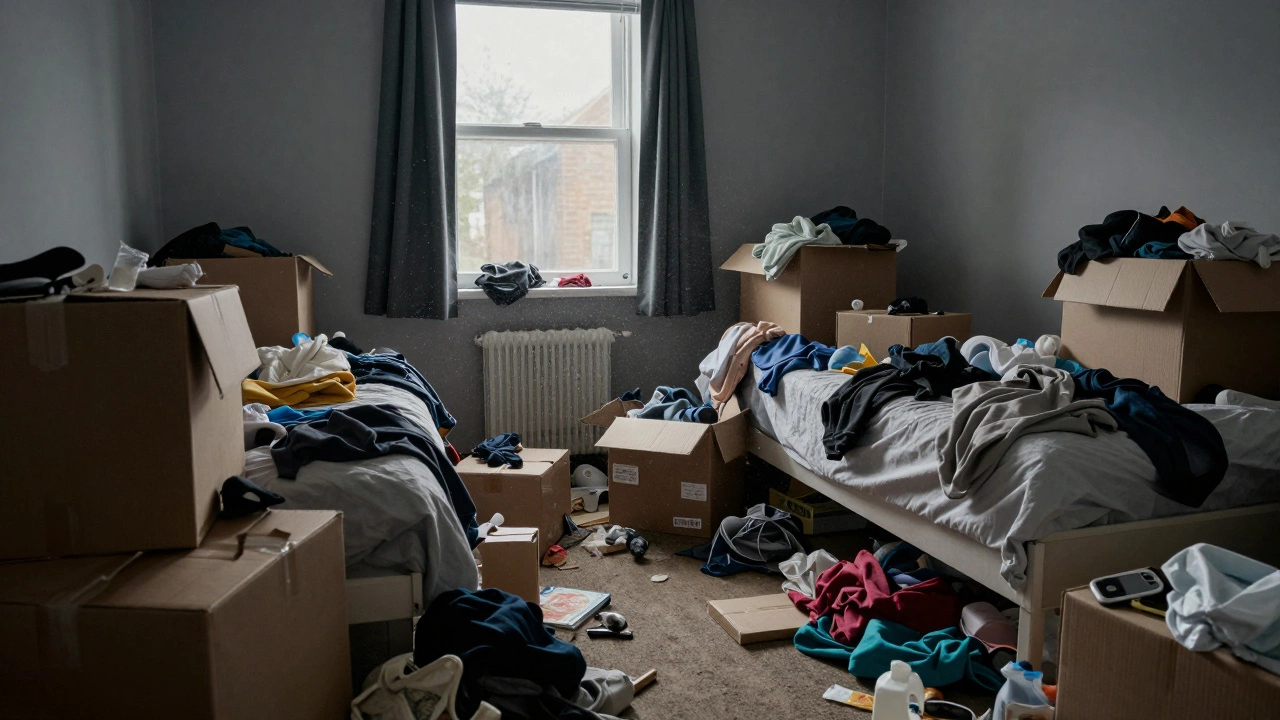
Staring at a room that looks more like a landfill than a living space is exhausting. It’s not just messy; it’s heavy. The air feels thick, your brain can’t find a resting place, and every step requires navigating an obstacle course of old boxes, forgotten clothes, and 'maybe I’ll need this someday' items. If you’re facing a room full of junk, the instinct is often to panic or give up before starting. But clearing it out isn’t about magic-it’s about strategy.
You don’t need to be a professional organizer or spend a fortune on storage bins to fix this. You just need a system that respects your psychology and keeps you moving forward. Here is how you tackle a chaotic room without burning out by hour two.
Key Takeaways
- Start with the floor: Clearing the walking surface gives you immediate momentum and physical space to work.
- Use the four-box method: Sort items into Keep, Donate, Trash, and Relocate to prevent decision fatigue.
- Set a timer: Work in short, intense bursts (20-30 minutes) to maintain energy and avoid overwhelm.
- Don’t organize yet: Focus on removing clutter first; organizing what remains comes later.
- Be ruthless with duplicates: If you have three cable ties, keep one. If you have five winter coats, keep two.
The Psychology of Clutter: Why It Feels Impossible
Before you pick up a single item, understand why this room got this way. Clutter is rarely just about laziness. Often, it’s a symptom of decision fatigue. When you look at a pile of stuff, your brain has to process thousands of micro-decisions: *Is this broken? Who gave me this? Where does this go?* That cognitive load is draining.
Additionally, many of us suffer from the endowment effect, a psychological bias where we overvalue things simply because we own them. That chipped mug isn’t just a mug; it’s a memory. That box of old manuals isn’t trash; it’s potential utility. Acknowledging these biases helps you detach emotionally. You are not throwing away memories; you are making space for your current life.
Preparation: Set Up Your Battle Stations
Do not start picking things up until you have your sorting stations ready. If you don’t have designated spots for decisions, you’ll end up creating new piles instead of solving the problem.
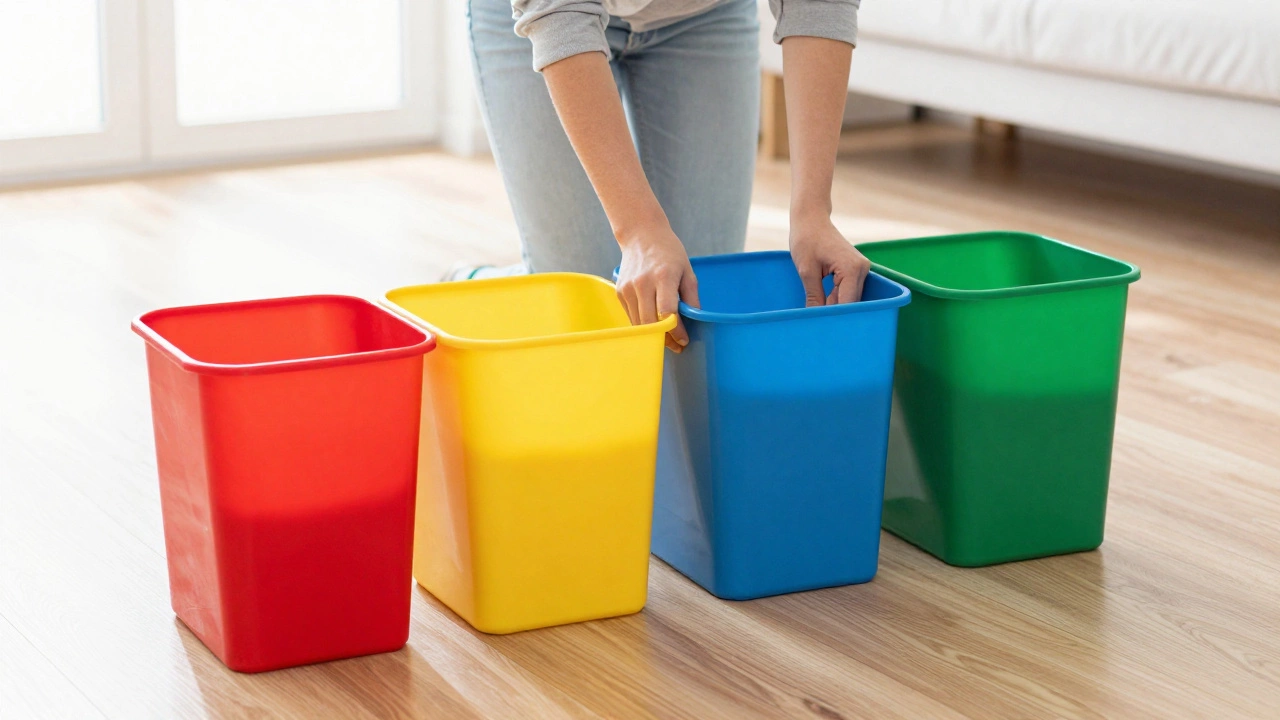
- Get Four Large Bins or Bags: Label them clearly. Use colors if possible (e.g., red for trash, yellow for donate).
- Trash/Recycling Bag: For broken items, expired food, empty containers, and non-recyclable waste.
- Donate/Sell Bag: For items in good condition that you no longer use or love.
- Relocation Box: For items that belong in other rooms (like mail that belongs in the kitchen or books for the study).
- Keep Zone: Designate a specific corner or shelf as the only place 'kept' items can go. Do not put them back in their original cluttered spots yet.
Put on music or a podcast. This creates a boundary between 'work mode' and 'rest mode.' Put your phone in another room unless you’re using it for entertainment. Distraction is your enemy here.
Phase 1: The Floor Sweep (Clearing the Path)
The most overwhelming part of a junk-filled room is usually the floor. If you can’t walk across it, you feel trapped. Start here.
Pick up everything on the floor. Do not judge it yet. Just move it. If it’s trash, bag it. If it belongs elsewhere, put it in the relocation box. If it stays, put it in the 'Keep' zone. Within twenty minutes, you will have a clear path. This visual win is crucial. It proves progress is possible.
Pro Tip: If there are large items blocking movement (like a stack of chairs or a broken dresser), move them against the wall first. Create a perimeter of safety.
Phase 2: Surface Clearing (The Horizontal Planes)
Once the floor is clear, move to horizontal surfaces: desks, tables, dressers, and shelves. These areas accumulate 'visual noise.'
Take each surface one at a time. Pick up every item. Ask yourself three questions:
- Do I use this regularly? If yes, keep it.
- Does this bring me joy or serve a purpose? If no, let it go.
- Would I buy this again today? If no, it’s gone.
If an item triggers guilt ('But my aunt gave it to me'), remember: gifts are meant to be used, not stored. If you haven’t used it in a year, it’s likely never going to be used. Place it in the donate bag. Be gentle but firm.
Phase 3: Vertical Storage (Drawers and Cabinets)
This is often the hardest part because it’s hidden. Open drawers and cabinets. Pull everything out. Yes, everything. Wipe the inside while it’s empty.
Sort the contents using the same four-box method. Look for duplicates. How many pens do you really need? Five? Ten? Keep three. Throw the rest. Look for expired medications, old receipts, and takeout menus. These are low-value items that consume high-value space.
When putting items back, ask: *Does this fit easily?* If you have to force it, you don’t have enough space. Consider downsizing your storage solutions. Smaller bins force you to be more selective.
Decision-Making Frameworks for Tough Items
Sometimes you get stuck on specific categories. Here are quick heuristics to help you decide:
| Item Type | Rule of Thumb | Action |
|---|---|---|
| Clothes | If it doesn't fit now, donate it. If you haven't worn it in 12 months, donate it. | Donate/Sell |
| Paper/Mail | Shred anything older than 2 years (unless tax/legal). Recycle junk mail immediately. | Shred/Recycle |
| Kitchen Gadgets | If you use it less than once a month, it's taking up too much space. | Donate |
| Electronics/Cables | Test it. If it doesn't work, recycle it. If you have multiple cables for the same device, keep one. | Recycle/Keep One |
| Sentimental Items | Take a photo. Keep the best 5-10 items. Store the rest digitally. | Digitize/Keep Few |
Avoiding Common Pitfalls
The 'Maybe Later' Pile: This is the enemy. If you create a pile for 'things I’m not sure about,' you will never touch it again. Force a decision now. If you truly can’t decide, put it in a sealed box, date it, and hide it. If you don’t open it in six months, donate it unopened.
Organizing Before Decluttering: Don’t buy pretty baskets yet. You cannot organize clutter. You must reduce volume first. Buying storage for junk is just paying to keep your problems.
Perfectionism: A clean room is better than a perfectly organized one. Aim for 'good enough.' Done is better than perfect.
Maintaining the Space: The One-In-One-Out Rule
Decluttering is not a one-time event; it’s a habit. To prevent the room from becoming a junk trap again, adopt the one-in-one-out rule. For every new item you bring into the house, one old item must leave. Bought a new shirt? Donate an old one. Got a new gadget? Recycle the old one.
Also, implement a daily 10-minute reset. Before bed, spend ten minutes returning items to their homes. This prevents small messes from becoming massive hoards.
When to Call for Help
If the room is so filled that you cannot sleep, eat, or move safely, you may be dealing with hoarding disorder, which is a mental health condition, not just a cleaning issue. In Sydney, services like Junk Removal Services can help with bulk disposal, but if emotional distress is high, consider speaking with a therapist specializing in compulsive hoarding. There is no shame in asking for professional support.
How long should it take to declutter a very messy room?
For a severely cluttered room, expect 4-8 hours spread over 2-3 days. Working in short bursts (20-30 minutes) prevents burnout. Trying to do it all in one day often leads to exhaustion and quitting halfway through.
What do I do with sentimental items I can't bear to throw away?
Take photos of the items. Digital memories take up zero physical space. Then, limit yourself to keeping only 5-10 physical sentimental items. Store them in a dedicated 'memory box' rather than scattered around the room.
Is it okay to hire someone to help me declutter?
Absolutely. Professional organizers provide accountability and expertise. They can help you make tough decisions and set up sustainable systems. In Australia, many organizers offer virtual consultations if budget is tight.
How do I handle clutter when I live with others?
Only declutter your own items. Do not touch anyone else's stuff without permission. Communicate your goals and ask for support, such as holding the donation bag or helping with heavy lifting. Respect boundaries to avoid conflict.
What if I feel guilty about donating usable items?
Remember that unused items lose value. Donating them allows someone else to benefit. Guilt often stems from attachment, not necessity. Remind yourself that you are freeing up space for your current happiness, not destroying the past.