Decluttering Progress Estimator
Calculate Your Decluttering Timeline
How long will it take to declutter your home? Answer a few quick questions to get your personalized plan.
Your Decluttering Plan
Estimated completion time:
0 days
Progress Over Time
Pro Tip: Remember the article advice: Start with one drawer, not the whole house. Even 15 minutes a day makes a difference.
Do you ever open a closet and feel like you’re digging through a landfill? Or walk into your kitchen and immediately forget why you went in? You’re not broken. You’re just surrounded by stuff that doesn’t serve you anymore. Decluttering isn’t about throwing things away-it’s about making room for what actually matters. And it’s not as hard as you think if you know where to start.
Start with one drawer, not the whole house
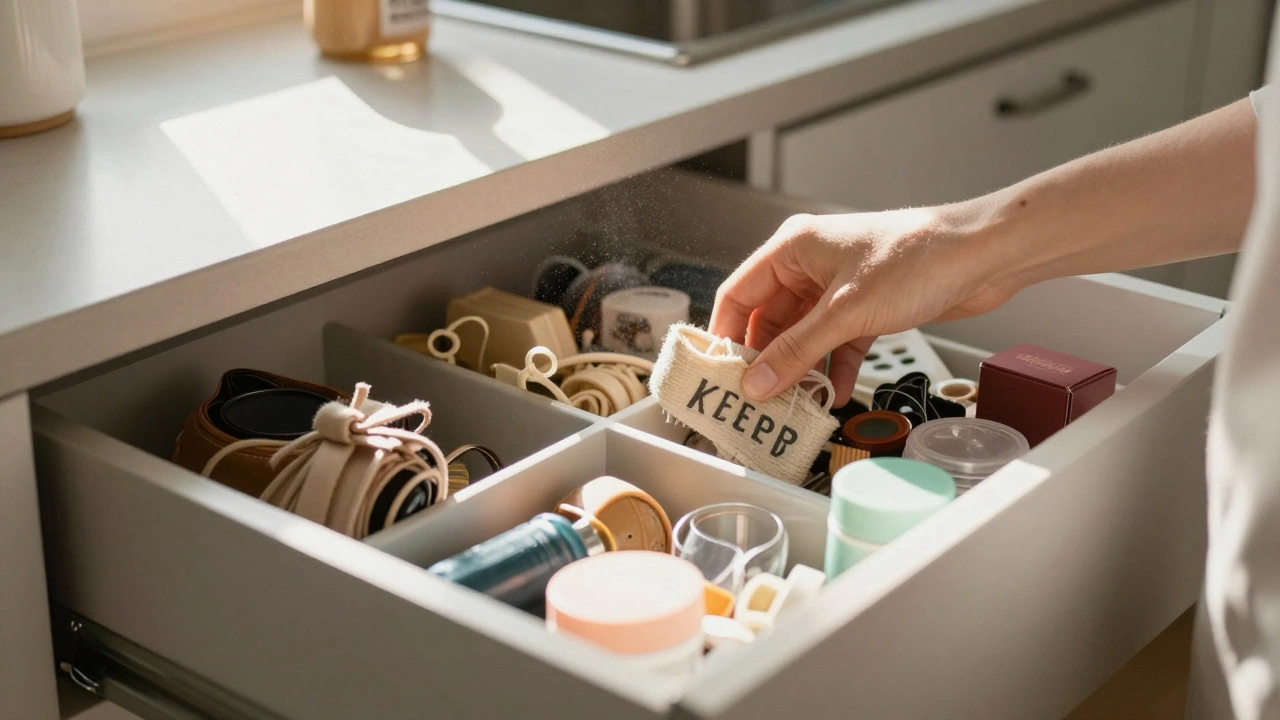
People get overwhelmed because they think they need to tackle the garage or the attic on day one. That’s why 80% of decluttering projects fail within the first week. Instead, pick one tiny space: a junk drawer, a single shelf, or even just your sock drawer. Close the door behind you. Set a timer for 15 minutes. Empty everything out. Sort into three piles: keep, donate, trash. Don’t overthink it. If you haven’t used it in the last year, and it doesn’t spark joy or solve a real problem, let it go. That drawer will feel lighter. And that feeling? It’s addictive.Use the 80/20 rule-your stuff is lying to you
You own about 1,000 things in your home. But you use 200 of them regularly. That’s the 80/20 rule: 20% of your items give you 80% of the value. The rest? They’re just taking up space, collecting dust, and quietly stressing you out. Look at your wardrobe. How many shirts do you wear? Probably five. How many pairs of shoes? Two. That’s it. The rest are ghosts of past versions of you-the version who thought they’d run marathons, the version who wanted to learn guitar, the version who swore they’d host Thanksgiving every year. Let those versions go. Keep what you use now, not what you used to be.Stop using storage as a band-aid
Buying bins, baskets, and labeled containers won’t fix clutter. It just hides it. You can’t organize your way out of too much stuff. If you’ve ever put something in a drawer labeled "Important Papers" and never opened it again-you know what I mean. Storage is for things you’ve already decided to keep. Not for things you’re pretending to keep. Before you buy a single bin, ask: "Do I really need this?" If the answer isn’t a clear yes, leave it out. You’ll be surprised how much you don’t miss.Set up a donation station
Keep a box or bag in your closet, garage, or under the sink. Every time you find something you don’t use-broken headphones, a candle you never lit, a sweater that pinches-put it in the box. Don’t think about it. Don’t decide if it’s "good enough" to donate. Just put it in. When the box is full, take it to a thrift store or schedule a pickup. This removes the guilt and pressure of having to sort through everything at once. It turns decluttering into a habit, not a chore. And you’ll be amazed how fast that box fills up.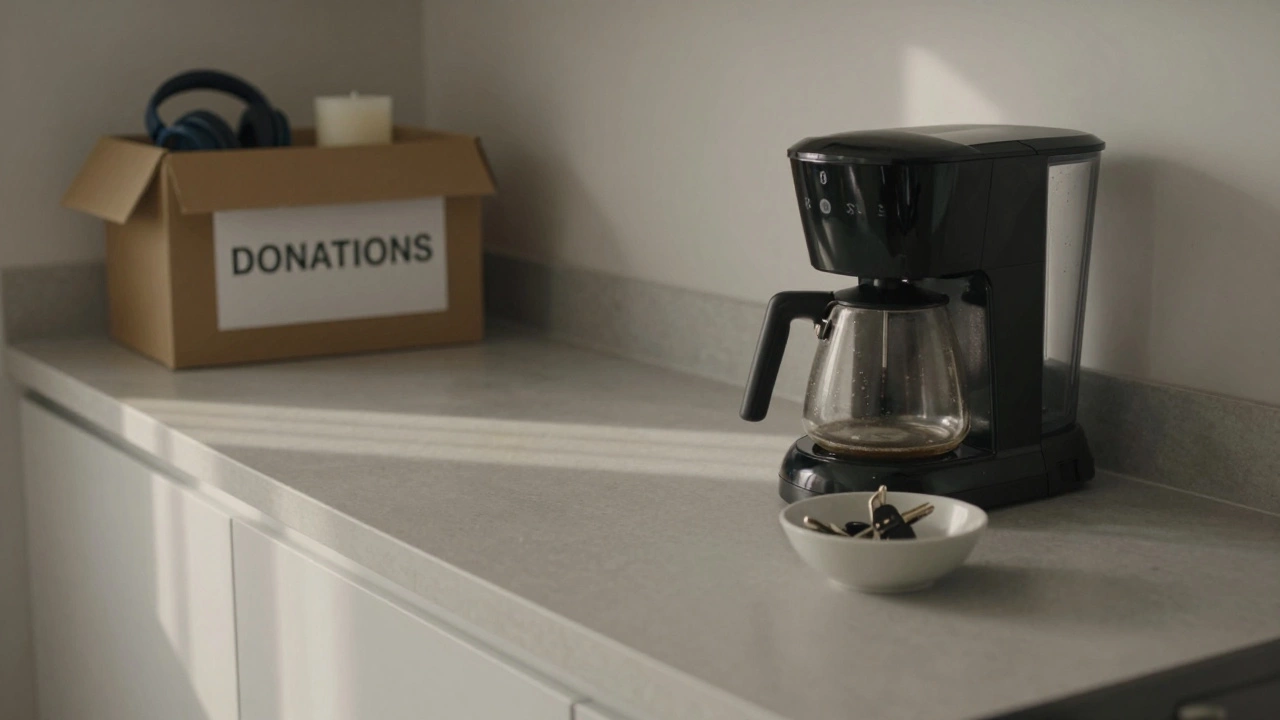
Make your surfaces clear
Your kitchen counter, your nightstand, your desk-these should be empty. Not clean. Not organized. Empty. Why? Because clutter doesn’t live in drawers. It lives on surfaces. And every item on a surface is a tiny distraction. Your brain notices it. Even if you don’t realize it. Studies show that visual clutter increases cortisol levels-the stress hormone. Clear surfaces = calmer mind. Put your coffee maker on the counter if you use it daily. Everything else? Put it away. Keys? A bowl by the door. Phone charger? A single outlet near your bed. That’s it.One in, one out is non-negotiable
You bought a new shirt? You must let go of one. Got a new book? Give away an old one. Got a new kitchen gadget? Toss the one you never used. This isn’t about being extreme. It’s about balance. Your home has a carrying capacity. If you keep adding without removing, you’re just building a museum of your past impulses. The one-in, one-out rule keeps your space from slowly taking over your life. And it makes you think before you buy. That’s the real win.Don’t declutter for Pinterest
You don’t need matching bins, color-coded labels, or a white minimalist aesthetic to be organized. That’s decoration, not function. Decluttering is about freedom-not perfection. If you love your colorful mugs? Keep them. If your books are stacked by the couch? Fine. If your kid’s art is pinned to the fridge? Leave it. Real organization is personal. It’s not about how it looks-it’s about how it feels. If you can find what you need in 10 seconds, and you’re not dreading opening a drawer, you’ve won.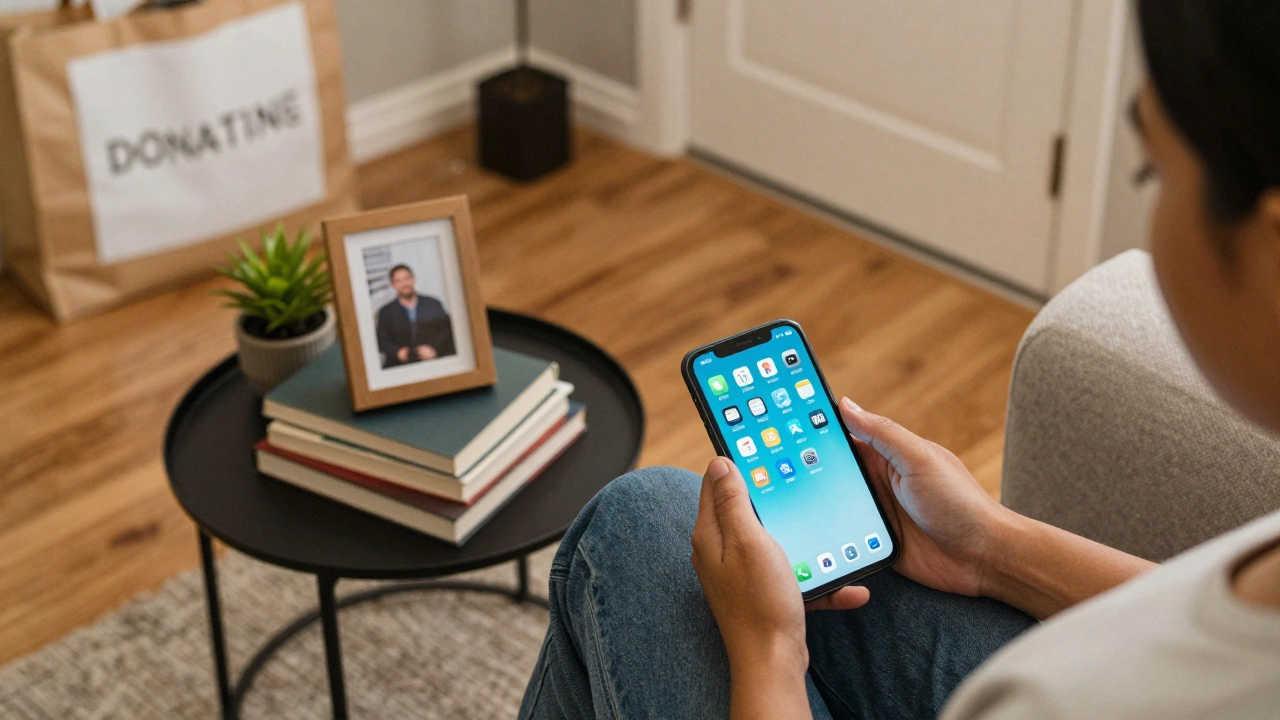
Declutter your digital space too
Your phone, your computer, your cloud storage-they’re just as cluttered as your drawers. Delete unused apps. Unsubscribe from emails you never open. Clear your downloads folder. Organize photos into one folder labeled "2025" instead of 17 different albums. You don’t need to keep every screenshot, every blurry photo, every PDF you downloaded "just in case." Digital clutter drains your focus and slows your devices. Spend 10 minutes a week cleaning it. You’ll feel lighter.It’s not a one-time thing
Decluttering isn’t a weekend project. It’s a lifestyle. Like brushing your teeth, it needs to be done regularly. Set a 10-minute daily habit: before bed, spend two minutes putting things back where they belong. Every Sunday, spend five minutes checking one spot-your purse, your car, your bathroom counter. Small, consistent actions prevent clutter from creeping back in. You don’t need to do it all at once. You just need to keep showing up.What happens when you actually finish?
You’ll find things you forgot you had. You’ll stop wasting time looking for your keys. You’ll feel calmer walking into your home. You’ll spend less money because you’ll realize you already own what you need. You’ll stop buying things to fill an emotional hole. And most importantly-you’ll start to breathe again. Clutter isn’t just physical. It’s mental. When you remove the noise, you finally hear yourself.How long does it take to declutter a home?
There’s no magic timeline. A single drawer can be done in 15 minutes. A whole house? It depends on how much you own. Most people make real progress in 3-6 weeks by focusing on one small area at a time. The goal isn’t to finish fast-it’s to finish right. Slow, steady work sticks.
What if I feel guilty about throwing things away?
Guilt comes from thinking your worth is tied to your stuff. But keeping something doesn’t honor the person who gave it to you-it just takes up space. Donate it. Someone else will use it. If it’s broken or unusable, recycle or trash it. You’re not being disrespectful-you’re being honest. Letting go is an act of self-respect, not betrayal.
Do I need to buy storage solutions?
No. Storage is for things you’ve already chosen to keep. Don’t buy bins before you’ve reduced what’s inside them. Use what you already have-shoeboxes, old jars, baskets from last Christmas. You don’t need fancy labels or matching containers. Just clear space, then put things where they make sense.
How do I declutter sentimental items?
Take photos first. Keep one or two meaningful pieces-the rest can go. A shoebox with 50 childhood drawings? Pick your top three. Keep the rest as digital memories. Sentimental clutter isn’t about memory-it’s about fear. Fear of forgetting. Fear of losing connection. But you don’t need 200 stuffed animals to remember your grandma. You carry her love with you. Let the objects go. Keep the feeling.
What if my partner or family doesn’t want to declutter?
You can’t force anyone to change. Focus on your own space. When they see how calm and easy your area feels, they might ask how you did it. Don’t lecture. Just show up with your clear counter, your tidy drawer, your stress-free closet. Lead by example. People change when they see the benefit-not when they’re told to.