
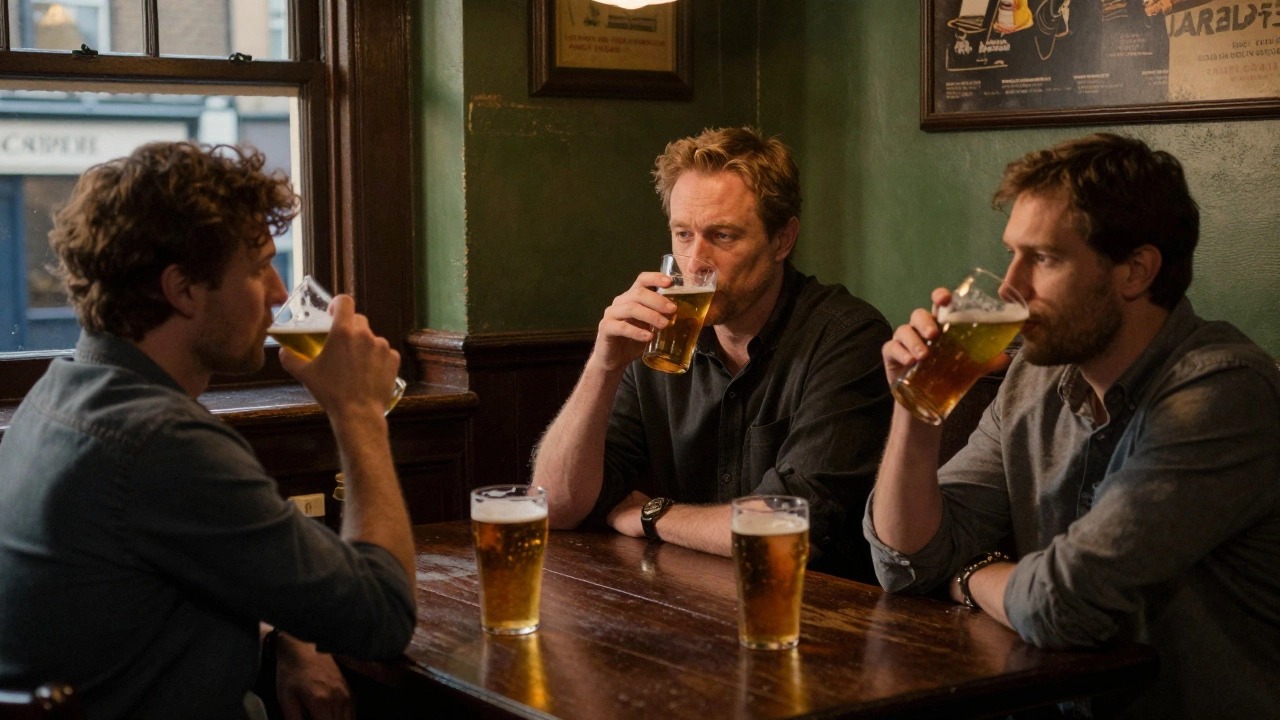
Walking into a pub in London and ordering a pint without saying "cheers" might seem harmless. But in the UK, small actions carry big meaning. What’s considered rude in Australia or the US might be perfectly normal here-and vice versa. If you’re planning a trip to the UK, knowing what’s taboo isn’t just about avoiding embarrassment. It’s about respecting a culture built on quiet manners, unspoken rules, and deep-rooted social codes.
Don’t Stare or Make Loud Comments
In the UK, public spaces are treated like shared quiet zones. Staring at someone for too long-whether it’s because they’re dressed differently, have a disability, or are talking loudly on their phone-is seen as intrusive. You won’t hear people say "excuse me" or "sorry" every few seconds like in Japan, but you’ll notice the silence. A British person might look away, shift their posture, or just freeze in place rather than confront you. It’s not about politeness; it’s about avoiding conflict at all costs.
One traveler in Edinburgh told me how she accidentally offended a local by loudly commenting on someone’s accent. "I thought I was being friendly," she said. "But he just walked away. Later, my guide explained that in the UK, pointing out accents-even if it’s meant as a compliment-is often seen as mocking. People don’t like being labeled."
Never Talk About Money or Salary
Ask someone how much they earn, and you’ll likely get a blank stare-or a sudden change of subject. In the UK, talking about income, bonuses, or even how much you paid for your shoes is considered deeply inappropriate. This rule applies even among friends. A colleague at a London coffee shop once asked me how much I paid for my train ticket. I laughed and said, "About £12." She went completely silent, then changed the topic to the weather. No explanation. No follow-up. Just discomfort.
Even asking about housing costs can raise eyebrows. If you’re staying in a B&B and ask, "How much does this room cost?"-you’re fine. But if you ask a British person, "How much is your mortgage?"-you’ve crossed a line. The same goes for asking about inheritance, savings, or investments. These topics belong behind closed doors.
Avoid Talking About the Royal Family (Unless They Do First)
The monarchy is a sensitive topic. Most Brits won’t bring it up in casual conversation, especially with foreigners. If you start praising the Queen or criticizing Prince Harry, you’re not being bold-you’re being awkward. The British don’t have strong public opinions on the royals the way Americans do about the presidency. Most are indifferent. A few are quietly annoyed. Very few are loudly passionate.
One American tourist in Windsor Castle tried to start a conversation with a guard by saying, "I can’t believe they still have a king." The guard didn’t respond. He just turned and walked away. Later, a local told me, "We don’t talk about them. We don’t need to. They’re just… there."
Don’t Cut in Line (Even If It’s "Just One Person")
Queuing is sacred. In the UK, standing in line isn’t just about order-it’s a social contract. Cutting in line, even by one person, is seen as a serious breach of trust. You’ll see people literally turn around and stare if someone tries to jump ahead. It’s not about anger; it’s about fairness. People remember who cut in. They tell others. And you’ll hear about it.
A study by the University of Oxford in 2023 found that 87% of Brits would refuse to help someone who had previously cut in line at a bus stop. That’s not a myth. That’s real social currency. If you’re late for a train and the platform is crowded, don’t push. Wait. The train will come. And everyone else will be there too.

Don’t Ask Personal Questions Early On
"Where are you from?" is fine. "Are you married?" is not. "Do you have kids?" is a hard no. "What do you do for work?" is acceptable-but only after you’ve exchanged small talk about the weather, a football match, or the price of tea.
British small talk follows a strict rhythm: weather → transport → food → work → hobbies. Skip ahead, and you’ll feel the chill. I once asked a woman in Manchester if she was planning to have children. She paused, looked at me, and said, "That’s a very personal question." Then she walked away. No explanation. No follow-up. Just silence.
Even asking about someone’s health-"Are you feeling better after your surgery?"-can be too much. If they’ve had a medical issue, they’ll bring it up. You don’t.
Don’t Be Too Loud or Overly Enthusiastic
British culture values restraint. Loud laughter, exaggerated gestures, or overly emotional reactions can make people uncomfortable. Smiling too much? It’s odd. Shouting "I love this!" in a shop? It’s jarring. Even complimenting someone too strongly-"Your outfit is amazing!"-can feel like pressure.
Instead, you’ll hear things like: "That’s nice," "Bit different," or "Not bad." These aren’t insults. They’re the highest praise. If someone says, "That’s quite good," they mean it’s excellent. If they say, "I quite like it," they’re thrilled.
One American student in Glasgow told me she thought her British roommate didn’t like her because she never said "I love you" back. "I said it after we watched a movie," she said. "She just nodded and said, ‘Yeah, it was alright.’ I thought she hated me." A week later, her roommate invited her to stay for Christmas. "Turns out," the student said, "she was just being British."
Don’t Forget to Say "Thank You" and "Sorry"
It’s not just politeness-it’s a rhythm. Brits say "thank you" for everything: for being handed a cup of tea, for someone holding a door, for the bus driver stopping. And they say "sorry" even when they’re not at fault. If you bump into someone, you say "sorry." If they bump into you, they say "sorry." If you’re walking past someone in a narrow hallway, you say "sorry."
There’s a famous quote from a British comedian: "We apologize for the weather, for being late, for existing too close to you, and for breathing." It’s not exaggeration. It’s cultural programming.
One survey from 2024 found that the average British person says "sorry" 11 times a day. That’s more than in any other country in Europe. If you don’t say it, people will notice. And they’ll think you’re rude.
Don’t Ignore the Tea Ritual
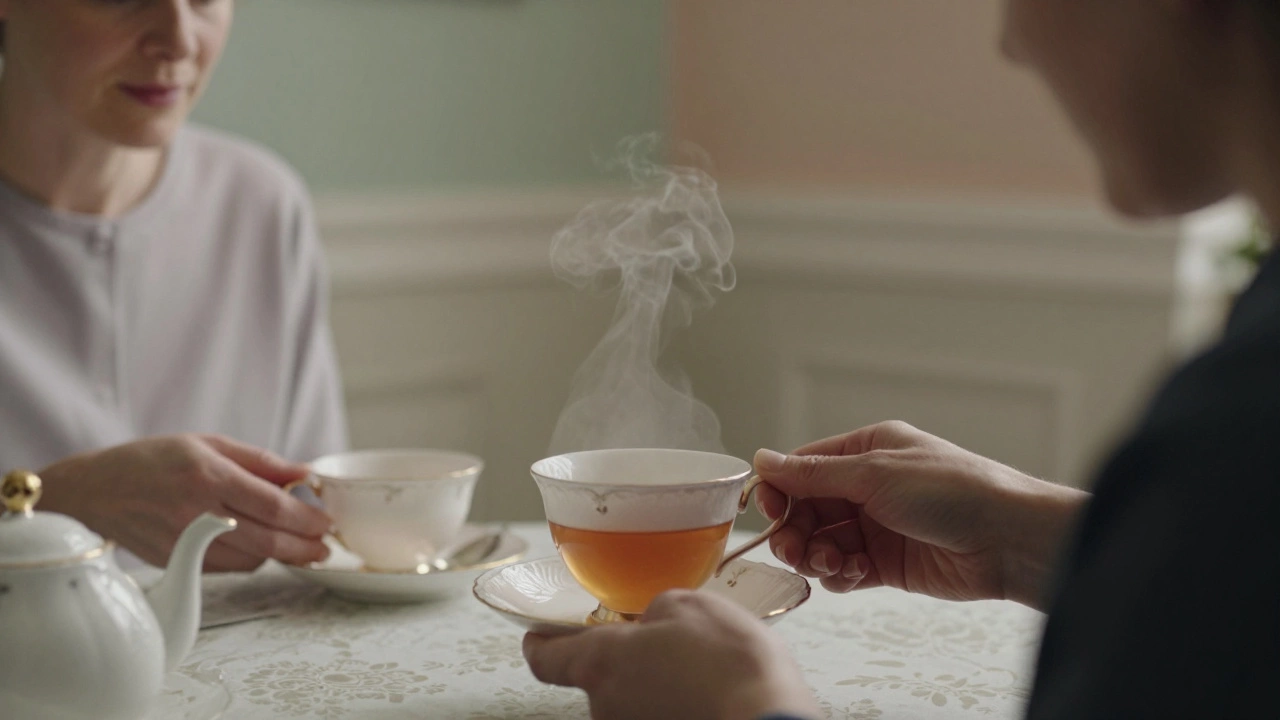
Tea isn’t just a drink. It’s a social ritual. If someone offers you tea, accept it. Declining it-especially in someone’s home-is seen as rejecting their hospitality. Even if you don’t like tea, say yes. You can sip slowly. You can leave it half-finished. But don’t refuse.
And don’t ask for "coffee" unless you’re in a café. In homes, "tea" means hot tea with milk. Black tea? That’s "no milk." Sweet tea? That’s "two sugars." Don’t ask for sugar unless you want it. Most Brits take their tea with one or two sugars, no lemon.
Also, never stir tea with the spoon while it’s still in the cup. That’s considered messy. Stir gently, then remove the spoon and place it on the saucer. It’s not a rule written down. But everyone knows it.
Don’t Be Late-But Don’t Be Too Early Either
Arriving exactly on time is fine. Arriving five minutes early? That’s acceptable. Arriving 10 minutes early? That’s awkward. Arriving 20 minutes early? You’ll be asked to wait outside.
British punctuality is flexible. For a dinner party, 7:30 means 7:30 to 7:45. For a meeting, 10:00 means 10:00 to 10:10. But if you show up at 7:15, people will assume you’re overeager or don’t understand social norms. It’s not about being late-it’s about matching the rhythm.
One Australian tourist in Brighton showed up 25 minutes early for a guided walking tour. The guide didn’t answer the door. He was on his way. "I thought I was being polite," the tourist said. "Turns out, I was just weird."
Don’t Assume Everyone’s the Same
The UK isn’t one place. Scotland, Wales, Northern Ireland, and England all have different norms. In Scotland, it’s okay to ask about whisky. In Wales, talking about rugby is safe. In Northern Ireland, avoid politics. In London, you can talk about anything-but keep your voice down.
Don’t treat the UK as a single culture. A person in Manchester won’t react the same way as someone in Cornwall. A Londoner might find your accent charming. A rural Scot might think you’re too loud. You can’t guess. So stay quiet, stay observant, and let them lead.
What to Do Instead
Listen more than you speak. Wait for cues. Match their tone. If they’re quiet, be quiet. If they smile lightly, smile back. If they say "bit chilly," don’t argue-say, "Yes, it is."
British culture rewards subtlety. The more you try to fit in, the more you’ll stand out. The best thing you can do is be calm, polite, and unobtrusive. You don’t need to be perfect. You just need to be respectful.
And if you mess up? Say "sorry." Then move on. Everyone does. They’ll forgive you. Just don’t make it a habit.