Baseboard Height Calculator
Your Ceiling Height
Recommended Baseboard Height
Pro Tip: Match baseboard height to door trim for cohesive design. In 2024, wider baseboards (5-7") create visual balance in rooms with 9+ foot ceilings.
Baseboards aren’t just there to hide the gap between your floor and wall-they’re a quiet but powerful part of your home’s personality. In 2024, they’ve moved far beyond the plain white rectangles of the 90s. Today’s baseboards are intentional, textured, and tailored to match the mood of the whole room. Whether you’re renovating or just refreshing, knowing what’s trending helps you avoid a look that feels dated before it’s even finished.
Flat and Minimalist Is Still Winning
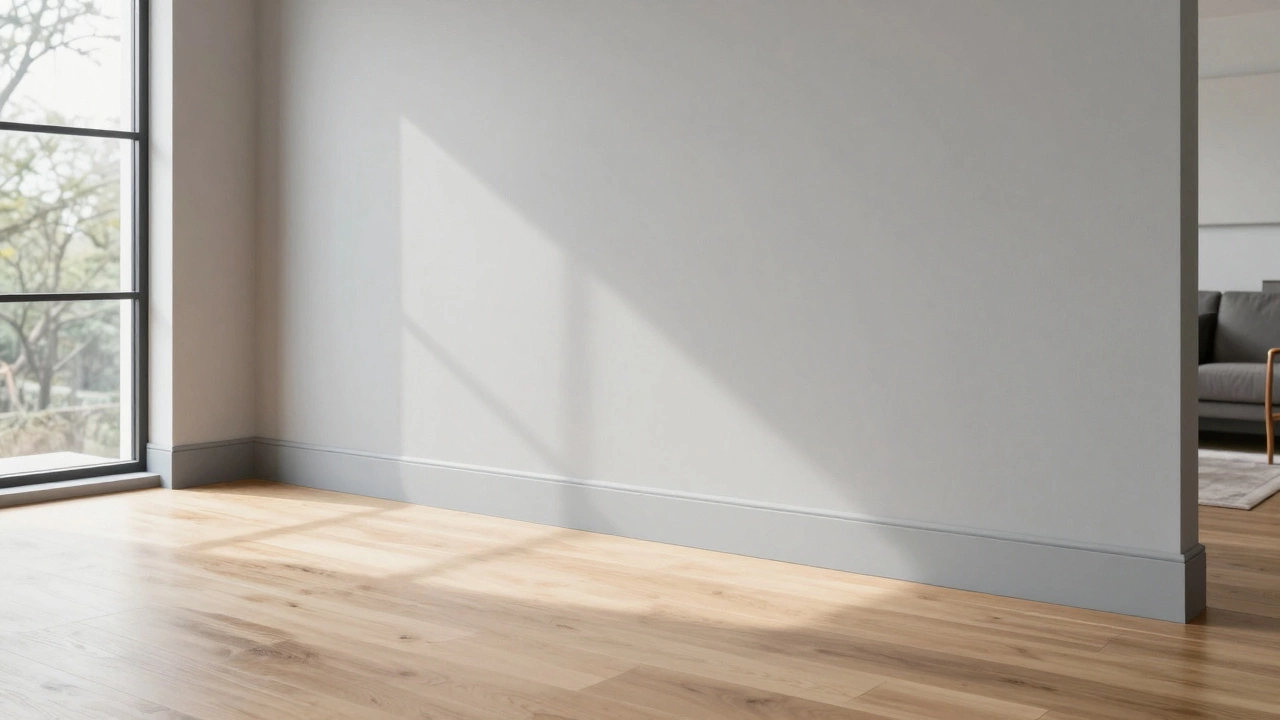
The biggest shift in 2024? Less is more. Flat baseboards-no curves, no ornate profiles-are dominating new builds and remodels. Think simple, clean lines, usually 3 to 4 inches tall, painted in the same color as the walls. This creates a seamless flow, especially in open-plan spaces. It’s not just a design choice; it’s a practical one. Flat profiles are easier to clean, less likely to collect dust, and pair perfectly with the rise of minimalist interiors.
Homeowners in Sydney and Melbourne are choosing matte white or soft greys like Sherwin-Williams’ Agreeable Gray or Benjamin Moore’s Revere Pewter. The key? Matching the baseboard color to the wall, not the trim. This blurs the line between floor and wall, making rooms feel larger and calmer.
Wide Baseboards Are the New Standard
Forget the skinny 2-inch baseboards of old. In 2024, wide baseboards-5 to 7 inches tall-are the norm. They add weight and presence to a room, grounding the space visually. Wide profiles work especially well with taller ceilings (9 feet or more) and in modern farmhouse, Japandi, and Scandinavian styles.
Why the shift? They cover more of the wall, reducing the chance of scuffs from vacuum cleaners or furniture. They also create a subtle visual anchor that makes furniture look more intentional. A 6-inch baseboard in a living room with a sectional sofa doesn’t just hide the floor edge-it makes the whole setup feel more deliberate and high-end.
Material Matters: Wood, MDF, and Beyond
Most baseboards today are made from MDF (medium-density fiberboard) because it’s stable, affordable, and takes paint beautifully. Solid wood is still used, but mostly in high-end homes or historic restorations where authenticity matters. In 2024, engineered wood with a real wood veneer is gaining traction-it gives the look of oak or walnut without the warping risk.
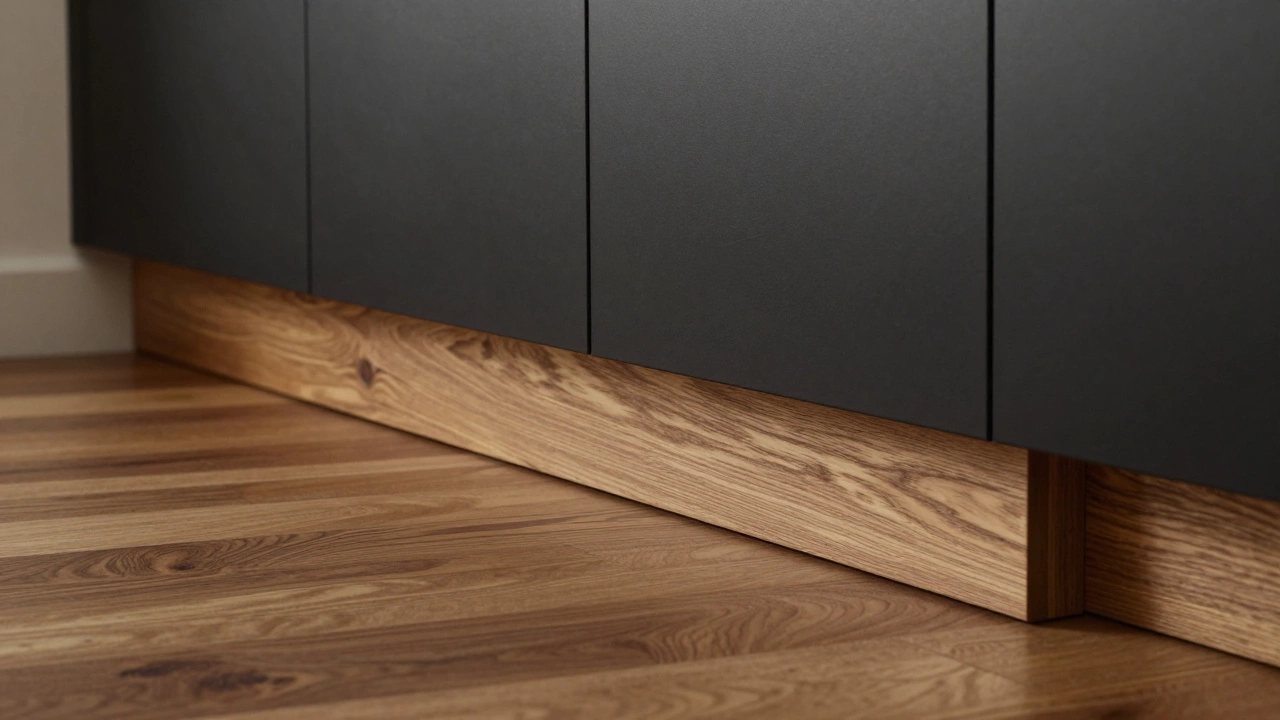
Painted MDF is the go-to for 80% of new installations. But if you’re going for warmth, stained wood is making a quiet comeback. Darker stains like Early American or Provincial on oak baseboards are showing up in modern kitchens and studies, especially when paired with matte black hardware or brass accents.
Color Trends: Beyond White
White baseboards aren’t going away-but they’re no longer the only option. In 2024, color is being used to create contrast, depth, or harmony.
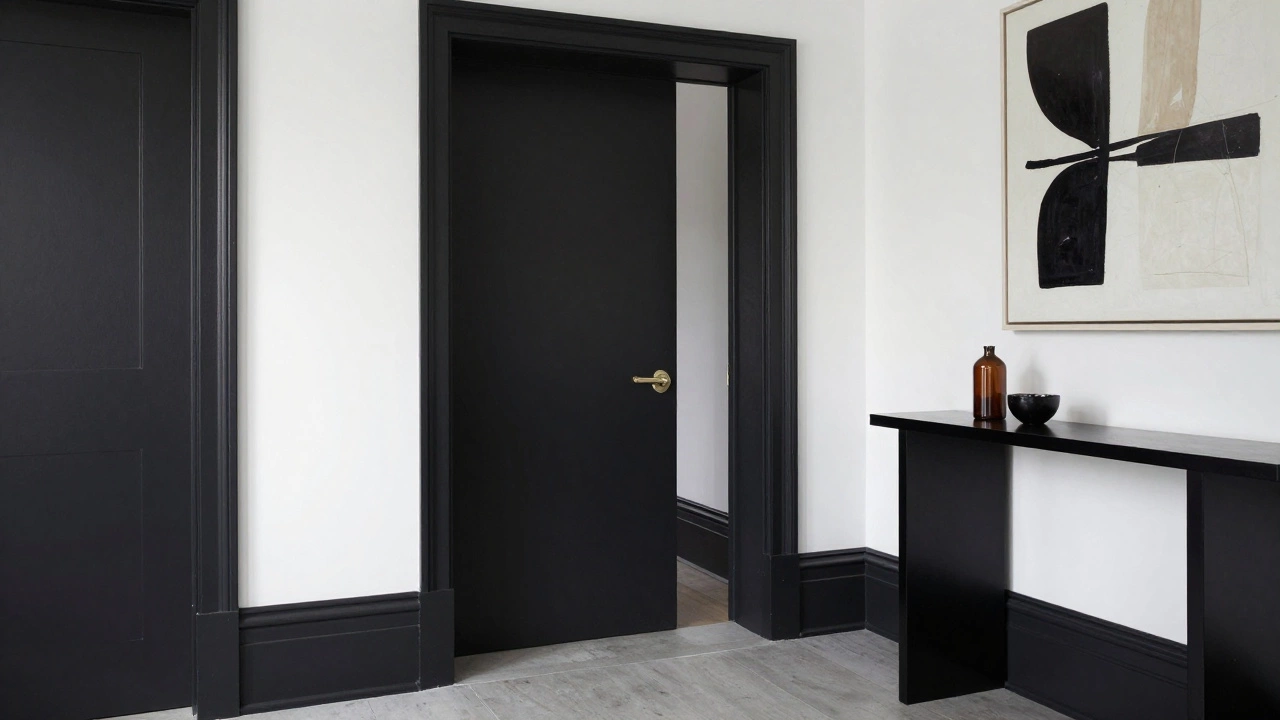
- Dark baseboards (charcoal, navy, black) are popular in rooms with light walls or floors. They add drama and definition, especially in entryways or dining rooms.
- Matching baseboards to floors is a trend gaining ground. If you have wide-plank walnut flooring, painting the baseboard the same tone creates a continuous, grounded look.
- Contrasting trim-like black baseboards with white walls-isn’t just for modern lofts anymore. It’s showing up in suburban homes too, often paired with bold accent walls.
One smart trick? Paint your baseboard the same color as your door frames. It ties the room together and makes the architecture feel more intentional.
Texture and Detail: The Quiet Rebellion
While flat profiles rule, texture is sneaking in through subtle details. Some designers are choosing baseboards with a slight bevel or chamfered edge-just enough to catch the light without adding visual clutter. Others are using wood grain patterns to add warmth without staining.
There’s also a quiet rise in baseboards with a slight crown molding profile at the top-think a tiny curve or quarter-round detail. It’s not a full crown, just enough to give a nod to traditional style without the fuss. This works best in transitional homes that blend modern and classic elements.
What’s Out in 2024
Some trends are fading fast:
- White plastic baseboards-they look cheap and don’t hold paint well.
- Overly ornate profiles like colonial or Victorian scrolls-too busy for today’s clean aesthetic.
- Baseboards in a different color than trim-unless it’s intentional contrast, mismatched colors feel accidental.
- Too narrow (under 3 inches)-they look outdated next to wider flooring and taller doors.
How to Choose Your Baseboard
Here’s a simple guide to picking the right one for your space:
- Match the scale-Taller ceilings? Go wider. Low ceilings? Stick to 3-4 inches.
- Consider your floor-Dark floors? Try dark baseboards. Light floors? White or gray works best.
- Think about maintenance-If you have kids or pets, painted MDF is easier to clean than stained wood.
- Paint it with the walls-This is the easiest way to make a room feel bigger and more modern.
- Don’t forget the door trim-Keep it consistent. Same height, same profile, same finish.
Real Examples from Australian Homes
In a recent renovation in Bondi, a couple replaced their 2-inch white plastic baseboards with 6-inch painted MDF in a warm grey. The result? The room felt taller, more luxurious, and the floorboards looked more intentional. In a new build in Byron Bay, the architect used stained oak baseboards that matched the floor-no paint at all. The effect was warm, natural, and timeless.
Even in small apartments, the trend holds. A 40-square-meter unit in Surry Hills used 4-inch flat baseboards in the same color as the walls. The space didn’t feel cramped-it felt curated.
Final Thought: It’s Not Just Trim, It’s Tone
Baseboards are the foundation of your room’s visual rhythm. They don’t scream for attention, but they set the tone. In 2024, the best baseboards are the ones you don’t notice-until you do. Then you realize they made the whole room feel right.
Are white baseboards still in style in 2024?
Yes, white baseboards are still popular-but they’re no longer the default. Many homeowners now paint them the same color as the walls for a seamless, modern look. Pure white is still used, but it’s often in brighter, crisper tones like Benjamin Moore’s White Dove or Sherwin-Williams’ Alabaster, not the yellowish off-whites of the past.
Should baseboards match the floor or the walls?
It depends on the look you want. Matching baseboards to the floor creates a grounded, continuous feel-great for hardwood or tile. Matching them to the walls makes the room feel larger and more airy, which works well in small spaces or modern designs. There’s no right answer, but consistency with your trim and doors is key.
What’s the best material for baseboards in 2024?
MDF is the most popular choice because it’s stable, paintable, and affordable. It doesn’t warp like wood and holds paint better than plastic. For high-end homes, engineered wood with a real wood veneer is growing in popularity. Solid wood is still used, but mostly for historic homes or when matching existing trim.
How tall should baseboards be in 2024?
The standard has shifted to 5 to 7 inches, especially in homes with 9-foot ceilings. In smaller rooms or homes with 8-foot ceilings, 3 to 4 inches still works well. The rule of thumb: the taller the ceiling, the taller the baseboard. This creates visual balance.
Can I install baseboards myself?
Yes, if you have basic tools like a miter saw, nail gun, and level. MDF baseboards are easier to cut and install than solid wood. The trick is measuring accurately and cutting corners at 45-degree angles. If you’re not confident, hiring a trim carpenter is worth it-poorly installed baseboards can ruin an otherwise beautiful room.