
Workout Plan Architect
Your Recommended Blueprint
--
--
--
Select your goals and click calculate to see your customized strategy.
Key Takeaways
- Define your goal first to decide between hypertrophy, strength, or endurance.
- Pick a workout split that matches your actual weekly availability.
- Balance your routine with compound movements and accessory work.
- Use progressive overload to ensure you don't hit a plateau.
- Prioritize recovery to avoid burnout and injury.
Defining Your North Star
Before you pick up a dumbbell, you need to know exactly what you're chasing. If you try to build maximum muscle, run a marathon, and lose 20 pounds all at once, you'll likely end up exhausted and seeing zero results. This is because different goals require different physiological triggers.
If your goal is Hypertrophy, which is the scientific term for muscle growth, you'll want to focus on a moderate rep range (8-12 reps) and higher volume. If you're after raw strength, you're looking at lower reps (1-5) with heavier loads. For those focusing on Endurance, you'll prioritize higher reps and shorter rest periods.
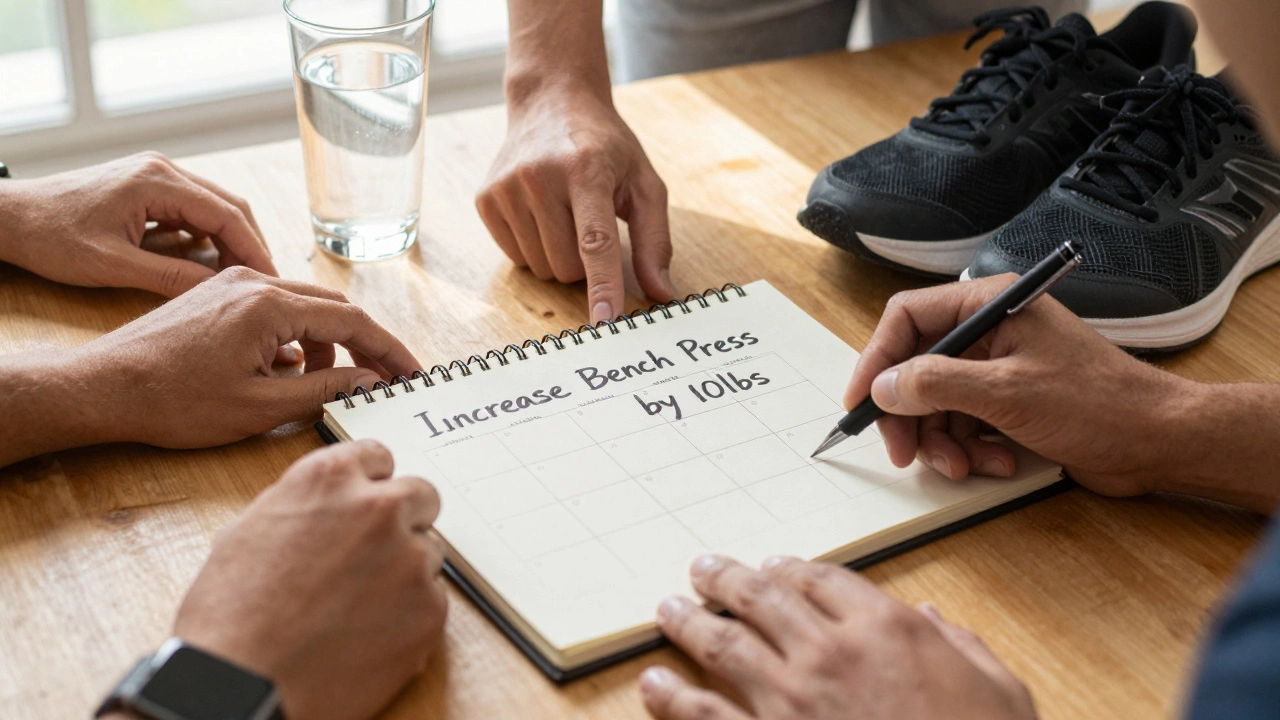
Be honest with yourself about your timeline. A realistic goal isn't "get ripped," but rather "increase my bench press by 10 pounds in six weeks" or "walk 10,000 steps a day for a month." Specificity is what makes a plan actionable.
Choosing the Right Workout Split
The "split" is simply how you divide your training across the week. The biggest mistake beginners make is choosing a professional bodybuilder's "bro split" (one muscle group per day) when they can only realistically hit the gym three times a week. If you miss one day in a five-day split, you might go two weeks without hitting that muscle group again.
For most people, Full Body Workouts are the gold standard for efficiency. You hit every major muscle group in one session, usually three times a week. This is great for beginners because it maximizes the frequency of stimulation for each muscle.
As you progress, you might move to a Upper/Lower Split. This divides the body into two sections, allowing you to hit each area twice a week while giving your upper body a break while you train legs. For those who can commit to 5-6 days, a Push/Pull/Legs (PPL) routine is highly effective. "Push" covers chest, shoulders, and triceps; "Pull" handles back and biceps; and "Legs" covers everything from the hips down.
| Schedule | Recommended Split | Best For | Frequency |
|---|---|---|---|
| 2-3 Days/Week | Full Body | Beginners / Busy Pros | Whole body per session |
| 4 Days/Week | Upper/Lower | Intermediate / Strength | Each group 2x week |
| 5-6 Days/Week | Push/Pull/Legs | Advanced / Muscle Growth | Each group 2x week |
Selecting Your Exercises: The Hierarchy of Movement
Not all exercises are created equal. To create my own workout plan that actually works, you need to prioritize Compound Exercises. These are movements that use multiple joints and muscle groups at once. Think of them as the "big rocks" of your routine.
Examples of compound movements include squats, deadlifts, overhead presses, and rows. Because they recruit more muscle fibers, they trigger a larger hormonal response and burn more calories. A common rule of thumb is to put your hardest, most taxing compound lifts at the beginning of your workout when your energy is highest.
After the compound work, add Isolation Exercises. These focus on a single joint and a specific muscle, like bicep curls or calf raises. These are the "pebbles" that fill in the gaps and help with sculpting or fixing imbalances.
To ensure a balanced physique and prevent injury, follow a "push-pull' ratio. For every pushing movement (like a chest press), include a pulling movement (like a lat pulldown). This prevents your shoulders from rounding forward and keeps your posture upright.

Mastering Progressive Overload
If you lift the same weights for the same reps every week, your body has no reason to change. This is where Progressive Overload comes in. It is the gradual increase of stress placed upon the body during exercise.
You don't always have to add more weight to the bar. There are several ways to progress:
- Increase Resistance: Adding 5 pounds to your dumbbells.
- Increase Volume: Doing 12 reps instead of 10 with the same weight.
- Improve Intensity: Slowing down the eccentric (lowering) phase of a lift to increase time under tension.
- Decrease Rest: Taking 60 seconds between sets instead of 90.
A pro tip: keep a workout log. Whether it's a notebook or an app, tracking your numbers allows you to see exactly where you are stalling. If you hit a plateau for three weeks straight, it's often a sign that you need to adjust your calories or take a Deload Week-a period of reduced intensity to let your central nervous system recover.
Integrating Cardio and Flexibility
Strength training is the engine, but Cardiovascular Training is the fuel system. Many people avoid cardio because they fear "losing muscle," but moderate cardio actually improves your recovery by increasing blood flow to your muscles.
For heart health and fat loss, consider LISS (Low-Intensity Steady State) cardio, like a brisk walk on an incline. It's easy on the joints and doesn't interfere with your strength gains. If you're short on time, HIIT (High-Intensity Interval Training)-short bursts of maximum effort followed by rest-can burn more calories in less time, though it requires more recovery.
Don't ignore mobility. Spending five minutes on dynamic stretching (like leg swings and arm circles) before your workout primes your joints. Post-workout static stretching helps bring your heart rate down and maintains your range of motion, which is critical for performing exercises like deep squats correctly.

The Recovery Equation
You don't grow muscle in the gym; you grow muscle while you sleep. Training creates microscopic tears in your fibers; recovery is when your body repairs them to be stronger than before. Without a recovery strategy, you're just breaking your body down.
Prioritize sleep. Seven to nine hours is the sweet spot for Muscle Protein Synthesis. When you're sleep-deprived, your cortisol levels rise, which can lead to muscle breakdown and increased fat storage around the midsection.
Nutrition is the other half of recovery. Ensure you're hitting a protein target-typically around 0.7 to 1 gram of protein per pound of body weight-to provide the amino acids necessary for repair. Hydration is equally vital; even a 2% drop in hydration can lead to a significant decrease in strength and cognitive focus during a workout.
How many days a week should I work out?
The best number of days is the one you can actually stick to. For beginners, 3 days a week using a full-body routine is ideal. Advanced trainees often prefer 5-6 days to increase volume. The key is consistency over intensity; working out 3 days a week for a year is better than working out 6 days a week for a month and then quitting.
Should I do cardio before or after weights?
If your primary goal is strength or muscle growth, do your weights first. Lifting requires the most glycogen (energy) and mental focus. If you do an intense cardio session first, you'll be fatigued, which increases your risk of injury and reduces the amount of weight you can lift. Use a 5-10 minute light walk as a warm-up, then lift, then finish with your main cardio session.
How do I know when to change my workout plan?
You should consider refreshing your plan every 8 to 12 weeks. This is typically when you encounter a "plateau," meaning you can no longer increase weight or reps. Changing the exercise variation (e.g., switching from a barbell bench press to dumbbells) or altering the rep ranges can provide a new stimulus to the muscles and keep you mentally engaged.
Do I need a gym membership to make this work?
Not at all. You can apply these same principles to bodyweight exercises (calisthenics) or home equipment. Squats can be done without weights, push-ups replace the chest press, and pull-ups or inverted rows replace the lat pulldown. The principles of progressive overload and compound movement still apply-you just increase difficulty by changing the angle or adding reps.
What if I feel pain during an exercise?
It is crucial to distinguish between "muscle burn" and "joint pain." A burning sensation in the muscle is normal. However, sharp, stabbing, or radiating pain in a joint (like the shoulder or knee) is a red flag. Stop the exercise immediately. Check your form, reduce the weight, or swap the exercise for a variation that doesn't cause pain. If the pain persists, consult a physical therapist.
Next Steps for Success
If you're feeling stuck, start with a "Minimum Viable Plan." Pick three compound lifts, do three sets of ten reps, and do it three times a week for one month. Once that becomes a habit, start layering in the details: add the isolation work, fine-tune your protein intake, and experiment with different splits. The goal is to build a sustainable lifestyle, not a temporary boot camp. Now, grab a pen, look at your calendar, and map out your first week.