
30-Day Home Workout Planner
Step 1: Set Your Parameters
This tool uses the "1g per pound" protein rule and estimates costs for resistance bands, weights, mats, and pull-up bars mentioned in our guide.
You probably see social media posts promising complete body transformations in one month. It is tempting to believe you can lose ten pounds or build massive muscles by April. However, your body follows biology, not marketing hype. While thirty days isn’t enough to change your entire genetics, it is plenty of time to spark a habit, tighten your core, and feel stronger than you do today. The difference between disappointment and success comes down to managing expectations and choosing the right tools.
Setting Realistic Expectations for a Month-Long Goal
Before buying equipment or printing schedules, you need to define what “in shape” looks like for you. Many people focus solely on the scale, but muscle weighs more than fat per volume. If you gain five pounds of muscle and lose five pounds of fat, the scale stays flat while your waistline shrinks. A 30-Day Fitness Challenge should prioritize how you move and feel rather than just weight loss. You might be able to run a mile faster, carry groceries without wheezing, or sleep deeper. These are concrete wins.
Your body adapts quickly to new stress. In the first week, you may feel soreness known as delayed onset muscle soreness. By week three, your energy levels usually stabilize. By day thirty, you should notice improved posture and stamina. Setting a primary goal like increasing your push-up count from ten to twenty is more motivating than guessing a weight number.
Selecting Essential Home Workout Equipment
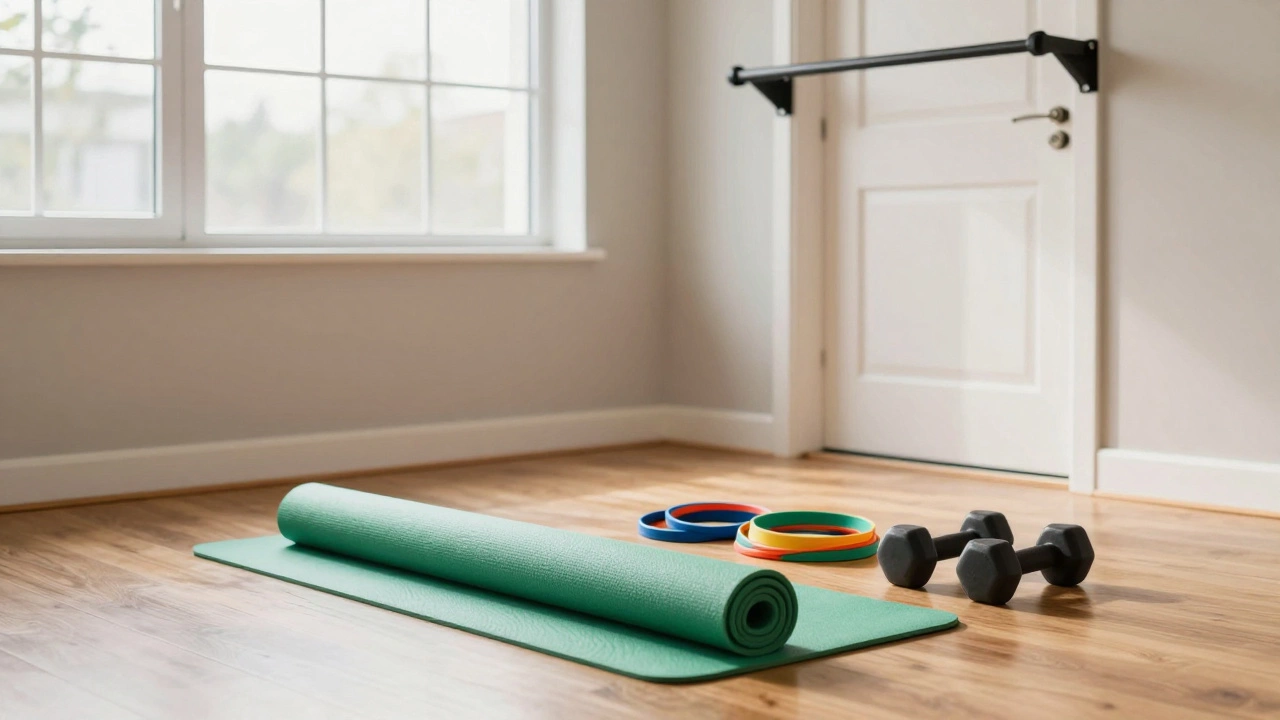
Gym memberships often gather dust because they require travel and fixed hours. Training at home removes those barriers, provided you have the proper tools. You do not need a garage full of heavy machines. A well-chosen set of gear allows for effective resistance training in small spaces.
| Equipment Type | Primary Function | Best For | Avg Price Range |
|---|---|---|---|
| Resistance Bands | Varying tension levels | Mobility and hypertrophy | $20 - $50 |
| Adjustable Dumbbells | Lifting weights | Strength building | $150 - $300 |
| Yoga Mat | Surface stability | Floor work and stretching | $20 - $60 |
| Pull-Up Bar | Upper back development | Compound movements | $30 - $80 |
Resistance bands are the unsung heroes of home training. They offer variable tension, meaning the harder you pull, the heavier it feels. This mimics the natural curve of strength movement better than gravity alone. Invest in a set with different colors representing different strengths. Adjustable dumbbells save space by replacing an entire rack of plates. Look for dial-based systems where you can change weight instantly between sets. Do not skimp on the yoga mat. A cheap plastic sheet slides when you sweat, compromising form. Finally, a pull-up bar mounts in a doorway and builds upper body strength that machines cannot replicate.
Structuring Your Weekly Routine
Random workouts rarely lead to progress. You need a structured approach that balances intensity and recovery. The best way to utilize these thirty days is to cycle through different training modalities. Consistency beats perfection here. Missing two sessions is okay, but missing two weeks halts momentum.
Consider a four-day split focusing on major muscle groups. Monday could target the lower body. Tuesday might focus on the upper body pushing muscles. Wednesday serves as active recovery. Thursday returns to legs. Friday works the core and back. Weekends remain mostly restful. This schedule prevents burnout and ensures every muscle group gets stimulated twice a week.
Incorporate High-Intensity Interval Training, commonly called HIIT. This involves short bursts of maximum effort followed by brief rest. For example, sprint on a treadmill or do jumping jacks for thirty seconds, then walk for thirty seconds. Repeat this ten times. HIIT improves cardiovascular health rapidly without needing hours of jogging. Pair this with steady-state cardio like walking or cycling once a week for endurance.

Nutrition Strategies to Support Exercise
Exercise stimulates change, but nutrition dictates the direction. You cannot out-train a poor diet. Focus on fueling your body with whole foods that provide sustained energy. Cut out processed sugars which spike insulin and lead to crashes.
Protein intake is crucial for repair. Aim for roughly one gram of protein per pound of your target body weight. This supports muscle synthesis after lifting weights. Hydration also plays a massive role. Dehydration reduces physical performance significantly. Drink water before, during, and after your session. Keep a bottle near your desk so you drink automatically throughout the day.
You do not need complex tracking apps for this month. Learn to estimate portion sizes using your hand. A serving of protein should match the size of your palm. Vegetables should fill half your plate. Carbohydrates provide energy for workouts, so eat them around training times. Save heavy carb meals for lunch or pre-workout snacks rather than late at night.
The Role of Sleep and Recovery
Many beginners skip the boring part: rest. Growth happens when you sleep, not when you train. Training creates micro-tears in muscle fibers; sleep repairs them stronger. If you cut your sleep to seven hours or less, your cortisol levels rise. Cortisol encourages fat storage and muscle breakdown.
Establish a Sleep Hygiene routine. Turn off screens an hour before bed. Keep your room cool and dark. Try to wake up at the same time every morning even on weekends. This regulates your circadian rhythm. Stretching lightly before bed signals your body that activity is ending. If you feel persistent joint pain, take an extra rest day. Pushing through injury leads to months of downtime.

Tracking Progress Beyond the Scale
Scales measure mass, not composition. A more accurate method is taking weekly photos under consistent lighting. Stand in front of the mirror from the side and front. Compare photos after fourteen days and again at day thirty. You will likely see tightness in your midsection or better definition that numbers miss.
Track your performance numbers. Write down how many reps you did with specific equipment last week. Beat that number next week. This principle is known as Progressive Overload. If you lift the same weight for the same reps forever, you stop changing. Increase weight, reps, or decrease rest intervals to force adaptation. Measuring waist circumference with a tape measure gives immediate feedback on belly fat reduction.
Staying Motivated Through the Dip
About day sixteen, motivation often crashes. This is normal. The novelty wears off. Rely on discipline instead of feeling good. Prepare your clothes the night before. Remove friction points. Have your bands ready on the floor. If you spend time digging for equipment, you talk yourself out of starting.
Connect with accountability partners. Text a friend when you finish a session. Public commitment increases follow-through rates. Celebrate non-scale victories like climbing stairs without breathlessness. Remember that this month is just the foundation. The goal is to turn these thirty days into a permanent lifestyle upgrade.
Is it safe to start working out if I haven’t exercised in years?
Yes, provided you start slowly. Begin with bodyweight movements like squats and walking. Listen to your joints and avoid sharp pain. Consult a doctor before beginning if you have pre-existing conditions.
How much should I spend on home equipment?
You can build a basic setup for under $200. Prioritize quality resistance bands and one set of adjustable weights. Expensive smart mirrors are optional and not required for results.
Can I see muscle growth in thirty days?
Visible bulk takes longer, but muscle density improves quickly. You will feel firmer and stand taller within the month. New trainers often experience rapid gains due to nervous system adaptation.
What if I miss a few workout days?
Missed days happen. Do not try to double up on other days. Just resume your normal schedule immediately the next available opportunity.
Do I need to eat protein supplements?
Supplements are not mandatory. Whole food sources like eggs, chicken, beans, and Greek yogurt provide superior nutrition. Shakes are only convenient options for busy schedules.