Open Shelf Practicality Calculator
How Practical Are Your Open Shelves?
Answer these questions to see if open shelves are right for your space.
Your Result
Open shelves used to be the go-to trend for modern kitchens and living rooms. Clean lines, airy feel, easy access - it all sounded perfect. But by 2024, you’re starting to see something different. Dusty mugs, mismatched bowls, and too many coffee mugs staring back at you. Are open shelves still in style? Or did they just get too popular for their own good?
Open shelves aren’t gone - they’re just smarter now
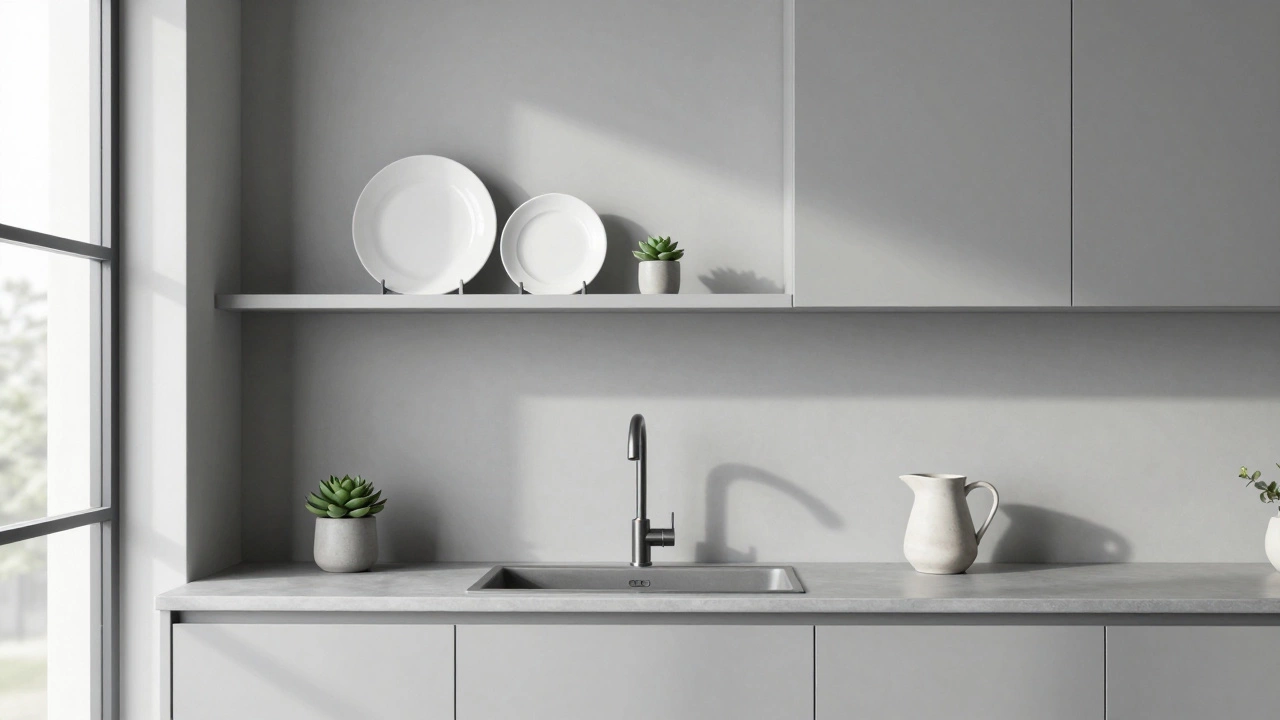
The truth? Open shelves haven’t disappeared. They’ve evolved. In 2024, it’s not about filling every inch with stuff. It’s about editing. People who still use open shelves are the ones who treat them like curated displays, not storage bins. Think three plates, one plant, a single ceramic pitcher, and nothing else. It’s less is more, but with intention.
Look at kitchens in Sydney, Melbourne, and even small-town homes. The ones that feel fresh don’t have walls of exposed shelves. They have one open shelf above the sink, or two floating shelves beside the stove - just enough to show off a favorite dish or a hand-thrown vase. The rest? Closed cabinets. Blended into the wall. No clutter. No cleaning anxiety.
Why the shift happened
Open shelves looked great in magazines. But real life? Dust. Grease. Kids grabbing things. Spills. Coffee rings. In a kitchen, open shelves are high-maintenance. A 2023 survey by the Australian Home Design Institute found that 68% of homeowners who installed open shelves in 2020 regretted it within two years because of cleaning effort.
And then there’s the aesthetic fatigue. For years, every Instagram kitchen had the same look: white shelves, ceramic bowls, copper pots, and a single succulent. It stopped feeling unique. It started feeling predictable. People are tired of trends that demand perfection. They want spaces that feel lived-in, not staged.
Where open shelves still work
Not all rooms are created equal. Open shelves still shine in places where you don’t need to hide clutter - and where you want to show off something beautiful.
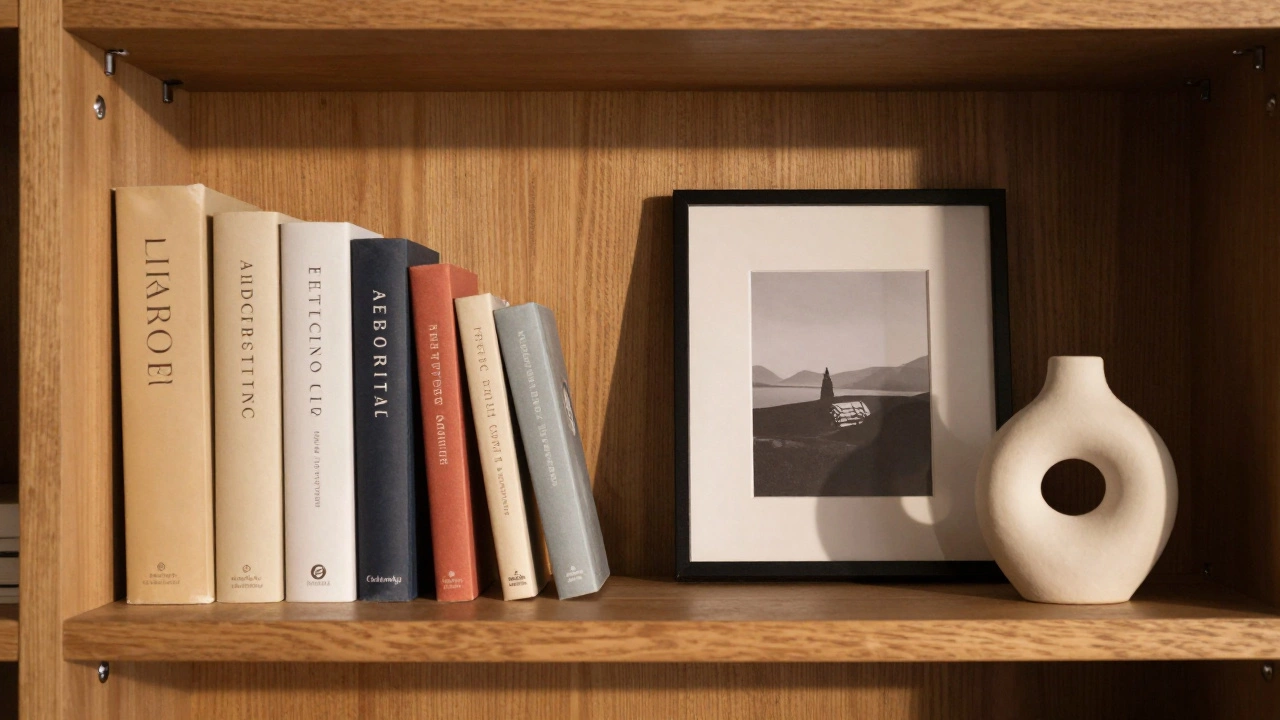
- Bookshelves in living rooms: A few well-chosen books, a framed photo, and a small sculpture make a statement without feeling messy.
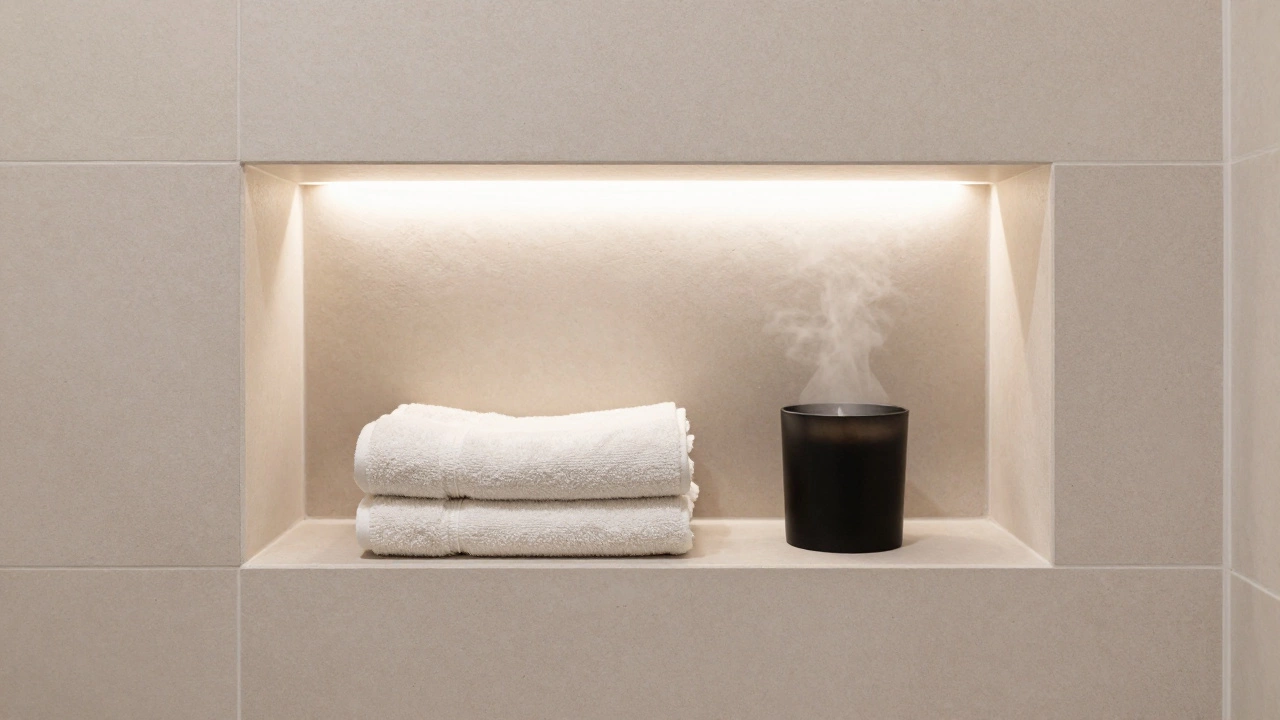
- Bathrooms with good ventilation: In a well-ventilated powder room, open shelves holding folded towels and a candle feel spa-like, not cluttered.
- Display areas in dining rooms: If you have nice china or glassware you love to show off, open shelves are still the best way to do it.
These are spaces where items are used less often, cleaned more carefully, and meant to be seen. That’s the key: open shelves work when they’re for display, not daily storage.
What’s replacing open shelves
Open shelves aren’t dead - they’re just sharing the spotlight. Closed cabinetry with hidden handles is back in a big way. But not the heavy, boxy kind from the ’90s. This is minimalist: flat-front doors, no knobs, matte finishes in warm greys, deep greens, and even soft blacks.
Another rising trend? Mixed storage. A few open shelves here and there, balanced by deep cabinets, pull-out drawers, and even glass-front cabinets with internal lighting. The goal isn’t total openness or total concealment. It’s balance.
And then there’s the rise of integrated storage. Built-in niches in walls, recessed shelving, and cabinetry that extends from floor to ceiling without breaks. These give the illusion of openness without the mess. You get the airy feel without having to dust every single plate.
What to do if you already have open shelves
You don’t need to rip them out. But you might need to rethink them.
- Reduce the number of items by half. If you have five mugs on display, keep two. The rest go in a cabinet.
- Stick to one material or color. All white? All matte black? All ceramic? Consistency reduces visual noise.
- Add a little structure. Use small trays or wooden boards to group items. It turns clutter into intentional arrangement.
- Keep a cleaning schedule. Wipe them down every Sunday. No excuses.
One client in Bondi told me she kept her open shelves but only displayed her grandmother’s pottery collection. Everything else? Hidden. Now, every time she walks into the kitchen, she smiles. That’s the goal.
The bottom line
Open shelves aren’t out of style - they’re just no longer the default. They’re a choice, not a trend. If you love them, keep them. But only if you’re willing to treat them like art, not storage. If you’re tired of cleaning them, or if your shelves look like a discount store clearance bin, it’s time to close them up.
The most stylish kitchens in 2024 aren’t the ones with the most open space. They’re the ones that feel calm. That feel intentional. That don’t make you sigh every time you walk in.
Style isn’t about following what’s popular. It’s about making your space work for you - not the other way around.
Are open shelves hard to keep clean?
Yes, especially in kitchens. Dust, grease, and cooking splatters build up quickly. A 2023 study showed that homeowners with open kitchen shelves spent an average of 45 minutes per week cleaning them. That’s more than double the time spent on closed cabinets. If you’re not willing to wipe them down weekly, closed storage is a better fit.
Can open shelves make a small room look bigger?
They can, but only if used sparingly. Too many open shelves create visual clutter, which makes a space feel smaller. One or two well-placed open shelves above a counter or in a corner can add lightness. But if you’re trying to maximize space, closed cabinets with light-colored fronts often work better because they create a seamless wall.
Do open shelves increase home value?
Not reliably. In high-end homes with curated displays, they can add character. But in most cases, buyers prefer closed storage for practicality. Real estate agents in Sydney report that homes with fully closed kitchens sell faster and for higher prices than those with exposed shelves, unless the open shelves are part of a designer renovation.
What’s the best alternative to open shelves?
Glass-front cabinets with internal LED lighting are the top alternative. They show off your dishes without exposing them to dust or grease. Another option is recessed wall niches - built into the wall, no edges to collect dirt, and they look built-in and high-end. Both give you the visual appeal of open shelves without the maintenance.
Should I install open shelves in my bathroom?
Only if your bathroom has good airflow and isn’t prone to steam buildup. In humid areas, moisture can damage wood shelves and cause mildew on towels. If you have a well-ventilated powder room or a secondary bathroom, open shelves with ceramic or metal finishes can look elegant. Avoid them in the main shower area.