
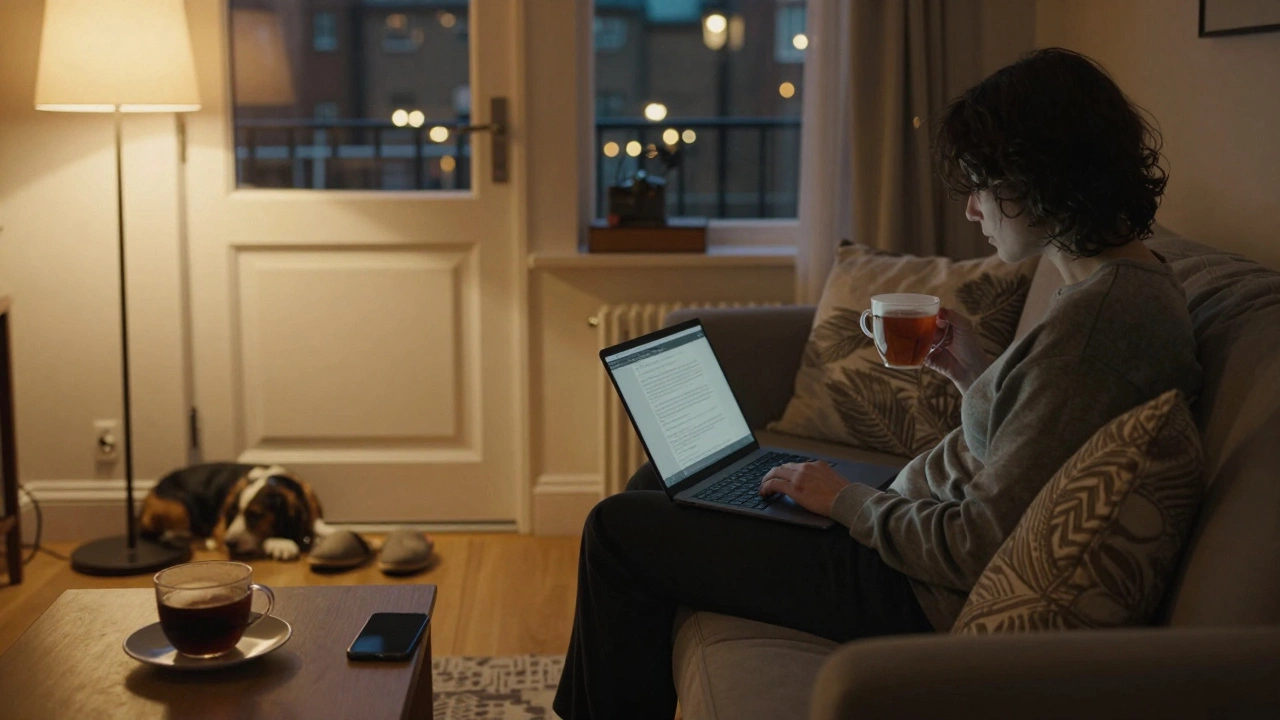
Work-Life Balance Assessment
This assessment helps you identify your current balance challenges and suggests personalized actions based on your unique situation.
How do you typically feel when you finish work for the day?
What's your biggest struggle with work-life balance?
What's most important to you in your balance?
Your Balance Assessment
Based on your responses, your key balance challenge is:
Your most important priority:
Why this matters: A 2024 study found people who set clear boundaries reported 42% higher life satisfaction than those who stayed constantly connected.
Most people think work-life balance means working less. But that’s not it. It’s about working in a way that doesn’t steal your energy, your time, or your peace. If you’re tired of checking emails after dinner, feeling guilty for taking lunch, or waking up dreading Monday - you’re not broken. You’re just in a system that doesn’t fit you.
What work-life balance actually looks like
Work-life balance isn’t a 50/50 split between job and personal time. That’s a myth. It’s about alignment. When your work supports your life instead of consuming it, that’s balance. It’s not about how many hours you work. It’s about whether you feel rested, present, and in control.
Think about the last time you felt truly good after a workday. Maybe you finished a project you cared about. Maybe you left on time and walked the dog without checking your phone. Maybe you cooked dinner with your partner and didn’t think about the next meeting. That’s the real goal. Not fewer hours. Better moments.
A 2024 study by the Australian Institute of Family Studies found that people who set clear boundaries - like not answering work messages after 7 p.m. - reported 42% higher life satisfaction than those who stayed constantly connected. The number of hours didn’t matter as much as the clarity of the line.
Your personal balance isn’t the same as someone else’s
Some people thrive on long days because they love what they do. Others need four-day weeks to feel human. Neither is right or wrong. Your ideal balance depends on your values, your energy, your responsibilities, and your stage of life.
Here’s a simple test: Ask yourself - if you had to do your current routine for the next five years, would you still feel excited? Or drained? If you’re unsure, that’s your signal. You’re not lazy. You’re just out of sync.
For example, a single parent in Sydney might need flexible hours to drop kids at school and pick them up. A freelance designer might prefer working late nights because that’s when their mind is sharp. A nurse working 12-hour shifts might need three full days off to recharge. All of these are valid. There’s no universal formula.
Where most people get stuck
The biggest mistake? Waiting for permission. You think you need your boss to say it’s okay to leave at 5 p.m. Or you wait for the company to offer remote work. But balance starts with you.
You don’t need a policy change to protect your time. You need a boundary. A simple, firm, non-negotiable rule. Like:
- No work emails after 7 p.m.
- Weekends are for family, not tasks.
- One day a week is completely device-free.
These aren’t radical. They’re basic human needs. But they feel radical because we’ve been trained to say yes to everything.
Another trap: thinking balance means being productive all the time. You don’t have to turn your downtime into a self-improvement project. Rest isn’t a reward for being productive. It’s a requirement for being human.

How to build your ideal balance - step by step
Start small. You don’t need to overhaul your life overnight. Pick one thing that’s draining you and change it.
- Track your energy for three days. Write down when you feel alert, tired, or overwhelmed. Notice patterns. Are you drained after back-to-back Zoom calls? Do you feel reset after a walk? This isn’t about hours - it’s about rhythm.
- Identify your non-negotiables. What time of day do you need to be free? What activities make you feel like yourself? Maybe it’s morning coffee alone, Sunday hikes, or dinner with your kid every night. Write them down. These are your anchors.
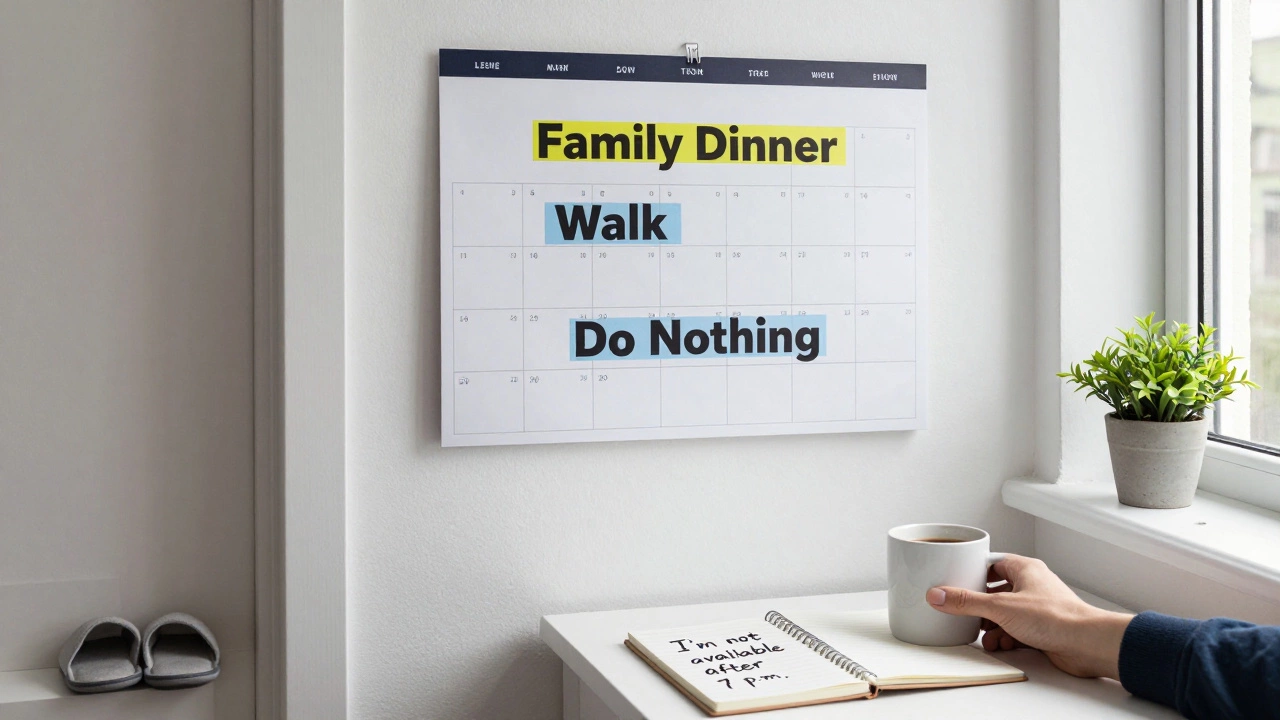
- Set one boundary. Pick one thing you’ll stop doing. Maybe it’s replying to Slack after dinner. Maybe it’s skipping meetings that don’t need you. Say it out loud: “I’m not available after 7 p.m.” Then do it.
- Protect your time like money. You wouldn’t give away $50 to a stranger without thinking. Don’t give away your hours either. Block time for lunch. Block time to walk. Block time to do nothing.
- Revisit it every month. Your balance isn’t set in stone. If you start a new project, get a pet, or move cities, your needs change. Check in. Adjust.
Tools that actually help
You don’t need fancy apps. But a few simple things make a difference.
- Calendar blocking. Put your personal time in your calendar like a meeting. Label it “Family,” “Walk,” or “Do Nothing.” Treat it like a doctor’s appointment.
- Phone settings. Turn off non-essential notifications. Use grayscale mode after 8 p.m. to make your phone less addictive.
- Physical signals. Put your laptop away at night. Charge your phone outside the bedroom. These small rituals tell your brain: work is over.
One person I know keeps a pair of slippers by the door. When she puts them on, work is officially done. It sounds silly - but it works. Rituals matter more than apps.
What to do when your job fights back
Not everyone works in a supportive environment. Some bosses reward hustle. Some cultures glorify burnout. If you’re in one of those places, start quietly.
Don’t announce a boundary. Demonstrate it. Leave on time for a week. Don’t reply to late-night emails. Show up rested, focused, and productive the next day. People notice. Eventually, they’ll stop expecting you to be always on.
And if your job still doesn’t respect your time? That’s not your fault. It’s a sign you might need to look elsewhere. No job is worth losing your peace.
Balance isn’t perfect. It’s practiced.
You’ll have weeks where work takes over. Maybe it’s a deadline. Maybe it’s a family emergency. That’s life. Balance isn’t about being perfect. It’s about returning.
Think of it like a compass. You won’t always point north. But if you keep checking, you’ll get back on track. The goal isn’t to never feel overwhelmed. It’s to notice when you are - and give yourself permission to reset.
That’s the real secret: work-life balance is about reclaiming your right to be human. Not just productive. Not just efficient. Just… you.
What’s your next step?
Don’t wait for the perfect moment. Pick one thing from this list and try it tomorrow:
- Turn off work notifications after dinner.
- Schedule a 20-minute walk before your next meeting.
- Write down one thing you’ll stop doing to protect your time.
Small changes build real change. You don’t need to fix everything. Just start.
Is working 40 hours a week still the standard for work-life balance?
Not anymore. The 40-hour week was designed for factory workers in the 1900s, not knowledge workers in 2025. Many people now find balance in 30-hour weeks, four-day weeks, or flexible schedules. What matters isn’t the number of hours - it’s whether you have enough time to rest, connect, and recharge. Studies show productivity doesn’t drop when hours are reduced - burnout does.
How do I set boundaries with a demanding boss?
Start by managing expectations, not fighting them. If your boss expects late-night replies, don’t respond - but do reply the next morning with a clear note: “I’ve reviewed this and will send feedback by 9 a.m. tomorrow.” Show reliability, not availability. Over time, they’ll learn you’re responsive, not reachable 24/7. If they push back, ask: “What’s the priority here? I want to make sure I’m focusing on what matters most.”
Can I have work-life balance if I work remotely?
Remote work makes balance harder - not easier - because your home becomes your office. Without physical separation, work bleeds into every corner. That’s why routines matter even more. Set a start and end time. Have a separate space if you can. Walk out the door at the end of the day, even if it’s just to the backyard. Rituals create boundaries when walls don’t.
What if I love my job? Do I still need work-life balance?
Yes - especially if you love your job. Passion makes burnout sneak up on you. You’ll skip breaks, work through weekends, and tell yourself “I’m fine.” But even the most fulfilling work needs rest. Balance isn’t about disliking your job. It’s about protecting your energy so you can keep loving it.
How do I know if I’m burning out?
Burnout isn’t just being tired. It’s feeling empty, cynical, or numb - even when you’re busy. You might feel detached from your work, irritable with loved ones, or unable to focus. Physical signs include headaches, sleep problems, or getting sick more often. If you’ve been feeling this way for more than two weeks, it’s not stress. It’s burnout. And it’s a signal to change your routine - not push harder.
What to do next
If you’re reading this and thinking, “I need to change something,” you already know what it is. Don’t wait for motivation. Start with one small action today. Turn off notifications. Say no to one meeting. Walk instead of scrolling. Balance isn’t found in grand gestures. It’s built in quiet, consistent choices - the kind you make when no one’s watching.