Rule of 3 Meal Plan Checker
Check Your Meal Plan
Ever feel like you’re spending too much time thinking about what to eat - only to end up grabbing something unhealthy anyway? You’re not alone. The rule of 3 meal plan isn’t a diet. It’s not a detox. It’s not about cutting carbs or counting calories. It’s a simple, no-fuss system that helps you eat better without stress. And it works whether you’re cooking for one or feeding a family.
What Exactly Is the Rule of 3 Meal Plan?
The rule of 3 meal plan means eating three balanced meals a day - breakfast, lunch, and dinner - with no snacks in between, unless you’re genuinely hungry. It’s not about rigid timing or strict portions. It’s about structure. The idea is simple: give your body three clear windows to fuel up, then let it rest and digest. No grazing. No mindless snacking. No midnight fridge raids.
This isn’t new. People ate this way for generations before snack packs and 24/7 food delivery. Your grandparents didn’t have protein bars or energy drinks. They had meals. And they stayed energized.
Here’s how it breaks down:
- Meal 1: Breakfast - Within an hour of waking up. Focus on protein and fiber.
- Meal 2: Lunch - Around midday. Balanced with carbs, protein, and veggies.
- Meal 3: Dinner - At least 3 hours before bed. Lighter, but still nourishing.
That’s it. No snacks. No extra meals. Just three solid, thoughtful meals.
Why Does It Work?
Your body isn’t designed to be constantly digesting. When you snack all day, your insulin stays elevated. That keeps your body in fat-storage mode. It also messes with your hunger signals. You start feeling hungry even when you’re not - because your blood sugar keeps spiking and crashing.
With the rule of 3, you give your body a chance to reset. Between meals, insulin drops. Your body switches from burning sugar to burning fat. That’s when you feel clearer-headed, less bloated, and more in control.
Studies show that people who eat three meals a day with no snacks tend to consume fewer calories overall - not because they’re restricting, but because they’re not grazing. A 2023 review in the Journal of Nutrition and Metabolism found that participants who followed a three-meal structure lost more body fat than those who ate six smaller meals, even when total calories were the same.
And here’s the real win: you stop feeling guilty about food. No more "I already ate breakfast, so I shouldn’t have this" or "I had a snack, so I’ll skip dinner." You eat when it’s time to eat. Period.
What Should Each Meal Include?
It’s not about perfection. It’s about balance. Each meal should have three key parts:
- Protein - Keeps you full, supports muscle, stabilizes blood sugar. Think eggs, chicken, tofu, beans, fish, lentils.
- Fiber-rich carbs - Gives steady energy. Not white bread or pasta. Think oats, quinoa, sweet potato, brown rice, whole grain bread.
- Vegetables or fruit - Vitamins, minerals, and bulk. Fill half your plate. Doesn’t have to be fancy. Frozen spinach, canned tomatoes, or an apple count.
Here’s what that looks like in real life:
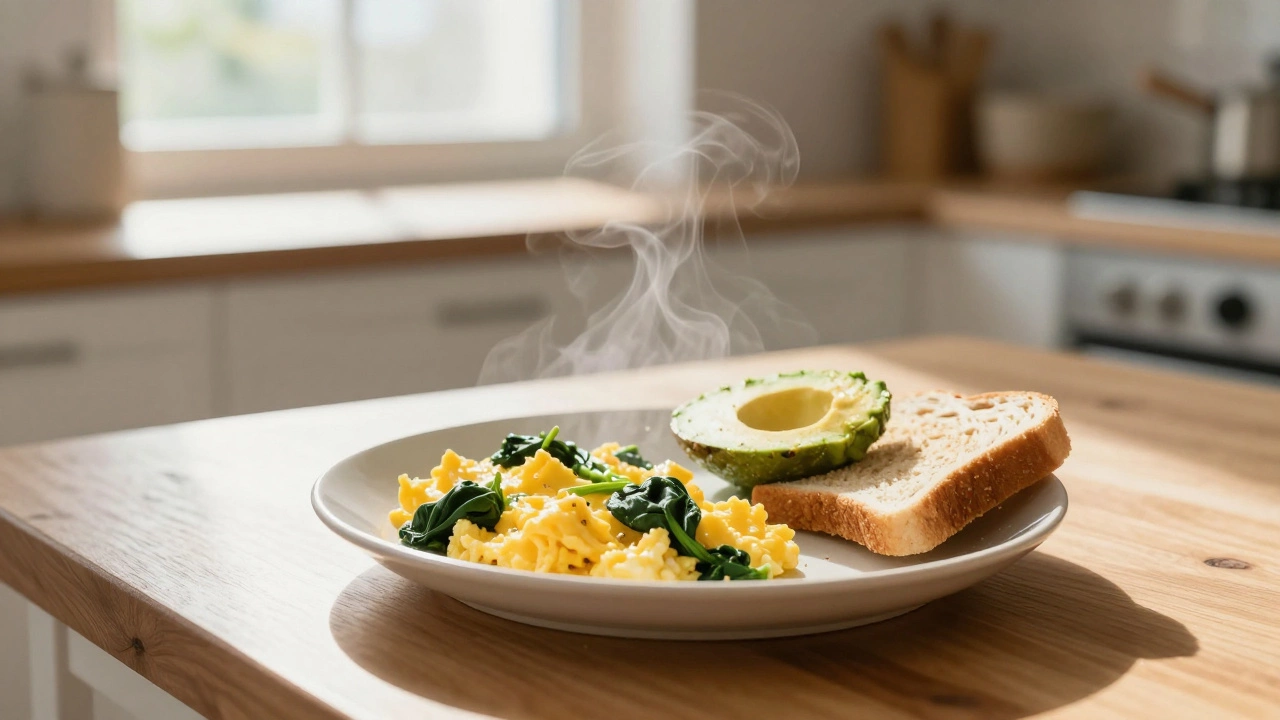
- Breakfast: Scrambled eggs with spinach, half an avocado, and one slice of whole grain toast.
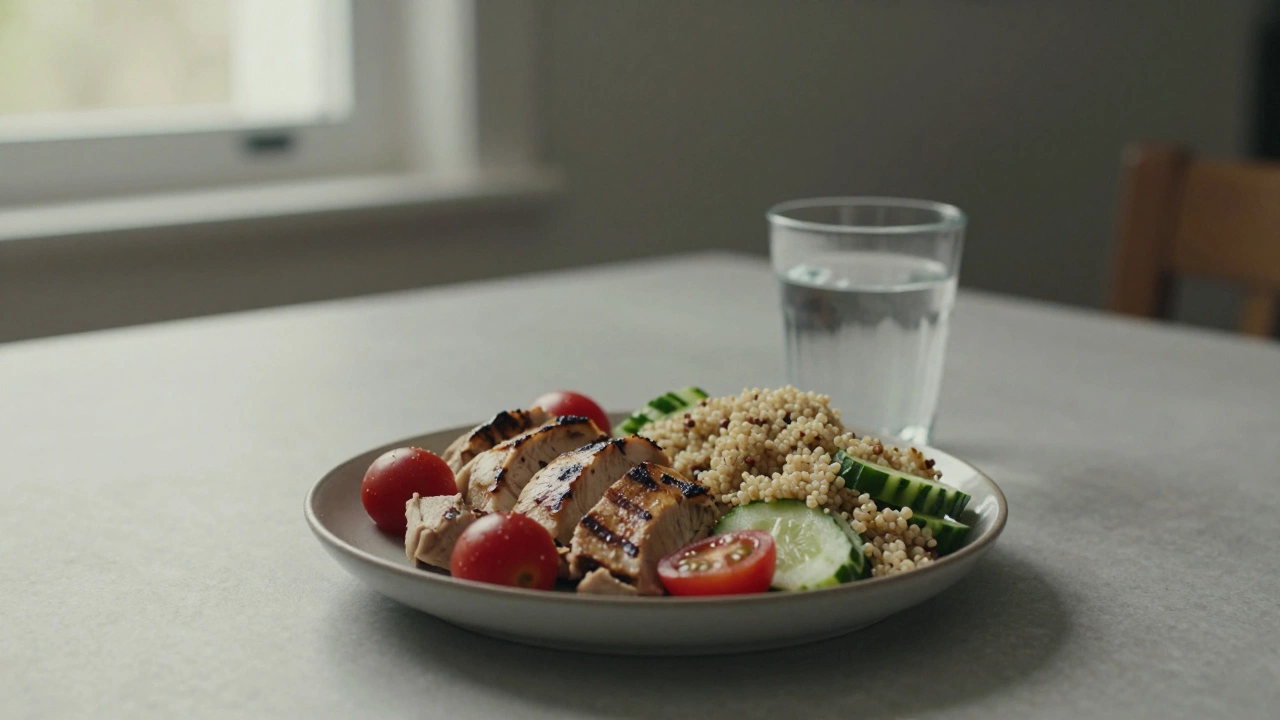
- Lunch: Grilled chicken salad with quinoa, cherry tomatoes, cucumber, and olive oil dressing.
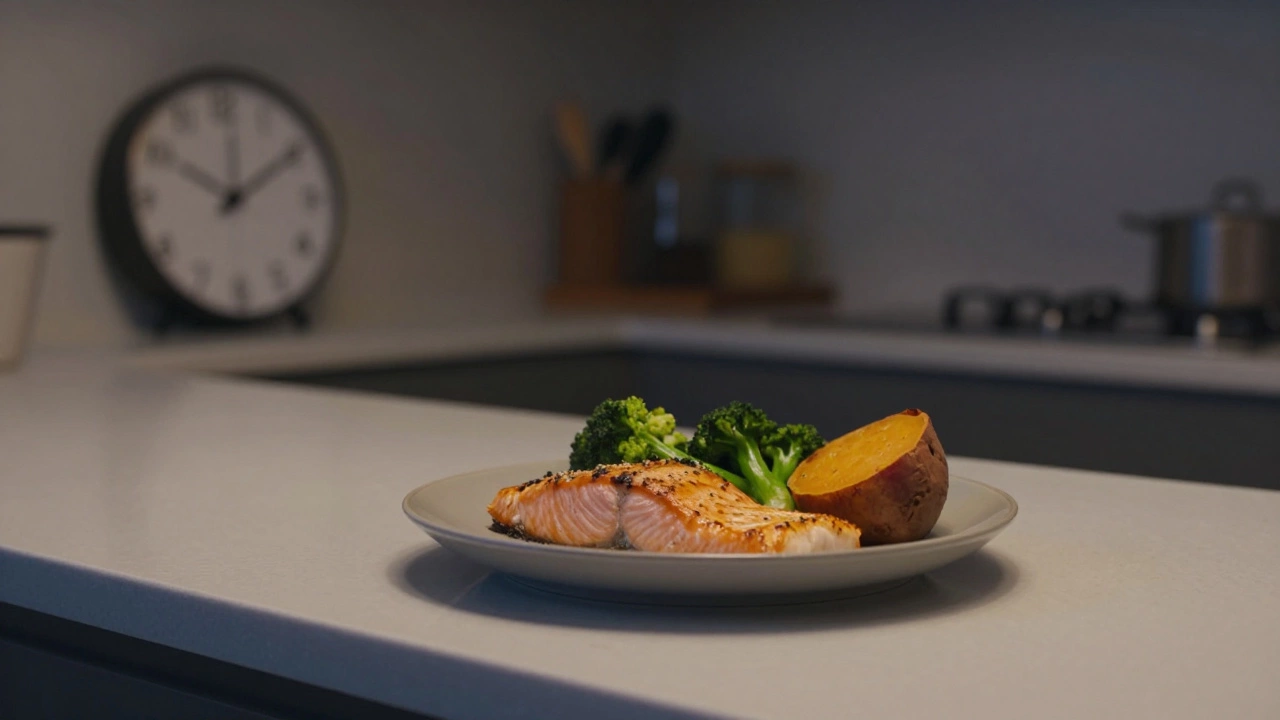
- Dinner: Baked salmon, roasted broccoli, and a small sweet potato.
It doesn’t have to be gourmet. Leftovers work. Canned beans count. Frozen veggies are fine. The goal isn’t to impress anyone - it’s to feel good.
What About Snacks? Can I Ever Have Them?
Yes - but only if you’re truly hungry. Not bored. Not stressed. Not because it’s 3 p.m. and you’re used to eating.
If you’re hungry between meals, ask yourself: Am I thirsty? Am I tired? Am I stressed? Sometimes what feels like hunger is just dehydration or fatigue. Drink a glass of water. Wait 10 minutes. See if the feeling passes.
If you’re still hungry, go ahead. But keep it simple: a handful of nuts, a piece of fruit, or some plain yogurt. No granola bars. No chips. No cookies. Those aren’t snacks - they’re mini-meals that ruin the rhythm.
And if you’re eating snacks because you’re not satisfied after meals? That’s a sign your meals aren’t balanced. Add more protein or fiber. You’ll feel fuller longer.
How to Start - Even If You’re Busy
You don’t need to overhaul your life. Start small.
- Eliminate one snack today. Maybe it’s your afternoon candy bar. Swap it for water.
- Make sure your next meal has protein and veggies. Even if it’s just a boiled egg and a carrot.
- Plan your next day’s dinner tonight. Five minutes. Write it down.
Do that for three days. Then add one more habit. Maybe prep two breakfasts on Sunday. Or chop veggies while your coffee brews.
Most people think meal prep means spending hours chopping and labeling containers. It doesn’t. It just means thinking ahead. You don’t need fancy containers. You don’t need Instagram-worthy meals. You just need to know what you’re eating before you get hungry.
Who Is This For?
The rule of 3 works for almost everyone:
- Parents - Fewer snacks means less chaos at mealtime. Kids learn to eat when food is served.
- Working professionals - No more 3 p.m. energy crashes from sugary snacks.
- People with digestive issues - Less constant eating = less bloating and reflux.
- People trying to lose weight - Fewer meals = fewer opportunities to overeat.
It’s not for everyone. If you’re an athlete training twice a day, you might need extra fuel. If you have diabetes or another medical condition, talk to your doctor. But for most people, three meals a day is the sweet spot.
Common Mistakes (And How to Fix Them)
Here’s what goes wrong - and how to fix it:
- Mistake: Skipping breakfast because you’re not hungry. Fix: Start with something small - a boiled egg, a spoon of peanut butter on toast. Your body will adjust.
- Mistake: Eating dinner too late. Fix: Aim to finish eating by 7 or 8 p.m. Your digestion works better when you’re not lying down.
- Mistake: Thinking you have to cook from scratch every night. Fix: Use leftovers. Buy pre-washed greens. Canned beans are fine.
- Mistake: Feeling deprived. Fix: You can still have dessert. Just have it at dinner. One square of dark chocolate. A small bowl of berries.
The rule of 3 isn’t about restriction. It’s about clarity. When you know when you’re eating, you stop wondering if you should be eating.
What Happens After a Week?
Most people notice changes within a few days:
- Less bloating
- More stable energy
- Fewer cravings
- Better sleep
- Less mental clutter around food
After a week, you start to feel like you’re in charge of your eating - not the other way around. You stop checking the clock wondering when you can eat again. You stop feeling guilty about what you ate. You just eat. Then you move on.
That’s the real power of the rule of 3. It doesn’t ask you to change your life. It just asks you to be a little more intentional. And that’s enough.