Meal Prep Safety & Storage Planner
Select the ingredient you are prepping to see the safest way to make it last for 5 days.
Ingredient
Status-
Select an ingredient above to generate a safety plan.
Quick Takeaways
- Most cooked meals stay safe for 3 to 4 days in a standard fridge.
- To hit the 5-day mark, you must freeze the meals for Thursday and Friday.
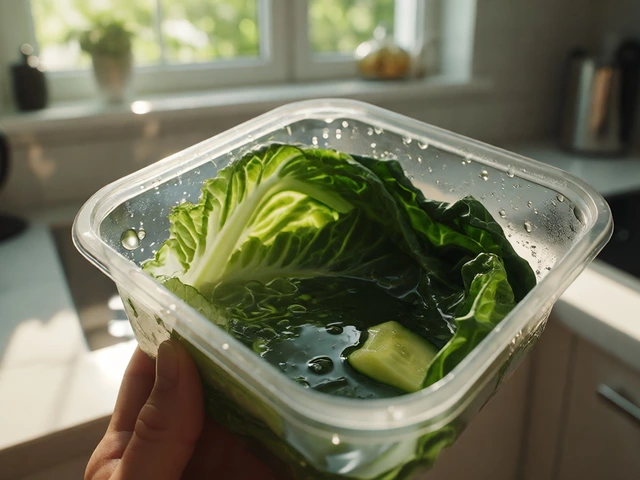
- Fresh produce like spinach or sliced cucumbers won't last the full stretch.
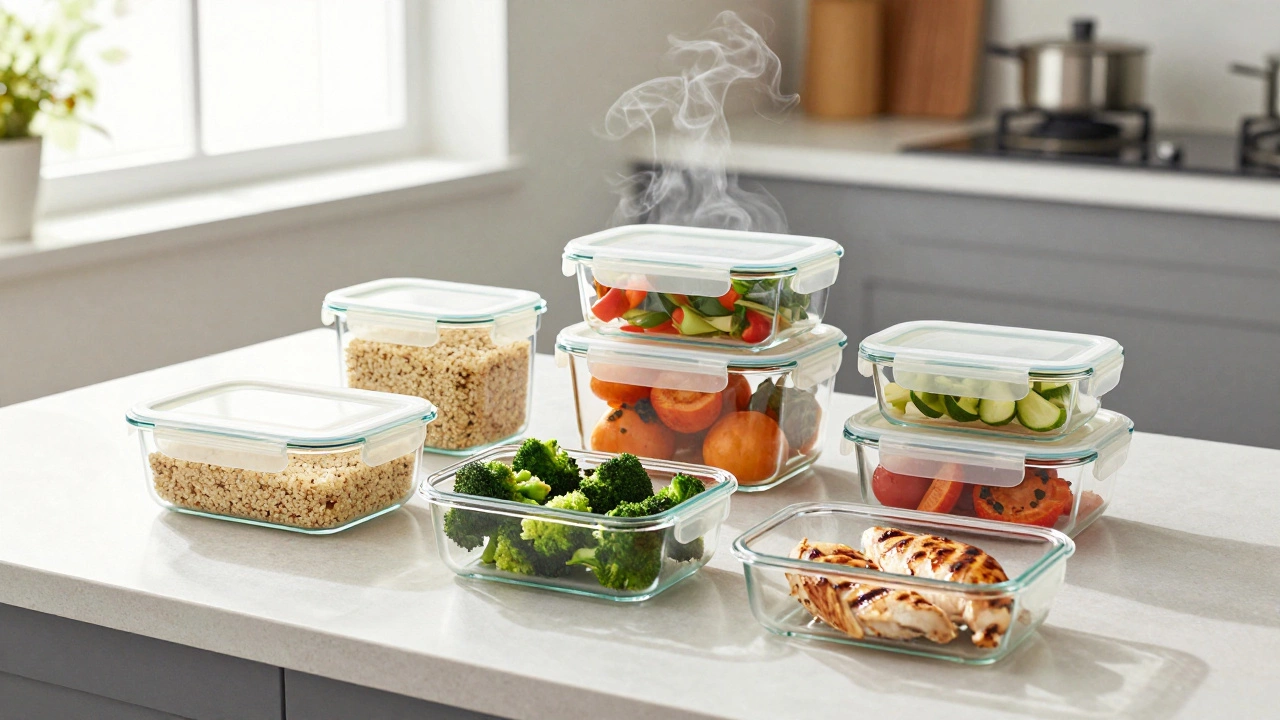
- Airtight glass containers are the gold standard for keeping food fresh.
- Proper cooling before storing is the secret to avoiding bacterial growth.
The Hard Truth About Fridge Life
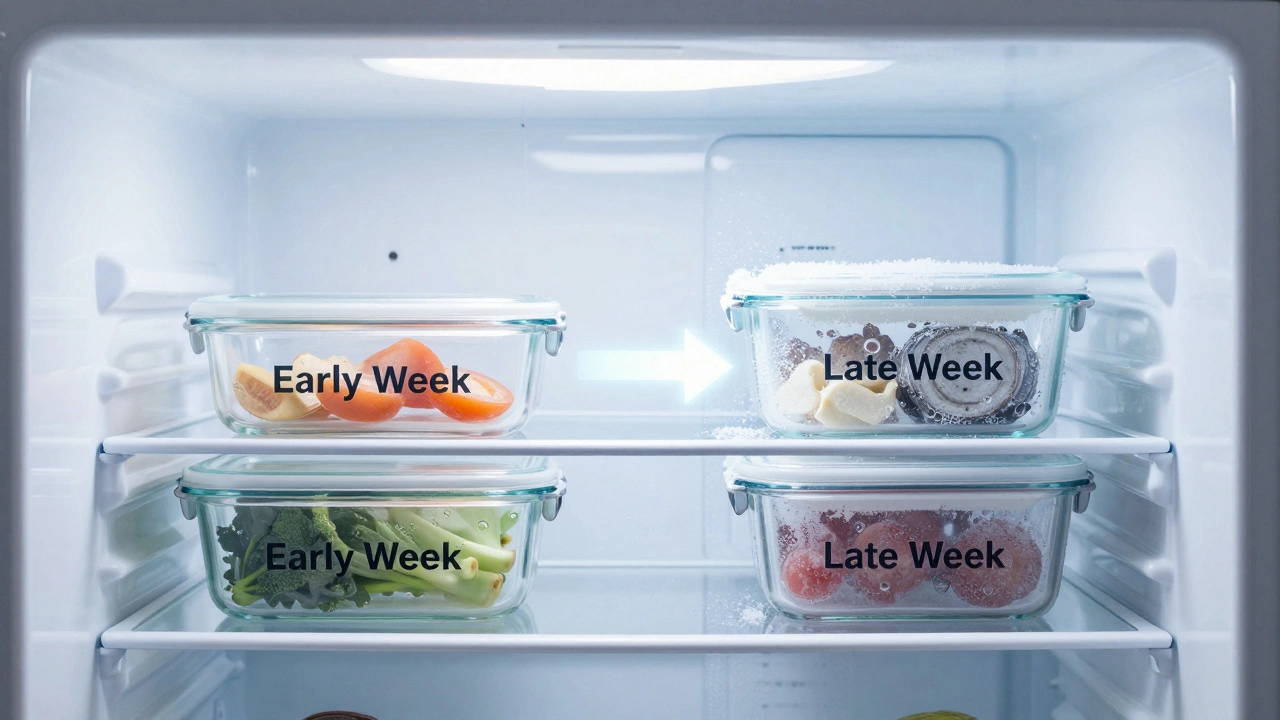
Before you fill your fridge with ten identical containers, let's look at the rules. Food Safety is governed by the danger zone, which is the temperature range between 40°F and 140°F where bacteria multiply rapidly. According to standards set by the USDA, most refrigerated cooked foods are safe for 3 to 4 days. Wait, so if the limit is four days, how do we hit five? If you cook everything on Sunday, by Thursday you're pushing the limit, and by Friday, you're in the risk zone. If you're determined to do a full five-day stretch, you can't rely on the refrigerator alone. You need a strategy that involves a Freezer. Think of your fridge as a short-term holding cell and your freezer as a long-term vault. To successfully meal prep for 5 days, you should store Monday through Wednesday in the fridge and pop Thursday and Friday's meals into the freezer immediately after they cool down. Move them to the fridge on Wednesday night to thaw safely.Which Foods Actually Last?
Not all ingredients are created equal. If you prep a bowl of sliced avocados and mixed greens on Sunday, by Tuesday you'll have a brown, slimy mess. Some foods are "marathon runners" (they last), and some are "sprinters" (they die fast).| Ingredient Type | Fridge Life | Best Storage Method | 5-Day Verdict |
|---|---|---|---|
| Cooked Grains (Rice, Quinoa) | 4-6 Days | Airtight Container | Safe |
| Cooked Poultry/Beef | 3-4 Days | Glass Container | Freeze days 4-5 |
| Leafy Greens (Spinach, Kale) | 2-3 Days | Paper towel lining | Will wilt |
| Hard Vegetables (Carrots, Broccoli) | 5-7 Days | Dry container | Safe |
The Art of the "Component Prep"
If you're tired of eating the exact same meal five times a week, stop doing "full-meal prep." Instead, try Component Prepping. This is where you prep individual building blocks-proteins, grains, and chopped veggies-rather than finished dishes. Why does this help with the 5-day goal? Because different components have different shelf lives. You can roast a huge batch of Sweet Potatoes (which last a while) and keep your Fresh Berries in a separate bowl. When it's time to eat, you assemble your bowl in 60 seconds. This prevents the "flavor bleed" that happens when you store a stew for five days, where everything starts tasting like the same bland mush. To make component prepping work, use the 3-2-2 rule: prep 3 types of protein, 2 types of grains, and 2 types of roasted vegetables. Mix and match them with different sauces throughout the week to keep your taste buds from getting bored.Container Strategy: Glass vs. Plastic
Your choice of container can literally add a day to your food's life. Plastic containers are convenient, but they are porous. They let in air and can leach chemicals when heated in the microwave. Switch to Borosilicate Glass Containers. Glass creates a much tighter seal, which keeps oxygen out and moisture in. Oxygen is the enemy; it's what causes fats to oxidize and vegetables to brown. Glass also handles the transition from freezer to microwave much better than plastic, which can warp or crack under extreme temperature shifts. Pro tip: If you're prepping salads, use the "Mason Jar Method." Put your dressing at the very bottom, then the hard veggies (carrots, chickpeas), then the grains, and finally the leafy greens at the top. This keeps the greens away from the moisture, preventing that depressing soggy lettuce phenomenon by Thursday.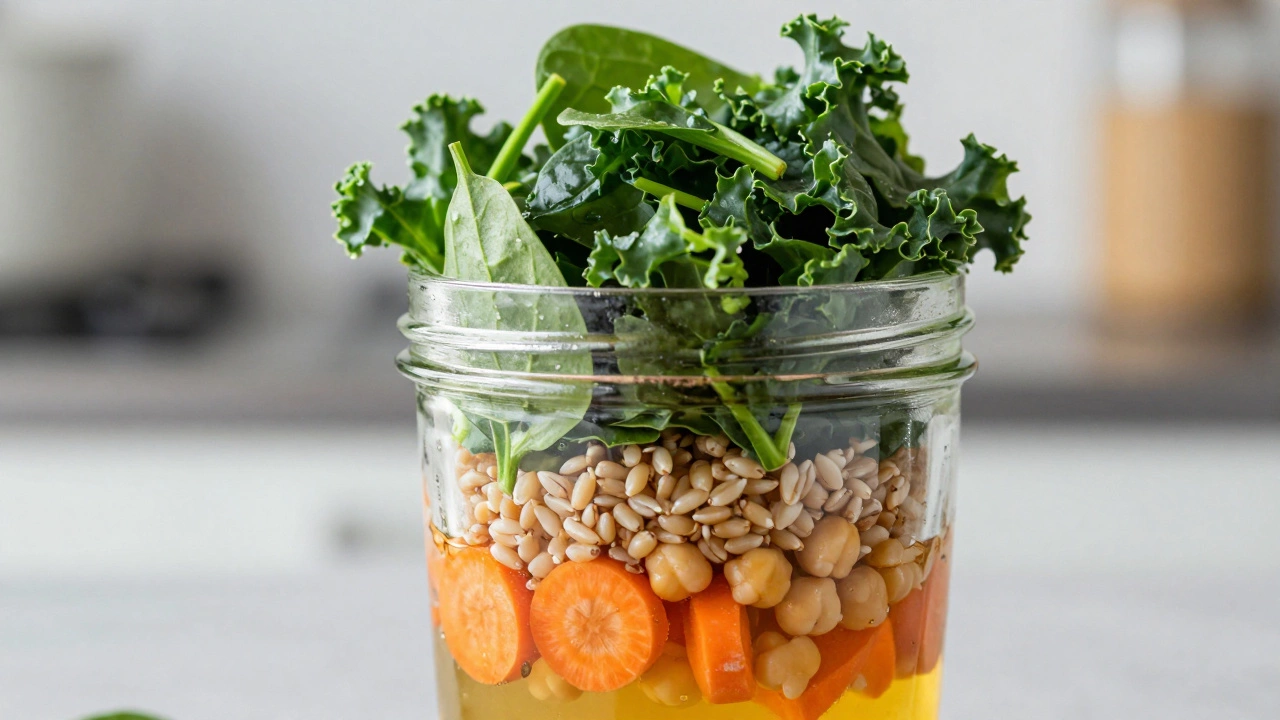
Common Pitfalls to Avoid
One of the biggest mistakes people make is putting hot food directly into the fridge. While it seems intuitive to get it cold quickly, putting a giant pot of hot chili in the fridge can actually raise the internal temperature of the rest of your groceries. This puts your milk and eggs at risk. Instead, divide your food into smaller, shallow containers. This increases the surface area, allowing the food to cool down much faster. If you have a massive amount of food, let it sit on the counter for about 30-60 minutes, but never longer than two hours, before refrigerating. Another trap is ignoring the "smell test." While a lack of smell doesn't always mean food is safe (some bacteria don't produce odors), a sour or ammonia-like smell is a definite red flag. If your chicken smells slightly "off" on Friday, don't risk it. The cost of a new meal is much lower than the cost of a trip to the urgent care clinic.The 5-Day Workflow Checklist
To make this a repeatable habit, follow this specific order of operations:- Inventory: Check what you already have so you don't buy double.
- Batch Cook: Start with the things that take the longest (grains and roasted root veggies).
- Protein Prep: Grill or bake your meats. Ensure they reach the safe internal temperature (e.g., 165°F for chicken).
- Cooling Phase: Spread food out in shallow containers to cool rapidly.
- The Split: Put Monday-Wednesday meals in the fridge. Put Thursday-Friday meals in the freezer.
- The Shift: On Wednesday evening, move the Thursday/Friday meals from the freezer to the fridge to thaw.
Can I prep raw ingredients for 5 days?
Yes, but with limits. Chopped hardy vegetables like carrots, celery, and bell peppers can last 5 days if stored in airtight containers with a damp paper towel to maintain humidity. However, pre-cut mushrooms or sliced avocados will spoil much faster. For the best results, chop the hard stuff on Sunday and wait until Wednesday to chop more delicate produce.
Is it safe to eat 5-day-old cooked rice?
Rice is actually one of the riskiest foods for long-term prep because of Bacillus cereus, a bacterium that can survive the cooking process. To keep rice safe for 5 days, you must cool it quickly and store it at 40°F or below. If you're unsure, freezing the rice is the only way to guarantee safety for a full work week.
How do I stop my meal prep from tasting boring?
The secret is in the sauces. Don't add the sauce to the food during the prep phase-that's what makes the food mushy. Instead, prep 3 small containers of different dressings (like a tahini lemon, a spicy sriracha mayo, and a classic pesto). Add the sauce right before you eat. This changes the flavor profile of the same base ingredients every day.
Should I reheat my meals in the microwave?
Microwaving is fine, but to avoid "rubberized" meat, add a splash of water or a damp paper towel over the container. This creates steam, which re-hydrates the food. Always ensure the food is steaming hot all the way through to kill any surface bacteria that may have developed.
What are the best proteins for 5-day prep?
Harder proteins like roasted chicken breast, lean beef, and tofu generally hold up better than fish or seafood. Shrimp and salmon are best eaten within 2 days and should generally not be prepped for a full 5-day cycle unless they are frozen immediately.